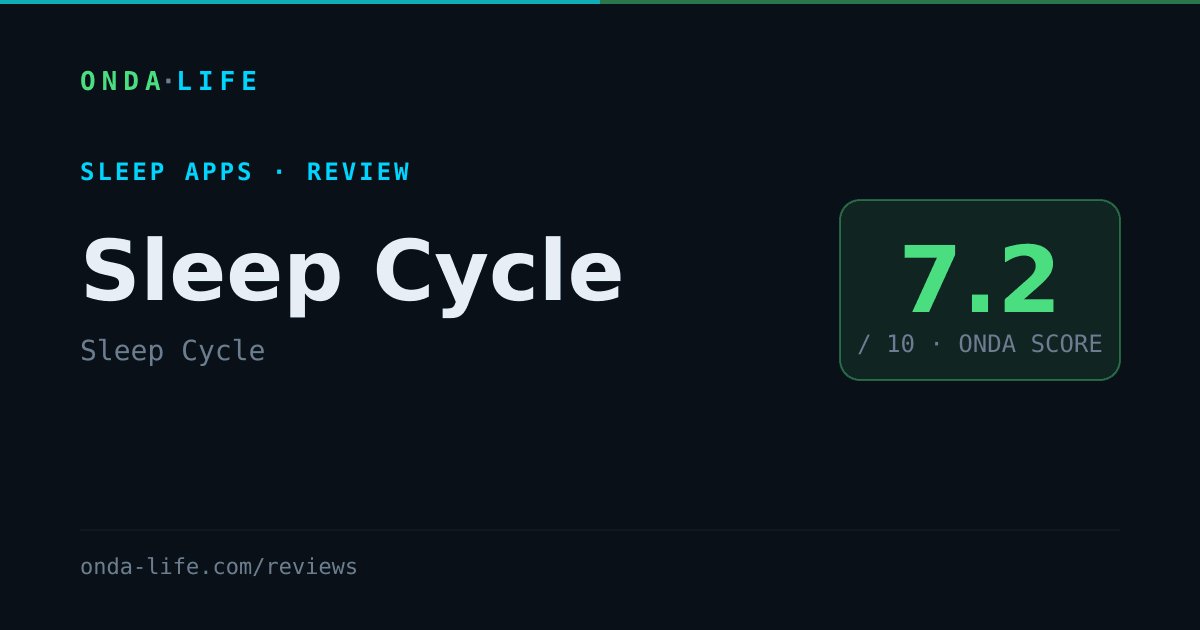
The most polished mainstream sleep tracker — a smart alarm and clean analysis, with a genuinely useful free tier.Best for a polished, low-effort sleep tracker with a smart alarm.
Sleep Cycle is the most popular sleep tracker for good reason: it measures your night, wakes you in light sleep so you get up less groggy, and hands back a clean, readable analysis. Its free tier is genuinely useful, and the paid plan stays inexpensive.
How we tested: Evidence-based assessment — from public information, app-store data and independent 2026 reviews. Not based on a long hands-on trial by ONDA.
Tracks by microphone and accelerometer, or by heart rate with an Apple Watch — solid for a phone-based tracker.
Wind-down content
6.5
Some sleep sounds and aid content, though wind-down is not its main focus.
Sleep science
7.0
The smart-wake window — rousing you in lighter sleep — is its long-running, science-led idea.
Insights and guidance
7.5
Clear nightly analysis and long-term trends, readable rather than overwhelming.
App experience
8.0
Polished and easy — the most refined of the mainstream sleep apps.
Free tier
7.0
A genuinely usable free tier; many users never need to pay.
Value
7.5
Around 50 USD a year for Premium — inexpensive for what it adds.
Pros
+Smart alarm wakes you in light sleep
+Genuinely useful free tier
+Clean, readable sleep analysis
+Polished and easy to use
Cons
−Wind-down content is light
−Phone-on-bed tracking is less precise than a wearable
−Best data — snoring, heart rate — needs Premium or a watch
−Not a fall-asleep aid
Price: $50 per year (Premium); a usable free tier (as of 2026-05-16)
Where it leads
Sleep Cycle is the most popular sleep tracker for a reason: it does the core job cleanly. It measures your night through the phone microphone and accelerometer — or through heart rate if you wear an Apple Watch — and its long-running idea, the smart alarm, rouses you within a window when you are in lighter sleep rather than deep sleep, so you wake less groggy. The analysis it hands back is readable: trends and a nightly breakdown, not a wall of numbers.
What are the downsides of Sleep Cycle?
It is a tracker first. Wind-down content — sounds, sleep-aid audio — exists but is thin next to a dedicated relaxation app, and phone-on-the-bed tracking is inherently less precise than a wearable on your wrist. The better data, from snoring to heart rate to deeper trends, sits behind the Premium plan.
Who should buy Sleep Cycle?
Choose Sleep Cycle if you want a polished, low-effort tracker with a smart alarm and a free tier you can actually live on. If you mainly need help falling asleep, a relaxation app will serve you better; a wearable adds heart-rate data, though its sleep staging is not independently validated either; only a sleep study is clinical-grade.
Background reading
The sleep biology behind what these apps measure and the protocols they support.
Sleep Cycle is worth it if you want a polished, low-effort sleep tracker with a smart alarm that wakes you in light sleep. Its free tier is genuinely useful. It is not a fall-asleep aid, though, and phone-on-bed tracking is less precise than a wearable.
How much does Sleep Cycle cost?
Sleep Cycle Premium costs about $50 per year, and there is a usable free tier. Premium, or pairing a watch, is needed for the best data such as snoring and heart rate. The free version still gives you the smart alarm and clean sleep analysis.
What are the downsides of Sleep Cycle?
Sleep Cycle's wind-down content is light and it is not a fall-asleep aid. Phone-on-bed tracking is less precise than a wearable, and the best data, like snoring and heart rate, requires Premium or a watch, so the free tier only goes so far.
Sleep Cycle vs SleepScore: which is better?
Pick Sleep Cycle for a more polished, low-effort tracker with a smart alarm and a useful free tier. Pick SleepScore if you want contact-free sonar tracking and the most concrete, science-led recommendations, accepting that its useful analysis sits behind Premium.