Cold Exposure: What the Evidence Shows and Where It Gets Risky
Yakiv Bilenko — editor · Updated October 6, 2026
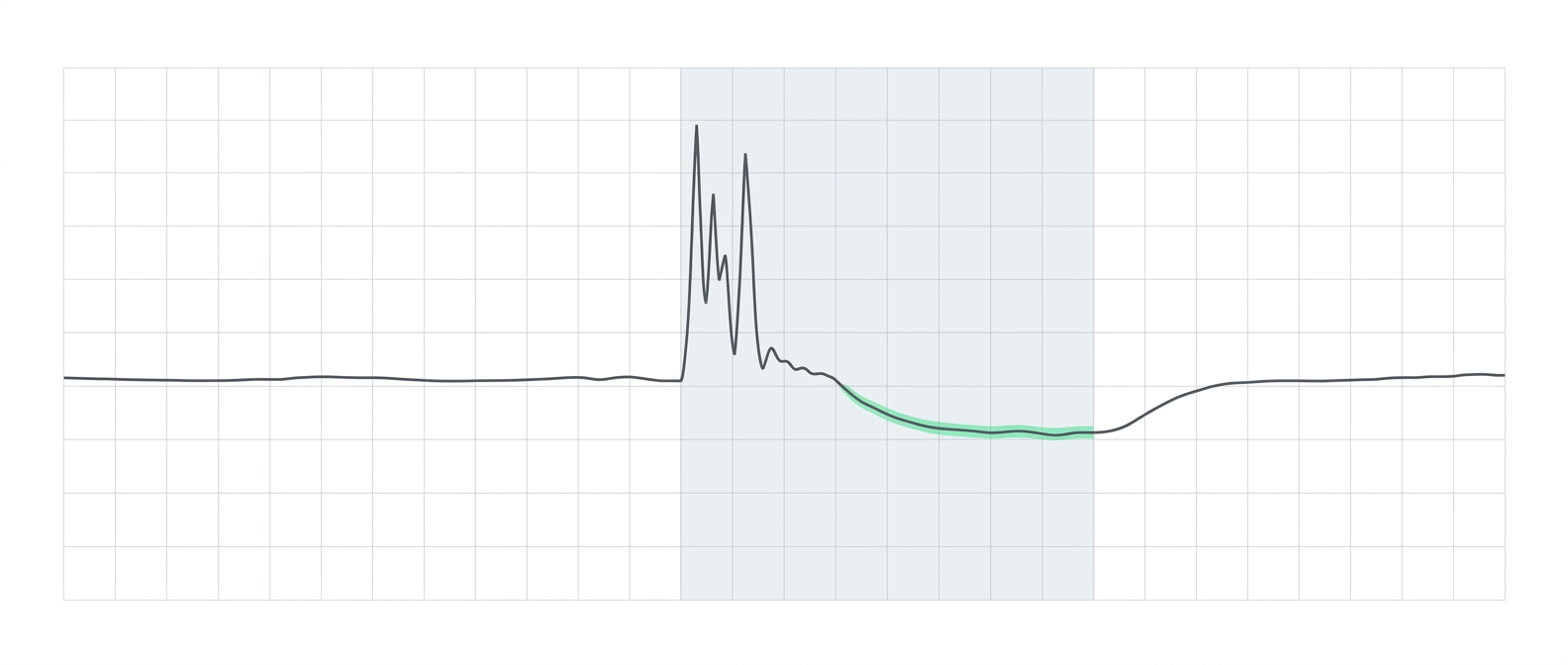
Cold exposure covers different things: cold-water immersion, cold showers, face cooling and whole-body cryotherapy. Sudden cold triggers a cold shock response that speeds breathing and heart rate; cold on the face slows the heart through the vagus. Studies suggest some benefits for stress, sickness absence and post-exercise soreness, but most are small and short. Regular plunges after strength training may blunt muscle gains. Cold water can be dangerous, especially in open water.
Key points
- Cold-water immersion, cold showers, face cooling and cryotherapy are different exposures; results from one do not transfer to the others.
- Sudden immersion triggers the cold shock response: a gasp, rapid breathing and a jump in heart rate; cold on the face slows the heart.
- Vagally mediated HRV rises during diving-response triggers but not afterwards.
- A large randomised trial found that cold showers reduced self-reported sickness absence but not illness days.
- Cold-water immersion reduces muscle soreness after exercise, but regular use after strength training may reduce gains in strength and muscle.
- The popular dopamine figures come from one study of long immersions in cold water; they do not describe a short plunge.
- The cold shock response is a leading cause of death in cold water; never swim in cold open water alone or after alcohol.
What counts as cold exposure?
"Cold exposure" covers several different things, and studies of one do not tell you much about the others:
- Cold-water immersion: sitting in a cold bath, plunge or lake, usually up to the neck. Trials have used a wide range of temperatures and durations [S1].
- Cold showers: a shorter, milder stimulus, often after a warm shower.
- Face cooling or face immersion: cold water on the face, which triggers the diving response.
- Whole-body cryotherapy: a few minutes in a chamber of extremely cold dry air.
Many studies are small, often include only men, and use different temperatures and water types, which makes clear conclusions hard [S2].
What happens in the body?
Cold shock. Sudden immersion in cold water triggers the cold shock response: a gasp, fast uncontrolled breathing and a rise in heart rate. It can cause heart-rhythm disturbances and raises the risk of drowning by making it harder to act safely [S7]. With repeated immersions, the response becomes smaller [S7].
The diving response. Cold water on the face does something different: it slows the heart through parasympathetic input from the vagus nerve [S4]. When both responses are triggered at once, for example when the head goes under cold water, the two branches of the autonomic nervous system are activated together. Researchers propose that this "autonomic conflict" explains the heart-rhythm disturbances seen during cold-water submersion [S5].
HRV. In a meta-analysis of diving-response triggers, including face immersion and whole-body immersion, vagally mediated HRV (RMSSD) rose during exposure but not afterwards [S3]. A higher reading in the cold does not mean your resting HRV has changed; see why HRV changes day to day.
What does the evidence show?
Stress, mood and sleep. Emerging. A meta-analysis of randomised trials in healthy adults found lower stress twelve hours after cold-water immersion, but not immediately or at later time points; sleep quality and quality of life improved, while mood did not [S1]. The authors note few trials and small samples [S1].
Sickness absence. Emerging. In a large randomised trial, people who ended their shower with cold water for a month reported fewer days off work sick, but did not report fewer days of illness [S8]. Outcomes were self-reported, and participants knew which group they were in.
Recovery after exercise. Context-dependent. Cold-water immersion reduced muscle soreness after exercise compared with rest, in small, low-quality trials; it was not shown to beat warm-water or contrast baths [S9]. But in a trial of men doing strength training, those who used cold-water immersion after each session for twelve weeks gained less strength and muscle than those who used active recovery [S10]. If muscle growth is the goal, routine plunges straight after strength training may work against it. For whole-body cryotherapy, the evidence on muscle soreness is of very low quality [S11].
Metabolism, brown fat and insulin. Emerging. Ten days of mild cold acclimation increased brown fat activity and heat production in a small study [S12], and a similar protocol improved insulin sensitivity in a small, uncontrolled study of people with diabetes [S13]. Both used mild cold air over many hours, not short plunges. A review of cold-water studies concludes that effects on body fat and insulin look promising but remain debated [S2].
Immunity and inflammation. Emerging; do not mix the studies. Inflammation markers rise immediately after cold-water immersion [S1]. The best-known immune study trained volunteers in meditation, breathing techniques and cold exposure together, then found a weaker inflammatory response to an injected bacterial toxin [S14]. Because the training combined all three, the effect cannot be attributed to cold alone; in that study, practising the learned techniques produced large adrenaline rises [S14]. A later pilot study from the same group separated the components: cold training alone did not meaningfully change the inflammatory response, the breathing exercise did, and adding cold training strengthened its effect [S16].
Does a cold plunge flood your brain with dopamine?
The popular dopamine and noradrenaline figures come from one laboratory study. A small group of young men sat in water up to the neck for one hour; at 14 °C, plasma noradrenaline and dopamine rose by about 530% (noradrenaline) and 250% (dopamine) [S15]. Social media often turns this into "a one-minute ice bath multiplies your dopamine for hours". The study did not test short plunges or how long the rise lasted afterwards, and it measured hormones in the blood, not dopamine in the brain. It does not show a mood or motivation effect.
Safety
This is the most important part of the page.
- Cold shock is the main danger. It can kill within the first minutes, through inhaling water, reduced blood flow to the brain from over-breathing, and heart-rhythm disturbances, before the body has had time to cool [S6]. Most cold-water drowning is not caused by hypothermia [S6].
- Heart-rhythm disturbances can occur in healthy volunteers during cold-water submersion [S5].
- Never go into cold open water alone, and never after alcohol. Alcohol and other substances change the risks of cold-water immersion [S6]. Enter slowly, keep your head out of the water at first, and get out if breathing does not settle.
- Talk to a doctor first if you have heart disease, an arrhythmia, high blood pressure, Raynaud's phenomenon or another circulation problem, or if you are pregnant.
- Stop and seek help for chest pain, palpitations, fainting, confusion or uncontrollable shivering.
Does cold exposure "train" your vagus nerve?
A common claim is that cold plunges strengthen vagal tone. What the evidence shows is narrower: vagally mediated HRV rises during diving-response triggers but returns to baseline afterwards [S3]. Vagal tone cannot be measured directly; HRV measures such as RMSSD reflect vagally mediated changes in heart rate.
What it does not tell you
- Small, short studies. Most trials are small, short and use different temperatures and durations [S1] [S2].
- No blinding. People know they are in cold water, so expectations can shape self-reported results such as stress and wellbeing.
- Cold plus something else. Studies that combine cold with breathing or meditation cannot show the effect of cold alone [S14].
- Not a treatment. None of these studies shows that cold exposure can replace medical care for depression, infection or metabolic disease.
In ONDA
ONDA does not measure cold exposure, cold shock or the diving response. ONDA shows your pulse live during a practice, from the iPhone camera or an Apple Watch. If you use cold exposure, read your HRV against your own baseline rather than as a single value.
Educational information, not a diagnosis or medical treatment.
Evidence at a glance
| Claim | Evidence | Limitation |
|---|---|---|
| Randomised trials of cold-water immersion in healthy adults used baths or showers at a range of temperatures and durations. [S1] | Established | Describes the studies, not their results. |
| Studies of voluntary cold-water immersion are hampered by small groups, often of one sex, and differing temperatures. [S2] | Established | Narrative review. |
| Immersion in cold water evokes a cold shock response with hyperventilation, arrhythmias and a raised risk of drowning. [S7] | Established | Laboratory and field data; individual responses vary. |
| The cold shock response habituates with repeated immersions. [S7] | Established | Habituation reduces but does not remove the response. |
| The diving response slows the heart through increased parasympathetic input to the cardiac pacemaker. [S4] | Established | Mechanistic review. |
| Cold shock and diving responses can be activated together, and this autonomic conflict is proposed to explain arrhythmias during cold-water submersion. [S5] | Debated | A hypothesis supported by arrhythmia data in volunteers; not proven as a cause of death in each case. |
| Across diving-response triggers, RMSSD rose during exposure but not after it. [S3] | Context-dependent | Few, heterogeneous studies; low quality of evidence. |
| In a meta-analysis, stress was lower twelve hours after cold-water immersion but not at other time points; sleep quality and quality of life improved, mood did not, and inflammation rose acutely. [S1] | Emerging | Few RCTs, small samples; effects depend on timing. |
| In a randomised trial, a routine hot-to-cold shower reduced self-reported sickness absence but not illness days. [S8] | Emerging | Self-reported outcomes; participants could not be blinded. |
| Cold-water immersion reduced delayed-onset muscle soreness compared with rest, in small low-quality trials. [S9] | Context-dependent | Low study quality; no advantage over warm or contrast immersion was shown. |
| In a trial, men who used cold-water immersion after strength training for twelve weeks gained less strength and muscle than those who used active recovery. [S10] | Emerging | Small trial in active men; strength training specifically. |
| Evidence that whole-body cryotherapy reduces muscle soreness is of very low quality. [S11] | Unknown | Few small trials. |
| A ten-day mild cold acclimation protocol increased brown fat activity and non-shivering heat production. [S12] | Emerging | Small study of mild cold air, not cold-water plunges. |
| Short-term cold acclimation increased peripheral insulin sensitivity in a small group of people with type 2 diabetes. [S13] | Emerging | Eight participants, no control group, mild cold air. |
| A review concludes that cold-water immersion seems to reduce or transform body fat and improve insulin sensitivity, but that the topic remains debated. [S2] | Debated | Narrative review of small studies. |
| In a pilot study that separated the components, cold training alone did not meaningfully change the inflammatory response, the breathing exercise did, and adding cold training strengthened the breathing effect. [S16] | Emerging | Pilot study in healthy young men; laboratory endotoxin model, not inflammatory disease. |
| In a trial combining meditation, breathing techniques and cold exposure, trained volunteers showed a weaker inflammatory response to injected endotoxin. [S14] | Emerging | Twelve per group; the effect cannot be attributed to cold alone. |
| Cold-water immersion increased inflammation markers immediately and an hour afterwards. [S1] | Emerging | Acute response; long-term meaning unclear. |
| In one laboratory study, long head-out immersion in cold water raised plasma noradrenaline and dopamine. [S15] | Emerging | Small group of young men; one-hour immersion; plasma levels, not brain dopamine. |
| The cold shock response can cause death through aspiration, reduced brain blood flow and arrhythmia before core temperature falls; alcohol modifies the risks. [S6] | Established | Narrative review of drowning physiology. |
Sources
- [S1] Cain et al. (2025). Effects of cold-water immersion on health and wellbeing: a systematic review and meta-analysis. PLoS One. DOI 10.1371/journal.pone.0317615 · PMID 39879231 · Authors declare no competing interests
- [S2] Esperland, de Weerd & Mercer (2022). Health effects of voluntary exposure to cold water — a continuing subject of debate. International Journal of Circumpolar Health. DOI 10.1080/22423982.2022.2111789 · PMID 36137565 · Authors report no conflict of interest
- [S3] Ackermann et al. (2023). The diving response and cardiac vagal activity: a systematic review and meta-analysis. Psychophysiology. DOI 10.1111/psyp.14183 · PMID 36219506
- [S4] Gooden (1994). Mechanism of the human diving response. Integrative Physiological and Behavioral Science. DOI 10.1007/BF02691277 · PMID 8018553
- [S5] Shattock & Tipton (2012). 'Autonomic conflict': a different way to die during cold water immersion?. The Journal of Physiology. DOI 10.1113/jphysiol.2012.229864 · PMID 22547634
- [S6] Leuci et al. (2026). Beyond hypothermia: mechanisms of death, rescue, and prevention in cold water immersion. Journal of Applied Physiology. DOI 10.1152/japplphysiol.00578.2026 · PMID 42532024
- [S7] Barwood et al. (2024). Habituation of the cold shock response: a systematic review and meta-analysis. Journal of Thermal Biology. DOI 10.1016/j.jtherbio.2023.103775 · PMID 38211547 · Authors declare no competing interests
- [S8] Buijze et al. (2016). The effect of cold showering on health and work: a randomized controlled trial. PLoS One. DOI 10.1371/journal.pone.0161749 · PMID 27631616 · One author was employed by a health insurer (Achmea) during the study; an erratum was published (2018)
- [S9] Bleakley et al. (2012). Cold-water immersion (cryotherapy) for preventing and treating muscle soreness after exercise. Cochrane Database of Systematic Reviews. DOI 10.1002/14651858.CD008262.pub2 · PMID 22336838
- [S10] Roberts et al. (2015). Post-exercise cold water immersion attenuates acute anabolic signalling and long-term adaptations in muscle to strength training. The Journal of Physiology. DOI 10.1113/JP270570 · PMID 26174323
- [S11] Costello et al. (2015). Whole-body cryotherapy (extreme cold air exposure) for preventing and treating muscle soreness after exercise in adults. Cochrane Database of Systematic Reviews. DOI 10.1002/14651858.CD010789.pub2 · PMID 26383887
- [S12] van der Lans et al. (2013). Cold acclimation recruits human brown fat and increases nonshivering thermogenesis. The Journal of Clinical Investigation. DOI 10.1172/JCI68993 · PMID 23867626 · Small laboratory study of mild cold air exposure
- [S13] Hanssen et al. (2015). Short-term cold acclimation improves insulin sensitivity in patients with type 2 diabetes mellitus. Nature Medicine. DOI 10.1038/nm.3891 · PMID 26147760 · Small uncontrolled study in people with type 2 diabetes
- [S14] Kox et al. (2014). Voluntary activation of the sympathetic nervous system and attenuation of the innate immune response in humans. Proceedings of the National Academy of Sciences of the USA. DOI 10.1073/pnas.1322174111 · PMID 24799686 · Small trial; the training combined meditation, breathing techniques and cold exposure; authors declare no conflict of interest
- [S15] Šrámek et al. (2000). Human physiological responses to immersion into water of different temperatures. European Journal of Applied Physiology. DOI 10.1007/s004210050065 · PMID 10751106 · Small laboratory study in young men
- [S16] Zwaag et al. (2022). The effects of cold exposure training and a breathing exercise on the inflammatory response in humans: a pilot study. Psychosomatic Medicine. DOI 10.1097/PSY.0000000000001065 · PMID 35213875 · Pilot study in healthy young men from the group behind Kox 2014
Related
- ScienceThe Vagus Nerve: What It Does, and What Is Myth
- ScienceThe Baroreflex: How Your Body Keeps Blood Pressure Steady
- ScienceThe Autonomic Nervous System: Sympathetic and Parasympathetic
- ScienceWhy HRV Changes From Day to Day
- GlossaryVagus Nerve
- GlossaryHeart Rate Variability
- ArticleCold and the Vagus Nerve: Why a Cold Shower Resets Your Nervous System
How ONDA Science pages are made: every number comes from one checked list of facts, every claim is mapped to its sources and graded by strength of evidence, and sources need a DOI or PMID (manufacturer documentation is used only for device facts).