Why HRV Changes From Day to Day
Yakiv Bilenko — editor · Updated October 5, 2026
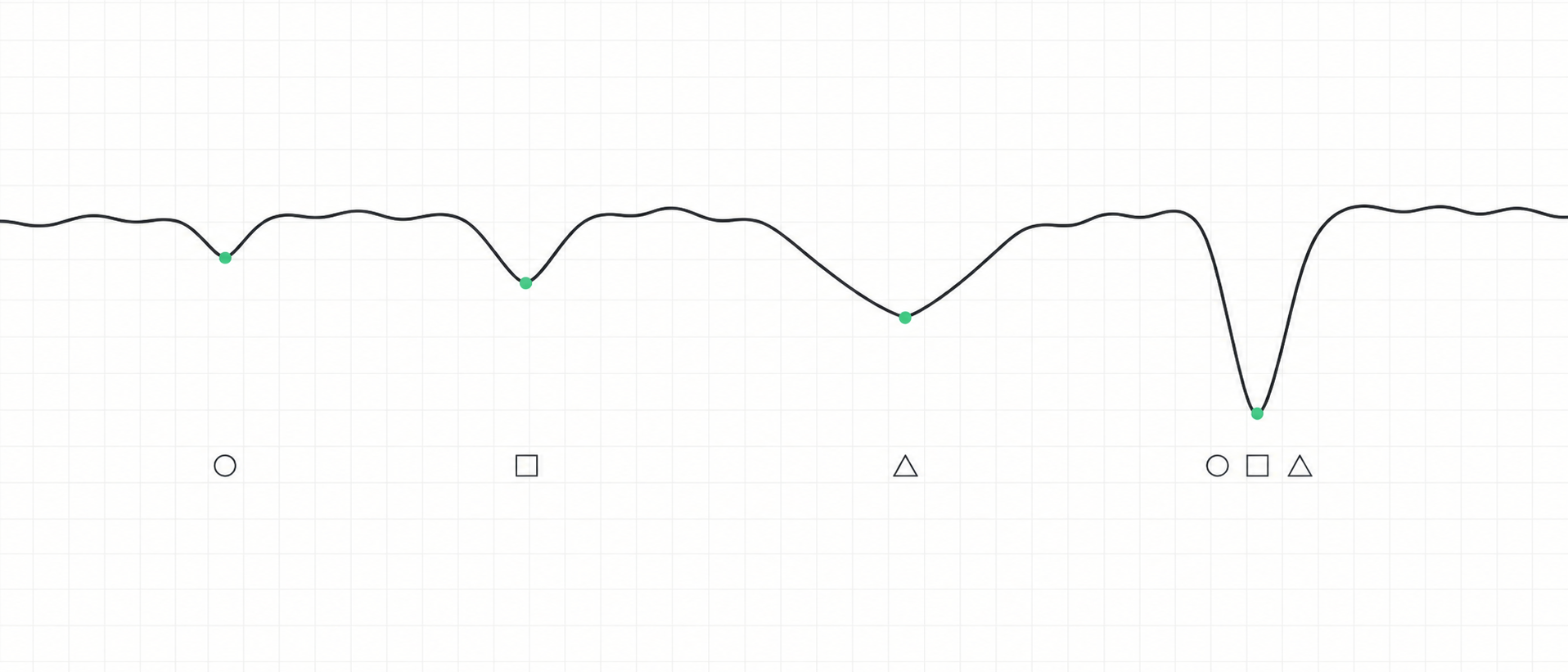
Heart rate variability changes from day to day even when nothing obvious has happened, because the body and the measurement both carry natural noise. On top of that, short or disturbed sleep, alcohol, hard training, infection, psychological stress, altitude and the menstrual cycle can lower it for hours or days. Several causes often act at once, so a single reading cannot say which one was responsible; a trend against your own baseline is more informative.
Key points
- Heart rate variability fluctuates from night to night even in healthy, well-rested people, partly from biology and partly from the measurement itself.
- Alcohol lowers night-time heart rate variability in a dose-dependent way, and even small amounts showed an effect in a large real-world study.
- A hard training session lowers heart rate variability for a day or more; regular training that improves fitness tends to raise it over weeks.
- Sleep loss, infection, acute altitude and psychological stress are each associated with lower heart rate variability.
- Evidence for caffeine and for late meals is inconsistent, so their effect is best judged in your own data.
- In naturally cycling women, heart rate variability tends to be lower in the second half of the menstrual cycle.
- Causes stack and overlap, so one low day does not identify its cause; a sustained change against your own baseline, read with context, is more informative.
Why does HRV change from day to day?
Heart rate variability (HRV) is not a fixed trait that a device reads once. It is a running result of how the heart's rhythm is being adjusted, beat by beat, by the nervous system — so it moves whenever that adjustment moves. Some of the movement has an everyday cause: a short night, a few drinks, a hard workout, a cold coming on. Some of it has no visible cause at all.
This page explains the mechanisms behind the main causes, how large the effects are where data exist and how long they last. What a single value can and cannot tell you is covered on interpreting HRV; how a personal reference is built is on HRV baseline. Practical advice for each cause lives in the linked articles.
How does it work?
Normal noise comes first. Even in healthy, well-rested people, HRV is never the same two nights running. Part of that is biology — breathing, posture, sleep stages and many small regulatory adjustments differ every night — and part is measurement error. In studies that repeat the same recording on different days, the typical day-to-day variation is about 3–13% [S1]. That figure is the spread of log-transformed RMSSD, not of the raw millisecond number a watch shows, so the raw swing looks larger; it comes from a study of elite athletes whose research group is supported by the wearable's maker (WHOOP). In a small laboratory study of fifteen young healthy men, the typical error of time-domain HRV indices across four days was about 4–17%, and higher for spectral and ratio indices [S2]. A change of that size between two nights is therefore expected, not news. Many experimental, demographic and environmental factors influence how HRV is measured and read [S5].
The variation itself carries information. In athletes, research monitoring practice tracks weekly mean HRV together with its coefficient of variation, because both describe adaptation and recovery [S4].
On top of the noise, real causes act. Most of the causes below work through the same broad route: they raise the body's demand for arousal, heat dissipation, immune activity or repair, heart rate rises, and the beat-to-beat adjustments that RMSSD and related measures reflect become smaller. Vagal tone cannot be measured directly; HRV measures such as RMSSD reflect vagally mediated changes in heart rate [S24], so a lower number describes a changed heart rhythm, not a measured "tone".
How is it measured?
Day-to-day comparisons only make sense when the recording is comparable. Night-time values from a wearable, a morning reading on waking and a daytime spot check reflect different conditions; the same holds for different devices and different metrics (SDNN and RMSSD are not interchangeable). The rules for comparable readings are on HRV baseline and measuring HRV.
Why night and day values differ. Across the twenty-four hours, heart rate and HRV follow two overlapping rhythms. A study under constant laboratory conditions found that sleep and the sequence of sleep stages shaped the daily profile more than the body clock itself [S7]; another found a clear circadian rhythm in heart rate and high-frequency HRV during wakefulness and all non-REM sleep stages, with deeper sleep shifting the heart toward greater parasympathetic modulation [S8]. Both were small laboratory studies, and how much of the daily pattern belongs to the clock and how much to sleep is debated. The practical consequence is not: a night-time value and a daytime value are different measurements, and moving bedtime or breaking up sleep moves the night-time number with it.
What affects it?
Sleep. In a meta-analysis of randomized trials, sleep deprivation significantly lowered RMSSD, while the drop in SDNN did not reach significance [S6]. The trials used laboratory deprivation, not an ordinary short night, and were heterogeneous, so the size of the effect after one late night is not known. Because the night-time HRV profile follows sleep stages [S7] [S8], shorter, broken or shifted sleep changes the night-time reading partly through the sleep itself. Duration and timing of sleep are covered practically in how much sleep you need.
Alcohol. In a large real-world study comparing each person's drinking and non-drinking days, alcohol was associated with less cardiovascular relaxation in the first hours of sleep, in a dose-dependent way and in both sexes [S9]. The larger the dose, the larger the drop in an HRV-derived recovery index [S9], and effects appeared even at low intake, and they were stronger in younger people. This is one observational study, the index is a manufacturer's own HRV-derived measure rather than RMSSD, and two co-authors worked for that manufacturer. How much a given number of drinks lowers HRV is the subject of how much alcohol lowers HRV.
Training load. A hard session lowers HRV for a while, and the recovery follows a time course. A review of aerobic exercise studies found that, after a single aerobic session, complete cardiac autonomic recovery takes up to a day after low-intensity exercise, one to two days after threshold-intensity exercise and at least two days after high-intensity exercise [S10]; recovery is faster in people with greater aerobic fitness, and strength training was not covered well enough to say the same [S10]. Over weeks, training that improved performance was associated with a small increase in resting RMSSD [S11]. The picture is not one-directional: in the same meta-analysis, resting HRV was largely unaffected by overreaching, possibly for methodological reasons [S11]. In one small randomized trial, hard sessions were scheduled only on mornings when HRV had not dropped [S12] — a single study, not a standard. Overreaching and its signs are covered in overtraining, HRV and resting heart rate.
Illness, infection and fever. Fever speeds the heart: in a small study of young men with an acute febrile infection, heart rate stayed high even during sleep [S13]. That study measured heart rate, not HRV. In a cohort of health care workers wearing an Apple Watch, the daily pattern of watch-recorded SDNN changed around a diagnosis of COVID and on the first day of symptoms [S14]. These are group-level findings from one cohort; they do not show that a watch can detect an infection in one person. The resting-heart-rate side of illness is on resting heart rate.
Psychological stress. A review of laboratory and field studies found that HRV variables changed in response to induced stress in most studies [S15]. The stressors were mostly short and acute, the methods varied widely, and the reverse inference does not hold: A single low HRV reading does not by itself mean you are stressed or unwell [S24].
Caffeine. The evidence is inconsistent. An older review found that caffeine reliably raises blood pressure for a while, that its effect on heart rate is less consistent across studies, and that regular users develop tolerance [S16]. In a randomized crossover study in healthy adults, caffeinated espresso had no specific short-term effect on vagally mediated HRV compared with decaffeinated espresso and water [S17]. In a small sleep-laboratory study, a large dose shortly before bed changed beat-to-beat heart and QT measures during REM sleep [S18]. Whether an ordinary afternoon cup shows up in your own night-time HRV is best judged against your own baseline; see caffeine, HRV and resting heart rate.
Late eating and digestion. Digestion raises the body's workload after a meal, but the data on night-time HRV are thin and mixed. In a small randomized crossover trial in young women, a larger share of the day's energy at dinner was followed by a lower high-frequency share of HRV across the night [S19]. In a small study of young men, a high-calorie meal late at night did not change a short morning HRV recording, although one of the meals disturbed sleep [S20]. Both are small single studies. The practical side is in eating late, heart rate and sleep.
The menstrual cycle. In naturally cycling women, a meta-analysis of within-person studies found that vagally mediated HRV falls from the follicular to the luteal phase — a small to moderate drop — with larger drops toward the premenstrual days in the finer-grained comparisons [S21]. The pattern is a group average; individual cycles differ. For women tracking HRV, this means part of a monthly drift can be expected. How to bring cycle-aware data to an appointment is covered in the ONDA report for your gynecologist.
Altitude and dehydration. A meta-analysis of healthy adults in their first days at high altitude found lower SDNN, RMSSD and other HRV indices than at sea level [S22]; acclimatization over longer stays is a separate question, touched on in breathing and altitude acclimatization. In a small randomized crossover study, exercising while dehydrated was associated with lower high-frequency HRV than exercising while hydrated [S23]. Heat is often named as a cause too, but this page does not cite a study for it.
Medicines. Many common medicines that act on heart rate or the nervous system also change HRV, so starting, stopping or changing a dose can shift your readings; this page does not cite a study for individual drugs, and questions about a specific medicine belong with the prescriber.
What does the evidence show?
Established. HRV varies from day to day without any visible cause, and that variation has to be expected before any single change is read [S1] [S2] [S5]. Readings depend on recording conditions and on the time of day [S5] [S7] [S8].
Context-dependent. Sleep deprivation lowers RMSSD in randomized trials [S6]. Alcohol is associated with a dose-dependent fall in overnight HRV-derived recovery [S9]. A hard aerobic session lowers HRV for a day or more, with faster recovery in fitter people [S10], and performance-improving training is associated with a small rise in resting RMSSD [S11]. HRV changes with induced psychological stress [S15], with the menstrual cycle [S21] and with acute high altitude [S22].
Emerging. Watch-recorded SDNN patterns around an infection [S14], the effect of dinner size [S19] and of dehydration during exercise [S23], and HRV-guided training [S12] each rest on single or small studies.
Debated. Caffeine: the heart-rate data are inconsistent and tolerance is reliable [S16]; one daytime trial found no specific effect on HRV [S17], and a small sleep study found changes after a large bedtime dose [S18]. How much of the daily HRV profile comes from the body clock and how much from sleep itself [S7] [S8]. Late eating, where two small studies point in different directions [S19] [S20].
Unknown. How large the effect of an ordinary short night, a single late coffee or a late dinner is for one person on a wrist device; how heat alone changes night-time HRV.
What it does not tell you
- One cause is rarely alone. Effects stack and overlap. A late evening with drinks usually also means a later bedtime, shorter sleep and sometimes a late meal; a hard training week can come with work stress and poor sleep; an infection brings fever, broken sleep and less training at once. The studies above isolate one cause at a time; real nights do not. So a single low day cannot tell you which cause was responsible.
- A single change is not a diagnosis. A single low HRV reading does not by itself mean you are stressed or unwell [S24]. A change of the size of normal day-to-day noise [S1] [S2] needs no explanation at all.
- Group effects are not your effect. Every effect size on this page is an average across people. Your own response to alcohol, a hard session or the luteal phase may be larger, smaller or absent.
- Different metrics, different answers. In the sleep-deprivation meta-analysis, RMSSD fell significantly while SDNN did not [S6]. A watch that reports SDNN may show a cause less clearly than a study that used RMSSD.
What follows for reading your own data. Watch the trend against your own baseline rather than one value, and record the context — sleep, alcohol, illness, training load, cycle phase — so that a change can be matched with what happened. A shift that lasts several days and comes with symptoms is a reason to look closer; a single dip after a late night usually is not. What a reading can and cannot say is set out on interpreting HRV.
In ONDA
ONDA reads HRV (SDNN) and resting heart rate from Apple Health. ONDA compares each night with your own corridor — the average of your recent nights plus or minus one standard deviation — and flags a night only when it is at least 1.5 standard deviations outside and has changed by a minimum amount [S25]. These comparisons are descriptive, not a diagnosis: ONDA does not say which cause lies behind a change.
Educational information, not a diagnosis or medical treatment.
Evidence at a glance
| Claim | Evidence | Limitation |
|---|---|---|
| Night-time log-transformed RMSSD varied from day to day in elite athletes, and typical day-to-day variability across measurement protocols spans a range. [S1] | Context-dependent | Eleven elite male athletes and one wearable; the range is for log-transformed RMSSD, so it understates the swing in raw milliseconds. Research support from the wearable's maker. |
| Repeated short seated recordings on different days gave a typical error for time-domain HRV indices within a range, larger for spectral and ratio indices. [S2] | Context-dependent | Fifteen young healthy men, ECG in a laboratory; wrist devices and free-living nights may vary more. |
| Tracking weekly mean HRV and its coefficient of variation gives insight into adaptation and recovery. [S4] | Context-dependent | Narrative review focused on athletes. |
| Many experimental, demographic and environmental factors influence HRV assessment and interpretation. [S5] | Guideline / expert consensus | Guideline for research settings; it does not rank everyday causes. |
| In a meta-analysis of randomized trials, sleep deprivation significantly lowered RMSSD, while the drop in SDNN was not significant. [S6] | Context-dependent | Eleven heterogeneous studies; laboratory deprivation rather than an ordinary short night; no pooled size usable here. |
| Across the twenty-four hours, heart rate and HRV are shaped mainly by sleep and sleep stages rather than by the circadian clock. [S7] | Debated | Seven subjects under constant laboratory conditions. |
| Heart rate and high-frequency HRV show a circadian rhythm during wakefulness and all non-REM sleep stages, and deeper sleep shifts toward greater parasympathetic modulation. [S8] | Context-dependent | Thirteen healthy young participants in a time-isolation protocol. |
| Alcohol intake was dose-dependently associated with reduced overnight HRV-derived recovery, with effects seen even at low intake. [S9] | Context-dependent | One large observational study, self-reported intake, first three hours of sleep; the recovery index is a proprietary HRV-derived measure, not RMSSD. |
| Alcohol disturbs cardiovascular relaxation during sleep in a dose-dependent manner in both sexes. [S9] | Context-dependent | Observational; within-person comparison of drinking and non-drinking days. |
| Full cardiac autonomic recovery after one aerobic session takes up to a day after low-intensity, one to two days after threshold-intensity and at least two days after high-intensity exercise. [S10] | Context-dependent | Pooled from aerobic-exercise studies; recovery is faster in fitter people and data on strength training are limited. |
| Cardiac autonomic recovery occurs more rapidly in people with greater aerobic fitness. [S10] | Context-dependent | Review synthesis; individual kinetics vary. |
| Training that improved performance was associated with small increases in resting RMSSD; resting HRV was largely unaffected by overreaching. [S11] | Context-dependent | Endurance-trained athletes; the authors note that resting HRV was largely unaffected by overreaching, possibly for methodological reasons. |
| In a small randomized trial, hard sessions were scheduled on days when morning HRV had not dropped. [S12] | Emerging | Single small randomized trial in healthy, moderately fit men. |
| During a febrile infection, heart rate stayed high even during sleep. [S13] | Context-dependent | One small study of young men; it reports heart rate, not HRV. |
| Changes in the daily pattern of watch-recorded SDNN were observed around a COVID-19 diagnosis and on the first symptomatic day. [S14] | Emerging | One observational cohort of health care workers; group-level differences, not individual detection. |
| In most studies, HRV variables changed in response to induced psychological stress. [S15] | Context-dependent | Review of heterogeneous, mostly acute laboratory stressors; no pooled size usable here. |
| A single low HRV reading does not by itself mean stress or illness. [S24] | Guideline / expert consensus | Interpretive caution derived from the classic standards; it does not quantify specificity. |
| Caffeine's effect on heart rate is less consistent across studies than its effect on blood pressure, and regular users develop tolerance. [S16] | Debated | An older narrative review of mostly daytime laboratory studies; it does not address HRV. |
| In a randomized crossover study, caffeinated espresso had no specific short-term effect on vagally mediated HRV in healthy people. [S17] | Debated | Daytime, short-term laboratory measurements; says nothing about sleep after a late cup. |
| In a small sleep-laboratory study, a large caffeine dose before bed changed beat-to-beat heart and QT measures during REM sleep. [S18] | Debated | Fifteen young adults, one large dose shortly before sleep; spectral measures only. |
| In a small randomized crossover trial in women, a larger dinner was followed by a lower high-frequency share of HRV across the night. [S19] | Emerging | Twenty-four young women; energy distribution, not meal timing as such. |
| In a small study of young men, a late-night high-calorie meal did not change morning HRV. [S20] | Emerging | Sixteen young men, a five-minute recording, no randomized control night. |
| In naturally cycling women, a meta-analysis found lower vagally mediated HRV in the luteal than in the follicular phase. [S21] | Context-dependent | Observational studies with heterogeneous phase definitions; group-level, individual patterns vary. |
| Acute exposure to high altitude lowered SDNN, RMSSD and other HRV indices compared with sea level. [S22] | Context-dependent | Fifteen studies of healthy adults in the first days at altitude; acclimatization later is not covered. |
| In a small randomized crossover study, exercising while dehydrated was associated with lower high-frequency HRV than exercising while hydrated. [S23] | Emerging | Twelve resistance-trained men around one exercise session; normalised spectral units. |
| Vagal tone cannot be measured directly; HRV measures such as RMSSD reflect vagally mediated changes in heart rate. [S24] | Guideline / expert consensus | Definition; it does not quantify vagal activity. |
| ONDA compares each night with the user's own baseline corridor and reads HRV (SDNN) from Apple Health. [S25] | Established | Product documentation; describes app behaviour only. |
Sources
- [S1] Bellenger et al. (2022). Evaluating the Typical Day-to-Day Variability of WHOOP-Derived Heart Rate Variability in Olympic Water Polo Athletes. Sensors. DOI 10.3390/s22186723 · PMID 36146073 · three authors belong to a research group that receives research support (funding, equipment) from the wearable's manufacturer (WHOOP); the authors state the company was not involved in the study
- [S2] Al Haddad et al. (2011). Reliability of resting and postexercise heart rate measures. International Journal of Sports Medicine. DOI 10.1055/s-0031-1275356 · PMID 21574126
- [S4] Esco, Fields, Mohammadnabi & Kliszczewicz (2026). Monitoring training adaptation and recovery status in athletes using heart rate variability via mobile devices: a narrative review. Sensors. DOI 10.3390/s26010003 · PMID 41516438
- [S5] Carter et al. (2026). Guidelines for rigor and reproducibility of heart rate variability within human cardiovascular research. Am J Physiol Heart Circ Physiol. DOI 10.1152/ajpheart.00041.2026 · PMID 42495990
- [S6] Zhang et al. (2025). Effects of sleep deprivation on heart rate variability: a systematic review and meta-analysis. Frontiers in Neurology. DOI 10.3389/fneur.2025.1556784 · PMID 40895095
- [S7] Viola et al. (2002). Sleep processes exert a predominant influence on the 24-h profile of heart rate variability. Journal of Biological Rhythms. DOI 10.1177/0748730402238236 · PMID 12465887
- [S8] Boudreau et al. (2013). Circadian variation of heart rate variability across sleep stages. Sleep. DOI 10.5665/sleep.3230 · PMID 24293767
- [S9] Pietilä et al. (2018). Acute Effect of Alcohol Intake on Cardiovascular Autonomic Regulation During the First Hours of Sleep in a Large Real-World Sample of Finnish Employees: Observational Study. JMIR Mental Health. DOI 10.2196/mental.9519 · PMID 29549064 · two co-authors employed by a heart-rate-monitoring company (Firstbeat); the recovery index is that company's proprietary HRV-derived measure
- [S10] Stanley, Peake & Buchheit (2013). Cardiac parasympathetic reactivation following exercise: implications for training prescription. Sports Medicine. DOI 10.1007/s40279-013-0083-4 · PMID 23912805
- [S11] Bellenger et al. (2016). Monitoring Athletic Training Status Through Autonomic Heart Rate Regulation: A Systematic Review and Meta-Analysis. Sports Medicine. DOI 10.1007/s40279-016-0484-2 · PMID 26888648
- [S12] Kiviniemi, Hautala, Kinnunen & Tulppo (2007). Endurance training guided individually by daily heart rate variability measurements. European Journal of Applied Physiology. DOI 10.1007/s00421-007-0552-2 · PMID 17849143
- [S13] Karjalainen & Viitasalo (1986). Fever and cardiac rhythm. Archives of Internal Medicine. · PMID 2424378
- [S14] Hirten et al. (2021). Use of Physiological Data From a Wearable Device to Identify SARS-CoV-2 Infection and Symptoms and Predict COVID-19 Diagnosis: Observational Study. Journal of Medical Internet Research. DOI 10.2196/26107 · PMID 33529156 · several authors disclose consulting fees, research funding or equity from health-technology and pharmaceutical companies (listed in the paper); none is the watch maker
- [S15] Kim et al. (2018). Stress and Heart Rate Variability: A Meta-Analysis and Review of the Literature. Psychiatry Investigation. DOI 10.30773/pi.2017.08.17 · PMID 29486547
- [S16] Green, Kirby & Suls (1996). The effects of caffeine on blood pressure and heart rate: A review. Annals of Behavioral Medicine. DOI 10.1007/BF02883398 · PMID 24203773
- [S17] Zimmermann-Viehoff et al. (2016). Short-term effects of espresso coffee on heart rate variability and blood pressure in habitual and non-habitual coffee consumers — a randomized crossover study. Nutritional Neuroscience. DOI 10.1179/1476830515Y.0000000018 · PMID 25850440
- [S18] Bonnet, Tancer, Uhde & Yeragani (2005). Effects of caffeine on heart rate and QT variability during sleep. Depression and Anxiety. DOI 10.1002/da.20127 · PMID 16184581
- [S19] Tada et al. (2018). Higher energy intake at dinner decreases parasympathetic activity during nighttime sleep in menstruating women: A randomized controlled trial. Physiology & Behavior. DOI 10.1016/j.physbeh.2018.06.010 · PMID 29894762
- [S20] Uçar, Özgöçer & Yıldız (2021). Effects of late-night eating of easily-or slowly-digestible meals on sleep, hypothalamo-pituitary-adrenal axis, and autonomic nervous system in healthy young males. Stress and Health. DOI 10.1002/smi.3025 · PMID 33426778
- [S21] Schmalenberger et al. (2019). A Systematic Review and Meta-Analysis of Within-Person Changes in Cardiac Vagal Activity across the Menstrual Cycle: Implications for Female Health and Future Studies. Journal of Clinical Medicine. DOI 10.3390/jcm8111946 · PMID 31726666
- [S22] Li, Chen, Huang & Du (2025). Effects of acute high-altitude exposure on heart rate variability: a systematic review and meta-analysis. Frontiers in Physiology. DOI 10.3389/fphys.2025.1696346 · PMID 41561154
- [S23] Hernandez et al. (2026). Dehydration reduces heart rate variability in recreationally resistance-trained men. Journal of Sports Medicine and Physical Fitness. DOI 10.23736/S0022-4707.26.17774-3 · PMID 41838387
- [S24] Task Force of the ESC and NASPE (1996). Heart rate variability: standards of measurement, physiological interpretation and clinical use. Circulation. DOI 10.1161/01.CIR.93.5.1043
- [S25] ONDA — product documentation: What ONDA measures. What ONDA measures and how it reads your signals.
Related
- ScienceHRV Baseline: Why Your Own Normal Matters More Than Any Norm
- ScienceWhat a Single HRV Value Can and Can't Tell You
- ScienceResting Heart Rate: What It Reflects and How It's Measured
- ScienceCan You Trust HRV From a Smartwatch or Ring?
- GlossaryHeart Rate Variability
- GlossaryCircadian Rhythm
- ArticleHow Much Does Alcohol Lower Your HRV? The Data by Number of Drinks
- ArticleOvertraining Has a Number: When Your Recovery Signals Turn
- ArticleHow Much Sleep Do You Need? (By Age)
- ToolHRV Calculator by Age
How ONDA Science pages are made: every number comes from one checked list of facts, every claim is mapped to its sources and graded by strength of evidence, and sources need a DOI or PMID (manufacturer documentation is used only for device facts).