Fast Breathing: What the Evidence Shows and the Real Risks
Yakiv Bilenko — editor · Updated October 7, 2026
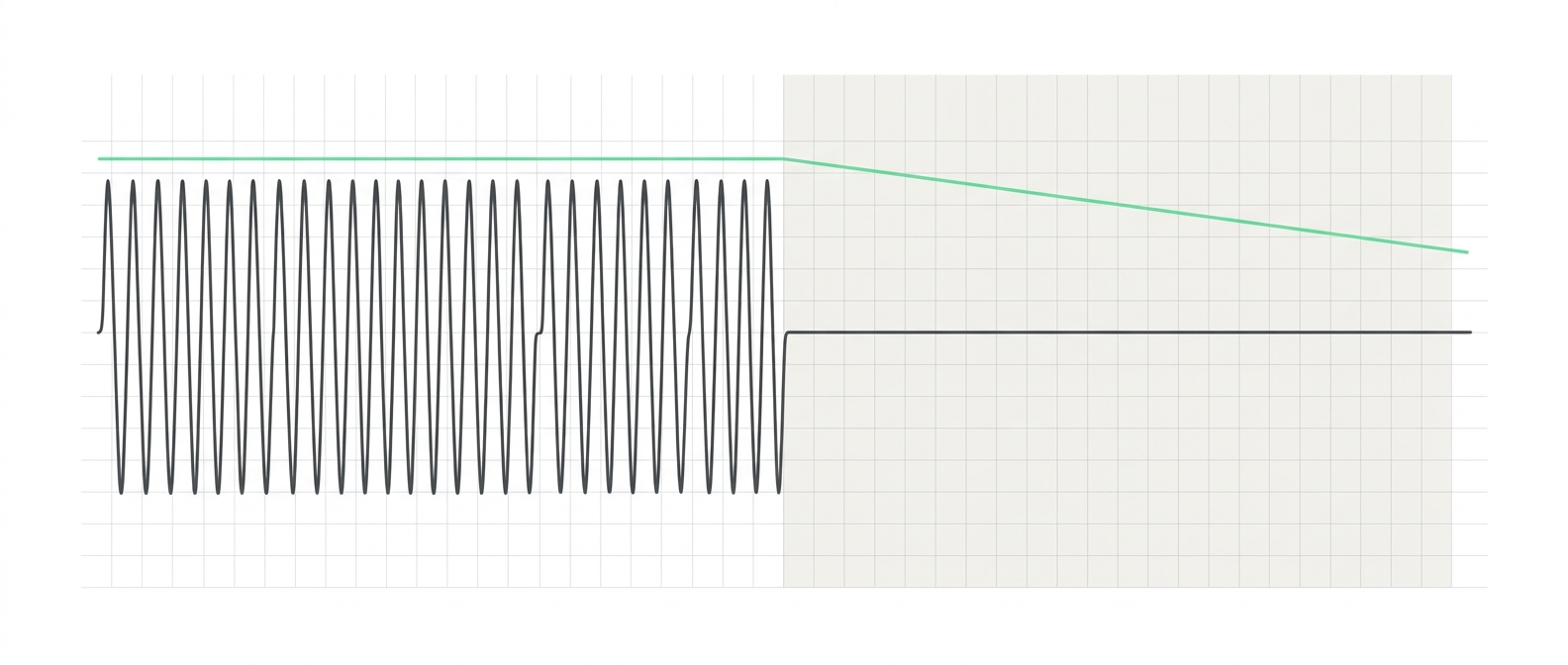
Fast breathing covers practices such as Wim Hof breathing, holotropic breathwork, tummo and cyclic hyperventilation. Breathing faster and deeper than the body needs lowers blood carbon dioxide, which narrows brain blood vessels, causes tingling and raises adrenaline. Small trials suggest effects on the laboratory inflammatory response and on mood, but not on sprint performance. It does not by itself establish any treatment effect, and combined with breath-holds it can cause blackout without warning.
Key points
- Wim Hof breathing, holotropic breathwork, tummo and bhastrika are different practices, and results from one do not transfer to the others.
- Fast, deep breathing lowers blood carbon dioxide; this narrows brain blood vessels and causes tingling, light-headedness and an adrenaline rise.
- Breath-holds feel easier after hyperventilation because the urge to breathe is delayed, not because the body has stored more oxygen.
- In laboratory studies of healthy young men, a trained breathing exercise blunted the inflammatory response to an injected bacterial toxin; this is not evidence that it treats disease.
- A single session of Wim Hof breathing did not improve repeated sprint performance in a small trial.
- Hyperventilation followed by breath-holding has caused drownings; never practise it in or near water, in the bath or while driving.
- People with epilepsy, heart disease, high blood pressure, pregnancy, panic attacks or a psychiatric condition should talk to a doctor first.
What is fast breathing?
"Fast breathing" here means breathing faster and deeper than the body needs, on purpose. Researchers group these practices as high ventilation breathwork; they are linked with marked changes in subjective experience and in nervous-system function [S5]. The practices differ, and results from one do not transfer to another:
- Wim Hof breathing: rounds of deep, fast breaths followed by a breath-hold after breathing out [S6]. The full Wim Hof Method adds cold exposure and a mindset or meditation component, and most studies test the combination [S1] [S4].
- Cyclic hyperventilation with retention: a similar pattern used in laboratory and remote trials, sometimes without the cold [S3].
- Holotropic breathwork: a prolonged session of voluntary hyperventilation, usually with music, in a group or therapy setting [S13].
- Tummo: a Tibetan practice that combines a forceful breathing technique with meditative visualisation [S14].
- Bhastrika and kapalabhati: fast pranayama techniques from yoga, studied separately; they are covered in the ONDA articles on fast versus slow pranayama and bhastrika.
What happens in the body?
Carbon dioxide falls. Breathing more than the body needs washes carbon dioxide out of the blood (hypocapnia). The blood becomes more alkaline: in runners doing Wim Hof breathing, exhaled carbon dioxide dropped to levels that indicate respiratory alkalosis [S6].
Brain blood vessels narrow. Low carbon dioxide increases the resistance of brain blood vessels and reduces brain blood flow [S10]. This is the likely source of light-headedness and the "high" some people describe.
Tingling and cramps. Tingling in the fingers and lips, and sometimes cramping of the hands, are common. They are usually attributed to a fall in ionized calcium as the blood turns alkaline, but one small study found tingling in every volunteer without a significant change in ionized calcium [S11]. The exact mechanism is debated.
Adrenaline rises. In trained volunteers, practising the techniques produced intermittent alkalosis and low oxygen, with a large rise in plasma adrenaline [S1]. This is an activating, not a calming, response.
Oxygen does not go up in any useful way; during the hold it falls. At the end of Wim Hof breath-holds, finger oxygen saturation fell to about 60% on average [S6].
Why the breath-hold feels easier. The urge to breathe is driven mainly by rising carbon dioxide. Hyperventilation lowers carbon dioxide first, so the breaking point comes later and the hold feels longer and easier; meanwhile oxygen keeps falling. That is why hyperventilation is considered a major risk factor for blackout during breath-holding [S7]. In serial breath-holds after hyperventilation, oxygen fell further with each round [S7].
What does the evidence show?
Inflammatory response in the laboratory. Emerging. In the best-known trial, twelve trained and twelve untrained healthy volunteers were given an injected bacterial toxin (endotoxin). The trained group, taught meditation, breathing techniques and cold exposure together, had a faster and higher anti-inflammatory response, lower pro-inflammatory proteins and fewer flu-like symptoms [S1]. Because the training combined all three, the effect cannot be attributed to breathing alone. A later pilot study from the same group separated the parts in 48 healthy young men: cold training alone did not meaningfully change the inflammatory response, the breathing exercise did, and adding cold strengthened the breathing effect [S2]. A systematic review of nine papers covering eight trials concluded that the method may reduce inflammation, with few and mostly small studies [S4]. All of this comes from short-lived laboratory inflammation in healthy volunteers, not from people with inflammatory or autoimmune disease. The cold side of these studies is covered on the cold exposure page.
Mood, anxiety and stress. Emerging and mixed. In a remote randomised trial, daily breathwork improved mood more than mindfulness meditation; the exhale-focused cyclic sighing arm did best, and cyclic hyperventilation with retention was one of the arms compared [S3]. In women with high depressive symptoms, a Wim Hof-based programme with cold showers and a slow-breathing programme with warm showers led to equivalent improvements in depression, anxiety and stress; all participants who dropped out were in the Wim Hof group [S15]. In another small trial, daily Wim Hof practice for about two weeks did not improve heart rate variability, blood pressure or psychological measures compared with controls [S16]. Each of these is a single study.
Sport performance. Emerging; no benefit shown. A single session of Wim Hof breathing before repeated sprints did not improve peak power, average power or fatigue in amateur runners, despite large changes in oxygen and carbon dioxide [S6]. The systematic review found mixed effects on exercise performance [S4].
Body temperature in tummo. Emerging. Expert tummo meditators raised their body temperature, but only during the forceful-breath type of practice and with meditative visualisation; non-meditators using the breathing alone produced only small rises within the normal range [S14]. This is one small study.
Altered states and holotropic breathwork. Unknown. Holotropic breathwork has been proposed as an addition to psychotherapy, but the main paper on it is a hypothesis paper that calls for better-designed research to confirm or refute any benefit [S13]. Controlled trials of its effects and safety are lacking.
Fast versus slow breathing. Fast breathing and slow breathing push the body in opposite directions: fast breathing lowers carbon dioxide and raises adrenaline [S1] [S6], while slow breathing near the resonance range is the pattern linked with higher heart rate variability. See slow breathing and how breathing changes HRV. Direct comparisons are rare. The two trials that compared them head-to-head found no advantage for the fast technique on mood or depression [S3] [S15].
Does hyperventilation fill the body with oxygen?
A common claim is that fast, deep breathing oxygenates the body. The studies show something else: what extra breathing mainly does is remove carbon dioxide, producing alkalosis [S6]. During the breath-hold that follows, oxygen saturation falls well below normal [S6], and after hyperventilation oxygen falls further before the urge to breathe arrives [S7].
Does making the blood alkaline fight disease?
Some teaching says that making the blood alkaline through breathing cures disease. The alkalosis from hyperventilation is real but temporary [S1] [S6], and it narrows brain blood vessels [S10]. No study has shown that it cures any disease.
Is the method proven to treat autoimmune disease?
The endotoxin studies are sometimes presented as proof that Wim Hof breathing treats autoimmune disease. The original authors suggested possible implications for such conditions [S1], but the studies used a short laboratory inflammation model in healthy young volunteers [S1] [S2]. The systematic review calls for studies in people with inflammatory disorders; it does not report proven benefit in them [S4].
Safety
This is the most important part of the page.
- Never in water. Never practise hyperventilation or breath-holds in a pool, the sea, a bath or a cold plunge. Healthy young swimmers have died after hyperventilating and becoming unconscious underwater [S8]. Hyperventilation delays the urge to breathe, so blackout can come without warning [S7]. Deaths in breath-hold diving mostly involve loss of consciousness from low oxygen [S9].
- Never while driving, cycling, standing or doing anything where fainting could hurt you. Practise sitting or lying down, on a safe surface.
- Epilepsy: talk to a neurologist first. Hyperventilation is used during EEG tests precisely because it can provoke seizures; in childhood absence epilepsy it provokes absence seizures with brief loss of consciousness in most patients [S12].
- Talk to a doctor first if you have heart disease, an arrhythmia, high or poorly controlled blood pressure, a history of fainting or stroke, if you are pregnant, or if you have panic attacks or a psychiatric condition. Holotropic breathwork can bring up intense emotional experiences and has not been tested for safety in controlled trials [S13].
- What to do if symptoms come. Tingling and light-headedness are signs of low carbon dioxide. If they appear, stop the fast breathing and breathe slowly and normally until they pass. If hands cramp, stop. If you faint, feel chest pain, palpitations with dizziness, severe breathlessness, or symptoms that do not settle within minutes, seek medical help. Someone who loses consciousness needs emergency care.
What it does not tell you
- Small samples. Most trials have a few dozen participants or fewer [S1] [S2] [S6] [S16].
- Motivated, self-selected participants. Volunteers who sign up to learn a famous method expect it to work; in one trial, participants were even trained by the method's creator [S2].
- No blinding. People know when they hyperventilate, so self-reported mood and symptoms are open to expectation effects.
- Mixed ingredients. Many studies combine breathing with cold exposure and meditation [S1] [S4], so the effect of breathing alone is known only from a pilot study [S2].
- Laboratory models. Endotoxin responses in healthy young men do not show what happens in disease.
- Long-term effects are unknown, both benefits and harms.
In ONDA
ONDA does not measure blood carbon dioxide, oxygen or adrenaline, and does not detect fainting or seizures. ONDA shows your pulse live during a practice, from the iPhone camera or an Apple Watch. A higher pulse during fast breathing fits the adrenaline rise seen in studies [S1]; it is not a sign of benefit. If you want to see how slow breathing affects your heart rhythm, read your readings against your own baseline rather than as single values; nightly breathing rate is covered on the respiratory rate page.
Educational information, not a diagnosis or medical treatment.
Evidence at a glance
| Claim | Evidence | Limitation |
|---|---|---|
| High ventilation breathwork covers practices that deliberately manipulate breathing and is associated with marked changes in subjective experience and in nervous-system function. [S5] | Context-dependent | Narrative review; the first author teaches breathwork. |
| Wim Hof breathing combines periods of hyperventilation with breath-holds at low lung volume. [S6] | Established | Describes the technique as used in one study; teaching varies. |
| Hypocapnia increases cerebrovascular resistance and decreases brain blood flow. [S10] | Established | Physiology review; the size of the effect during breathwork was not measured here. |
| Wim Hof breathing and plain hyperventilation lowered exhaled carbon dioxide to levels indicating respiratory alkalosis, and oxygen saturation fell during the breath-holds. [S6] | Emerging | Fifteen amateur runners; finger pulse oximetry. |
| Practising the combined techniques produced intermittent respiratory alkalosis and hypoxia with a large rise in plasma adrenaline. [S1] | Emerging | Small trial; training combined meditation, breathing and cold. |
| Finger tingling during voluntary hyperventilation is often attributed to a fall in ionized calcium, but one small study found tingling without a significant change in ionized calcium. [S11] | Debated | Ten volunteers, three minutes of hyperventilation; old study. |
| Hyperventilation is a major risk factor for hypoxic blackout during breath-holding because it delays the breaking point, and serial breath-holds after hyperventilation produced progressively deeper falls in oxygen. [S7] | Established | Laboratory study with face immersion; the risk statement reflects the field's consensus. |
| Healthy swimmers have died after becoming unconscious underwater following intentional hyperventilation before submersion. [S8] | Established | Case review from one US state; small number of cases. |
| Breath-hold diving deaths are concentrated in divers who fall victim to hypoxia, and hyperventilation is among the mechanisms of loss of consciousness. [S9] | Established | Narrative review of diving physiology. |
| Hyperventilation provokes absence seizures and spike-wave discharges in most children with absence epilepsy and is used as an activation test during EEG. [S12] | Established | Childhood absence epilepsy; risk in other epilepsies differs. |
| In a pilot study, the breathing exercise reduced the inflammatory response to injected endotoxin, cold training alone did not, and cold training enhanced the breathing effect. [S2] | Emerging | Pilot study in healthy young men; laboratory endotoxin model, not inflammatory disease. |
| In a trial of combined meditation, breathing and cold training, trained volunteers had higher anti-inflammatory and lower pro-inflammatory cytokines and fewer flu-like symptoms after endotoxin. [S1] | Emerging | Twelve per group; combined intervention; no blinding. |
| A systematic review found the Wim Hof Method may reduce inflammation and showed mixed effects on exercise performance, based on few trials. [S4] | Emerging | Nine papers, eight trials, mostly small; narrative synthesis. |
| A single Wim Hof breathing session did not improve repeated sprint performance. [S6] | Emerging | Single session; fifteen amateur runners. |
| In a remote randomised trial, daily breathwork, especially cyclic sighing, improved mood more than mindfulness meditation; cyclic hyperventilation with retention was one of the arms. [S3] | Emerging | Single trial, remote, short; an author advises a wearable company. |
| In women with high depressive symptoms, a Wim Hof-based programme and slow breathing produced equivalent reductions in depression, anxiety and stress; all dropouts were in the Wim Hof group. [S15] | Emerging | Single trial; differential attrition; Wim Hof arm also used cold showers. |
| Daily Wim Hof practice for about two weeks did not improve cardiovascular or psychological measures in a small randomised trial. [S16] | Emerging | Forty-two participants; short intervention. |
| Holotropic breathwork is a prolonged voluntary hyperventilation procedure whose therapeutic use is a hypothesis needing better research. [S13] | Unknown | Hypothesis paper, not a trial. |
| Expert tummo meditators raised body temperature only during the forceful-breath type of practice. [S14] | Emerging | Small group of expert monks; field conditions. |
Sources
- [S1] Kox et al. (2014). Voluntary activation of the sympathetic nervous system and attenuation of the innate immune response in humans. Proceedings of the National Academy of Sciences of the USA. DOI 10.1073/pnas.1322174111 · PMID 24799686 · Small trial; the training combined meditation, breathing techniques and cold exposure and was taught by the method's creator; authors declare no conflict of interest
- [S2] Zwaag et al. (2022). The effects of cold exposure training and a breathing exercise on the inflammatory response in humans: a pilot study. Psychosomatic Medicine. DOI 10.1097/PSY.0000000000001065 · PMID 35213875 · Pilot study in healthy young men from the group behind Kox 2014; some participants were trained by the method's creator
- [S3] Balban et al. (2023). Brief structured respiration practices enhance mood and reduce physiological arousal. Cell Reports Medicine. DOI 10.1016/j.xcrm.2022.100895 · PMID 36630953 · authors include an industry adviser
- [S4] Almahayni & Hammond (2024). Does the Wim Hof Method have a beneficial impact on physiological and psychological outcomes in healthy and non-healthy participants? A systematic review. PLoS One. DOI 10.1371/journal.pone.0286933 · PMID 38478473 · Authors declare no competing interests
- [S5] Fincham et al. (2023). High ventilation breathwork practices: an overview of their effects, mechanisms, and considerations for clinical applications. Neuroscience & Biobehavioral Reviews. DOI 10.1016/j.neubiorev.2023.105453 · PMID 37923236 · First author is a trained breathwork teacher with a non-profit foundation
- [S6] Citherlet et al. (2021). Acute effects of the Wim Hof breathing method on repeated sprint ability: a pilot study. Frontiers in Sports and Active Living. DOI 10.3389/fspor.2021.700757 · PMID 34514386 · Small randomised crossover pilot in amateur runners
- [S7] Pernett et al. (2023). Effects of hyperventilation on oxygenation, apnea breaking points, diving response, and spleen contraction during serial static apneas. European Journal of Applied Physiology. DOI 10.1007/s00421-023-05202-7 · PMID 37060440 · Small laboratory study; authors report no conflict of interest
- [S8] Boyd et al. (2015). Fatal and nonfatal drowning outcomes related to dangerous underwater breath-holding behaviors — New York State, 1988–2011. MMWR Morbidity and Mortality Weekly Report. · PMID 25996093 · CDC case review
- [S9] Lindholm & Lundgren (2009). The physiology and pathophysiology of human breath-hold diving. Journal of Applied Physiology. DOI 10.1152/japplphysiol.90991.2008 · PMID 18974367
- [S10] Willie et al. (2014). Integrative regulation of human brain blood flow. The Journal of Physiology. DOI 10.1113/jphysiol.2013.268953 · PMID 24396059
- [S11] Stadler et al. (1995). Electrolyte changes during and after voluntary hyperventilation. Praxis. · PMID 7701171 · Small study in ten volunteers; article in German, English abstract
- [S12] Rao & Kuperman (2024). A review of hyperventilation activation in diagnosis and management of childhood absence epilepsy. Journal of Child Neurology. DOI 10.1177/08830738241273347 · PMID 39175400 · One author is affiliated with a company (Eysz, Inc); authors declare no conflicts
- [S13] Rhinewine & Williams (2007). Holotropic Breathwork: the potential role of a prolonged, voluntary hyperventilation procedure as an adjunct to psychotherapy. Journal of Alternative and Complementary Medicine. DOI 10.1089/acm.2006.6203 · PMID 17931070 · Hypothesis paper, not a trial
- [S14] Kozhevnikov et al. (2013). Neurocognitive and somatic components of temperature increases during g-tummo meditation: legend and reality. PLoS One. DOI 10.1371/journal.pone.0058244 · PMID 23555572 · Small field and laboratory study; authors declare no competing interests
- [S15] Blades et al. (2024). A randomized controlled clinical trial of a Wim Hof Method intervention in women with high depressive symptoms. Comprehensive Psychoneuroendocrinology. DOI 10.1016/j.cpnec.2024.100272 · PMID 39606690 · Authors declare no conflicts of interest
- [S16] Ketelhut et al. (2023). The effectiveness of the Wim Hof method on cardiac autonomic function, blood pressure, arterial compliance, and different psychological parameters. Scientific Reports. DOI 10.1038/s41598-023-44902-0 · PMID 37845341 · Authors declare no competing interests
Related
- ScienceSlow Breathing: What the Evidence Shows
- ScienceCold Exposure: What the Evidence Shows and Where It Gets Risky
- ScienceHow Breathing Changes HRV — and Why Slow Breathing Raises It
- ScienceResting Respiratory Rate: What It Reflects and How It's Measured
- GlossaryCO2 Tolerance
- GlossaryHeart Rate Variability
- ArticleWim Hof Breathing and Inflammation: What the Breath and the Cold Each Do
- ArticleFast vs Slow Pranayama: Why Some Breathing Energizes and Some Calms
- ArticleBhastrika Pranayama and the Brain: How Bellows Breath Changes Anxiety
- ArticleCO₂ Tolerance and the BOLT Test: What Your Breath-Hold Time Really Tells You
How ONDA Science pages are made: every number comes from one checked list of facts, every claim is mapped to its sources and graded by strength of evidence, and sources need a DOI or PMID (manufacturer documentation is used only for device facts).