Meditation and the Autonomic Nervous System: What the Evidence Shows
Yakiv Bilenko — editor · Updated October 6, 2026
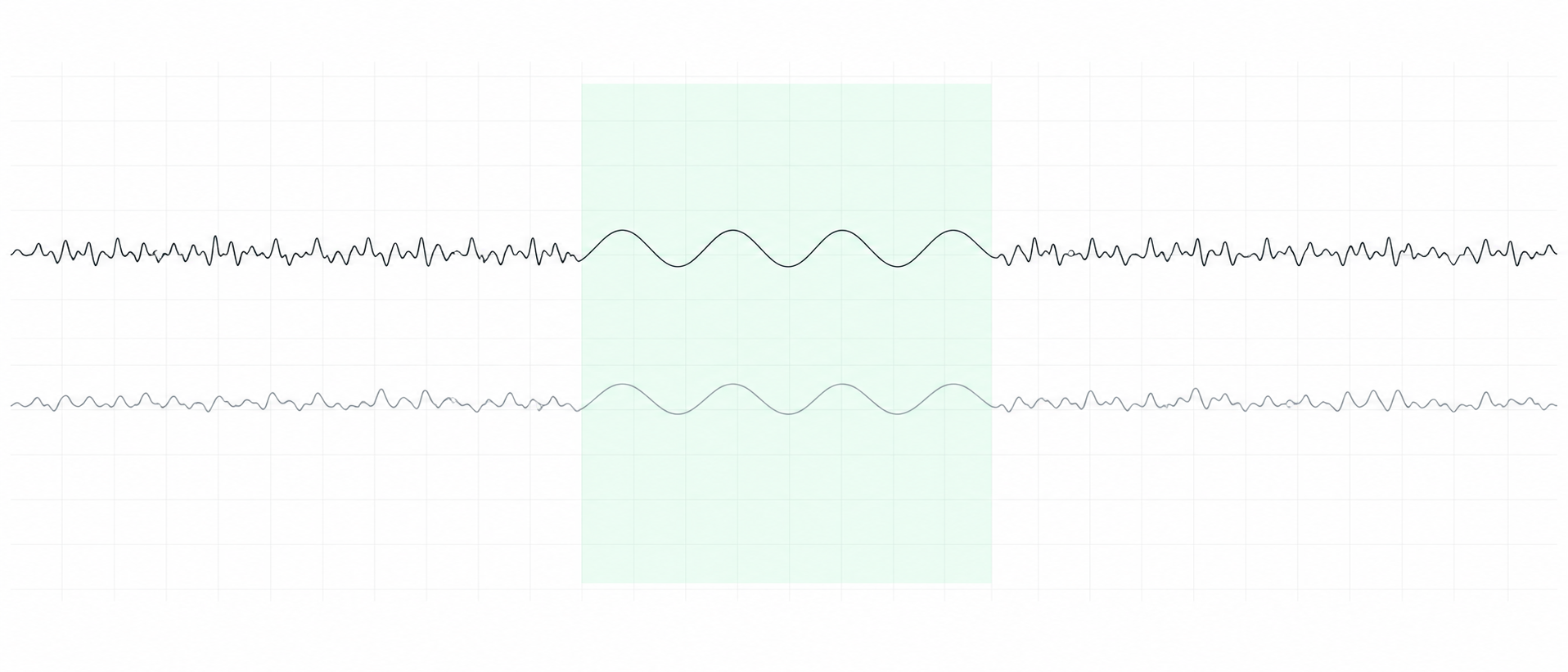
Meditation is a family of practices, not one treatment, and its effects on the autonomic nervous system differ by style. Trials with active controls show small falls in blood pressure, heart rate and cortisol, while heart rate variability findings are mixed. Many practices also slow breathing, which raises heart rate variability on its own. It does not by itself establish that meditation, rather than slower breathing or expectation, caused the change.
Key points
- Focused attention, open monitoring, loving-kindness, mantra practice and courses such as MBSR are different interventions, and their results should not be pooled into one verdict.
- Meta-analyses with active control groups show modest reductions in blood pressure, heart rate and cortisol, mostly in small and varied trials.
- Heart rate variability rises during some practices and falls or stays flat during others, so meditation does not always raise it.
- Slow breathing raises heart rate variability by itself, and few meditation studies separate the effect of attention from the effect of a slower breath.
- Differences seen in experienced meditators come from cross-sectional comparisons, so they may reflect who chooses to meditate rather than what meditation does.
- Evidence for night-time autonomic changes and sleep is thin and rests on single studies.
What is meditation, for the autonomic nervous system?
"Meditation" covers practices that ask very different things of the body. Researchers still classify them in varied and largely subjective ways [S1]. The main families studied are:
- Focused attention — holding attention on one object, such as the breath or a sound, and returning to it when the mind wanders.
- Open monitoring — noticing whatever arises, without choosing an object.
- Loving-kindness and compassion — deliberately generating warm feelings towards oneself and others.
- Mantra and Transcendental Meditation (TM) — silent or spoken repetition of a word or sound.
- MBSR and MBCT — eight-week group courses that combine body scans, sitting meditation, gentle yoga and teaching.
These are different interventions, and they should not be pooled into one conclusion. In experienced practitioners, some styles were accompanied by a relaxation response and others by clear arousal [S2]. A course like MBSR adds movement, group support and homework; a mantra recited aloud changes the breath. A verdict on "meditation" as a whole hides these differences.
What the autonomic nervous system is, and why heart rate variability is only an indirect window onto it, is covered on its own page. This page asks what meditation does to the signals that studies measure.
How does it work?
The honest answer is that the routes are not settled. Three candidates appear in the research:
- Attention and appraisal. Calmer thinking and less rumination may lower arousal. This is the route most people have in mind.
- Breathing. Many practices slow the breath, and slow breathing changes heart rhythm on its own (see below).
- Posture, stillness and setting. Sitting quietly for a while lowers heart rate compared with daily activity, whatever the mind is doing.
Brain imaging finds patterns that mostly differ between traditions [S1]; the brain side is covered in how fast meditation changes the brain and gamma waves in meditators. This page stays with the autonomic system.
How is it measured?
Studies of meditation and the autonomic system rely on a few signals:
- Heart rate variability (HRV), during a session or at rest before and after a course.
- Resting heart rate.
- Blood pressure, at the clinic or over a day and night with an ambulatory monitor.
- Cortisol and other stress markers in blood or saliva, and sometimes inflammatory markers.
- Breathing rate — measured in some studies, ignored in many.
Two time frames matter. A session effect is a change while someone is meditating. A trait effect is a lasting change after weeks of practice, or a stable difference between practitioners and non-practitioners. They answer different questions and are easy to confuse.
What affects it?
- The style of practice. Calming and arousing styles move the same signals in opposite directions [S2].
- Breathing rate during practice. Slower breathing raises HRV regardless of what the mind is doing [S10].
- The comparison condition. Wait-list controls flatter the effect; active controls such as relaxation, health education or listening to a story shrink it [S3] [S6].
- Who is studied. Effects on cortisol appeared mainly in people who were already ill or under strain [S16].
- How the signal is measured. Ambulatory and office blood pressure gave different answers in the same meta-analysis [S13].
What does the evidence show?
Heart rate variability: during a session and after a course
During a session: context-dependent. HRV often changes while people meditate, but not always in the same direction. A body scan raised the breath-linked heart rhythm more than other relaxing activities in two small studies, without changing heart rate [S6]. Mantra and prayer recited slowly enough to bring breathing near about 5.5–6 breaths per minute (around 0.1 Hz) produced large swings in heart rhythm [S8]. Some Chi and Kundalini Yoga techniques produced very large oscillations tied to slow breathing [S9].
"Meditation always raises HRV." The evidence does not support it. In one small study, overall HRV fell during deep heartfulness meditation compared with a breathing-matched control [S7], and arousing styles from the Vajrayana tradition were accompanied by arousal rather than relaxation [S2]. Meditation is not only an autonomically quiet state [S9].
After a course: unknown. A meta-analysis of standardized mindfulness-based interventions found mixed and inconclusive effects on HRV, because there were few studies and no large rigorous trials [S4]. The authors called for larger trials with active controls and longer follow-up [S4]. A single uncontrolled study before and after an intensive Vipassana retreat found changes during meditation that its own authors read as a shift in breathing and attention rather than a simple calming effect [S5].
Resting heart rate: context-dependent
A meta-analysis of 45 randomized trials with active controls found that open monitoring practices reduced heart rate, and that heart rate fell when all forms were pooled [S3]. These are small changes in mixed populations. Resting heart rate is a broad signal, and a modest fall says little about which part of the practice caused it.
Blood pressure: context-dependent
This is the outcome with the most trials, and the answer depends on the practice.
- Guideline view. The American Heart Association's statement on lowering blood pressure (Brook et al. 2013) rated Transcendental Meditation Class IIB and other meditation techniques Class III, describing modest, mixed or inconsistent evidence [S11]. It considered it reasonable for people above normal blood pressure to try such approaches as additions when clinically appropriate [S11]. Its later statement on meditation and cardiovascular risk (Levine et al. 2017) found a possible benefit from studies of modest quality, and said meditation may be considered as an adjunct to guideline-directed care, with the benefits still to be better established [S12].
- Against active controls, all meditation subtypes reduced systolic blood pressure [S3].
- TM and non-TM. A meta-analysis of randomized trials found lower office blood pressure with both. For TM, the effect on ambulatory systolic pressure was not significant, and the authors call for more ambulatory-measured TM trials [S13].
- TM overviews. An overview of reviews estimated a small reduction in both systolic and diastolic pressure with TM [S14]. Two of the reviews came from a TM-related institution, most were of fair quality, and the authors call for long-term trials by independent researchers [S14].
- A single small trial of mindfulness training in people with high-normal blood pressure or mild hypertension found lower blood pressure at the end of the course compared with health education, but the difference was no longer significant at follow-up [S15].
The practical side is in MBSR and mindfulness: the clinical evidence.
Cortisol and other stress markers: context-dependent
Against active controls, meditation reduced cortisol and C-reactive protein when all forms were pooled, and focused attention practices reduced cortisol on their own [S3]. A separate meta-analysis found a medium effect on cortisol in blood samples that appeared only in people with a somatic illness; in saliva samples the effect was small and not significant [S16]. Cortisol changes with the time of day, sleep and sampling method, so these results are harder to compare than blood pressure.
Sleep with autonomic measures: emerging
Few meditation trials measured autonomic signals and sleep together. The evidence here is one study: in one randomized trial against a wait-list, an app-based mindfulness programme improved ring-measured sleep efficiency, and heart rate fell and HRV rose during the sessions [S17]. HRV was measured during practice, not across the night, and personal burnout rose right after the programme before returning toward baseline [S17]. One study — emerging.
The main trap: breathing
Many meditation practices slow the breath, and slow breathing by itself raises vagally mediated HRV — during the breathing, right after a session and after weeks of practice [S10]. The mechanism is described in how breathing changes HRV, and the outcome evidence in slow breathing. So a rise in HRV during meditation does not show that attention, acceptance or compassion did anything beyond changing the breath.
What is known.
- Reciting a mantra or a rosary prayer at a slow pace brings breathing near the resonance rate, and the swings in heart rhythm grow large [S8].
- In a Vipassana study, the only change during meditation before the retreat was the kind expected from a change in breathing [S5].
- Large heart-rhythm oscillations in some Chi and Kundalini Yoga techniques were tied to slow breathing [S9].
What is debated. Few studies hold breathing constant. One design that does uses a paced-breathing control matched to each person's breathing rhythm during meditation; in that study, HRV fell rather than rose during deep meditation [S7]. A body scan raised the breath-linked heart rhythm more than other relaxing activities [S6], which hints at an effect beyond rest, but the abstract does not report whether breathing differed. Whether meditation changes heart rhythm through attention at all, once breathing is matched, remains open. How meditation and breathwork compare in practice is covered in meditation vs breathwork; training with real-time heart-rhythm feedback is a separate method, covered in HRV biofeedback.
Session vs long-term effects
What is shown. Changes during a session are well documented, and their direction depends on the style and on breathing [S2] [S6] [S8] [S9]. Courses with active controls show modest falls in blood pressure, heart rate and cortisol [S3].
What is not shown. Lasting changes in resting HRV after a course have not been shown consistently [S4]. Studies of experienced practitioners compare people who already meditate with people who do not [S2] [S7] [S9]. These are cross-sectional comparisons. People who keep meditating for years may differ from the start — in health, temperament, lifestyle or breathing habits — so a difference between groups does not show that meditation caused it. Pre–post studies without a control group, such as the Vipassana retreat study [S5], cannot separate practice from time, setting or expectation.
For tracking your own practice over time, see measuring meditation progress and the hub meditation with measurable progress.
What it does not tell you
- Expectations. Participants know they are meditating, so a true placebo is impossible, and hopeful expectations can lower blood pressure and heart rate on their own.
- The control group decides the answer. Many studies in this field lack an active control [S3]. A wait-list shows the effect of doing something versus nothing; an active control such as relaxation or health education shows what meditation adds [S6] [S15].
- Small samples. Most single studies here are small [S5] [S6] [S7] [S8] [S9] [S15] [S17], and the HRV meta-analysis had too few rigorous trials to conclude [S4].
- Different practices pooled. Pooled results mix styles that push the autonomic system in different directions [S1] [S2] [S3].
- Publication bias and independence. Positive small studies are more likely to be published, and part of the TM evidence comes from a TM-related institution [S14].
- A physiological change is not a health outcome. A lower reading during practice does not show fewer heart attacks or strokes; none of the sources here measured those.
- It is not a treatment on its own. Meditation does not replace medication or medical care for high blood pressure or any other condition. Nothing here means "stop your treatment".
Safety
Meditation is generally low-risk, but not risk-free: some people report anxiety, low mood or unsettling experiences, especially with intensive practice or a history of trauma or psychosis. One trial in this page saw personal burnout rise briefly after a mindfulness programme [S17]. The full picture is in meditation adverse effects and safety. Stop and seek help if practice leaves you more distressed, and talk to a clinician before intensive retreats if you have a mental-health condition.
In ONDA
ONDA shows your pulse live during a practice, from the iPhone camera or an Apple Watch. That lets you see how your pulse moves during a session; it does not measure your autonomic nervous system, and it cannot tell whether a change came from attention or from slower breathing. ONDA has no study of its own effectiveness, and the findings on this page do not show what ONDA does or does not achieve. ONDA does not diagnose or treat any condition. See what ONDA measures.
Educational information, not a diagnosis or medical treatment.
Evidence at a glance
| Claim | Evidence | Limitation |
|---|---|---|
| Meditation classification types are still varied and largely subjective. [S1] | Established | A narrative review; it describes the state of classification, not outcomes. |
| Brain-imaging patterns mostly differ across meditation traditions. [S1] | Context-dependent | Neuroimaging only; used here as a single boundary sentence. |
| In experienced practitioners, Theravada practices were accompanied by a relaxation response and Vajrayana practices by arousal, so styles can push the autonomic system in opposite directions. [S2] | Emerging | Small cross-sectional samples of experienced practitioners from each tradition; single laboratory. |
| The authors suggest classifying meditations by relaxation versus arousal rather than by focused versus distributed attention. [S2] | Debated | A proposal from one study, not an accepted taxonomy. |
| A meta-analysis of randomized trials with active controls included focused attention, open monitoring and automatic self-transcending subtypes. [S3] | Established | Describes the design; populations and controls varied. |
| Against active controls, all meditation subtypes reduced systolic blood pressure; focused attention also reduced cortisol and open monitoring also reduced heart rate. [S3] | Context-dependent | Subgroups contain fewer trials; physiological markers, not clinical events. |
| Pooled across forms, meditation reduced cortisol, C-reactive protein, blood pressure, heart rate and triglycerides compared with active controls. [S3] | Context-dependent | Pooling different practices is exactly what limits interpretation; heterogeneous populations. |
| Many studies in this field fail to include an active control group. [S3] | Established | The authors' assessment of the field. |
| A meta-analysis of standardized mindfulness-based interventions on heart rate variability and inflammatory markers found mixed and inconclusive results, attributed to few studies and a lack of large rigorous trials. [S4] | Unknown | Few studies; randomized and non-randomized trials pooled. |
| The authors call for larger trials with active controls and longer follow-up. [S4] | Established | The authors' own conclusion. |
| Before an intensive Vipassana retreat, the only heart-rate-variability change during meditation was a rise in high-frequency power consistent with a change in respiration. [S5] | Emerging | Single uncontrolled pre–post study; frequency-domain measures only. |
| After the retreat, the change during meditation was driven by a fall in low-frequency power rather than a rise in high-frequency power. [S5] | Emerging | Single study; no control group; interpretation of normalised units is contested. |
| In two small studies, the breath-linked heart rhythm rose more during a body scan than during other relaxing activities, without an effect on heart rate. [S6] | Emerging | Small samples of healthy young adults; the abstract does not report whether breathing rate differed between conditions. |
| In one study, heart-rate-variability measures fell during deep heartfulness meditation in regular practitioners, compared with a breathing-matched control. [S7] | Emerging | Single small study without randomization; interpretation of spectral indices is debated. |
| That study used a paced-breathing control matched to each person's breathing rhythm during meditation. [S7] | Established | Describes the method of one study. |
| Reciting a rosary prayer or a mantra slowed breathing to about the resonance rate and produced large increases in cardiovascular rhythms and baroreflex sensitivity. [S8] | Emerging | Small sample of healthy adults; acute laboratory effect. |
| Very large heart rate oscillations during certain Chi and Kundalini Yoga meditation techniques were associated with slow breathing. [S9] | Emerging | Small sample of practitioners; acute effect. |
| The authors say this finding challenges the idea of meditation as only an autonomically quiet state. [S9] | Emerging | Interpretation from one small study. |
| Vagally mediated heart rate variability increases during slow breathing, immediately after one session and after multi-session interventions. [S10] | Established | Heart rate variability changes, not health outcomes; heterogeneous protocols. |
| The American Heart Association statement rated Transcendental Meditation Class IIB and other meditation techniques Class III for lowering blood pressure, describing modest, mixed or inconsistent evidence. [S11] | Guideline / expert consensus | Published in 2013; newer trials are not included. |
| The same statement considered it reasonable for people above normal blood pressure to try alternative approaches as additions when clinically appropriate. [S11] | Guideline / expert consensus | Adjuvant use only; not a replacement for treatment. |
| A later American Heart Association statement on meditation and cardiovascular risk found a possible benefit with modest study quality, and said meditation may be considered as an adjunct to guideline-directed risk reduction, with benefits still to be better established. [S12] | Guideline / expert consensus | Adjunct only; the statement itself calls the evidence modest. |
| A meta-analysis of randomized trials found lower blood pressure after both TM and non-TM meditation in office readings, while for TM the ambulatory systolic effect was not significant. [S13] | Context-dependent | Few ambulatory-monitoring trials; mixed populations. |
| The authors conclude non-TM meditation may be a promising alternative approach and that more ambulatory-measured TM trials are needed. [S13] | Context-dependent | The authors' own conclusion. |
| An overview of reviews of TM estimated small reductions in systolic and diastolic blood pressure, noted reviews from a TM-related institution, fair review quality and risk of bias, and called for independent long-term trials. [S14] | Context-dependent | Fair-quality reviews; potential risk of bias in included trials; part of the evidence comes from a TM-related institution. |
| The overview calls for long-term trials by independent researchers. [S14] | Established | The authors' own conclusion. |
| In one small randomized trial in people with high-normal blood pressure or grade I hypertension, mindfulness training lowered ambulatory and clinic systolic blood pressure at the end of the course compared with health education, but the difference was no longer significant at follow-up. [S15] | Emerging | Single small trial; the effect faded by follow-up. |
| In blood samples, meditation interventions had a medium effect on cortisol compared with controls, present only in at-risk samples, while the saliva-sample effect was small and not significant. [S16] | Context-dependent | Mixed control groups; cortisol sampling methods vary widely. |
| In one randomized trial against a wait-list, an app-based mindfulness programme improved ring-measured sleep efficiency, and heart rate fell and heart rate variability rose during the sessions. [S17] | Emerging | Single trial with a wait-list control; heart rate variability measured during sessions, not across the night; sleep staging by a consumer ring. |
| In that trial, personal burnout rose right after the programme before returning toward baseline. [S17] | Emerging | Single trial; secondary outcome. |
Sources
- [S1] Brandmeyer, Delorme & Wahbeh (2019). The neuroscience of meditation: classification, phenomenology, correlates, and mechanisms. Progress in Brain Research. DOI 10.1016/bs.pbr.2018.10.020 · PMID 30732832
- [S2] Amihai & Kozhevnikov (2014). Arousal vs. relaxation: a comparison of the neurophysiological and cognitive correlates of Vajrayana and Theravada meditative practices. PLoS One. DOI 10.1371/journal.pone.0102990 · PMID 25051268
- [S3] Pascoe et al. (2017). Mindfulness mediates the physiological markers of stress: Systematic review and meta-analysis. Journal of Psychiatric Research. DOI 10.1016/j.jpsychires.2017.08.004 · PMID 28863392
- [S4] Rådmark et al. (2019). A Systematic Review and Meta-Analysis of the Impact of Mindfulness Based Interventions on Heart Rate Variability and Inflammatory Markers. Journal of Clinical Medicine. DOI 10.3390/jcm8101638 · PMID 31591316 · one author is a provider of mindfulness-based interventions (stated in PubMed)
- [S5] Krygier et al. (2013). Mindfulness meditation, well-being, and heart rate variability: a preliminary investigation into the impact of intensive Vipassana meditation. International Journal of Psychophysiology. DOI 10.1016/j.ijpsycho.2013.06.017 · PMID 23797150
- [S6] Ditto, Eclache & Goldman (2006). Short-term autonomic and cardiovascular effects of mindfulness body scan meditation. Annals of Behavioral Medicine. DOI 10.1207/s15324796abm3203_9 · PMID 17107296
- [S7] Léonard et al. (2019). Changes in Heart Rate Variability During Heartfulness Meditation: A Power Spectral Analysis Including the Residual Spectrum. Frontiers in Cardiovascular Medicine. DOI 10.3389/fcvm.2019.00062 · PMID 31139634
- [S8] Bernardi et al. (2001). Effect of rosary prayer and yoga mantras on autonomic cardiovascular rhythms: comparative study. BMJ. DOI 10.1136/bmj.323.7327.1446 · PMID 11751348
- [S9] Peng et al. (1999). Exaggerated heart rate oscillations during two meditation techniques. International Journal of Cardiology. DOI 10.1016/s0167-5273(99)00066-2 · PMID 10454297
- [S10] Laborde et al. (2022). Effects of voluntary slow breathing on heart rate and heart rate variability: a systematic review and a meta-analysis. Neuroscience & Biobehavioral Reviews. DOI 10.1016/j.neubiorev.2022.104711 · PMID 35623448
- [S11] Brook et al. (2013). Beyond medications and diet: alternative approaches to lowering blood pressure: a scientific statement from the American Heart Association. Hypertension. DOI 10.1161/HYP.0b013e318293645f · PMID 23608661
- [S12] Levine et al. (2017). Meditation and Cardiovascular Risk Reduction: A Scientific Statement From the American Heart Association. Journal of the American Heart Association. DOI 10.1161/JAHA.117.002218 · PMID 28963100
- [S13] Shi et al. (2017). Meditation and blood pressure: a meta-analysis of randomized clinical trials. Journal of Hypertension. DOI 10.1097/HJH.0000000000001217 · PMID 28033127
- [S14] Ooi, Giovino & Pak (2017). Transcendental meditation for lowering blood pressure: An overview of systematic reviews and meta-analyses. Complementary Therapies in Medicine. DOI 10.1016/j.ctim.2017.07.008 · PMID 28917372 · two of the eight reviews it covers came from a TM-related institution (stated in the abstract)
- [S15] Ponte Márquez et al. (2019). Benefits of mindfulness meditation in reducing blood pressure and stress in patients with arterial hypertension. Journal of Human Hypertension. DOI 10.1038/s41371-018-0130-6 · PMID 30425326
- [S16] Koncz, Demetrovics & Takacs (2021). Meditation interventions efficiently reduce cortisol levels of at-risk samples: a meta-analysis. Health Psychology Review. DOI 10.1080/17437199.2020.1760727 · PMID 32635830
- [S17] Kirk et al. (2026). A digital mindfulness intervention improves sleep efficiency and heart rate variability in healthy adults. Scientific Reports. DOI 10.1038/s41598-026-44902-w · PMID 41862627 · the programme was delivered through a wearable maker's app; the authors declare no competing interests
Related
- ScienceThe Autonomic Nervous System: Sympathetic and Parasympathetic
- ScienceHow Breathing Changes HRV — and Why Slow Breathing Raises It
- ScienceSlow Breathing: What the Evidence Shows
- ScienceHRV Biofeedback: What the Evidence Shows
- ScienceInteroception: How the Brain Senses the Body
- GlossaryAutonomic Nervous System
- GlossaryHeart Rate Variability
- GlossaryCortisol
- ArticleMeditation With Measurable Progress: The Complete Science-Based Guide
- ArticleHow to Measure Your Meditation Progress (Instead of Guessing)
- ArticleMBSR: The Most Studied Mindfulness Program — Does It Actually Work?
- ArticleThe Side Effects of Meditation No One Talks About
- ToolHRV Calculator by Age
How ONDA Science pages are made: every number comes from one checked list of facts, every claim is mapped to its sources and graded by strength of evidence, and sources need a DOI or PMID (manufacturer documentation is used only for device facts).