[ STATUS: ACTIVE ]
"Fascial Tensegrity Protocol: Clearing Myofascial Noise"
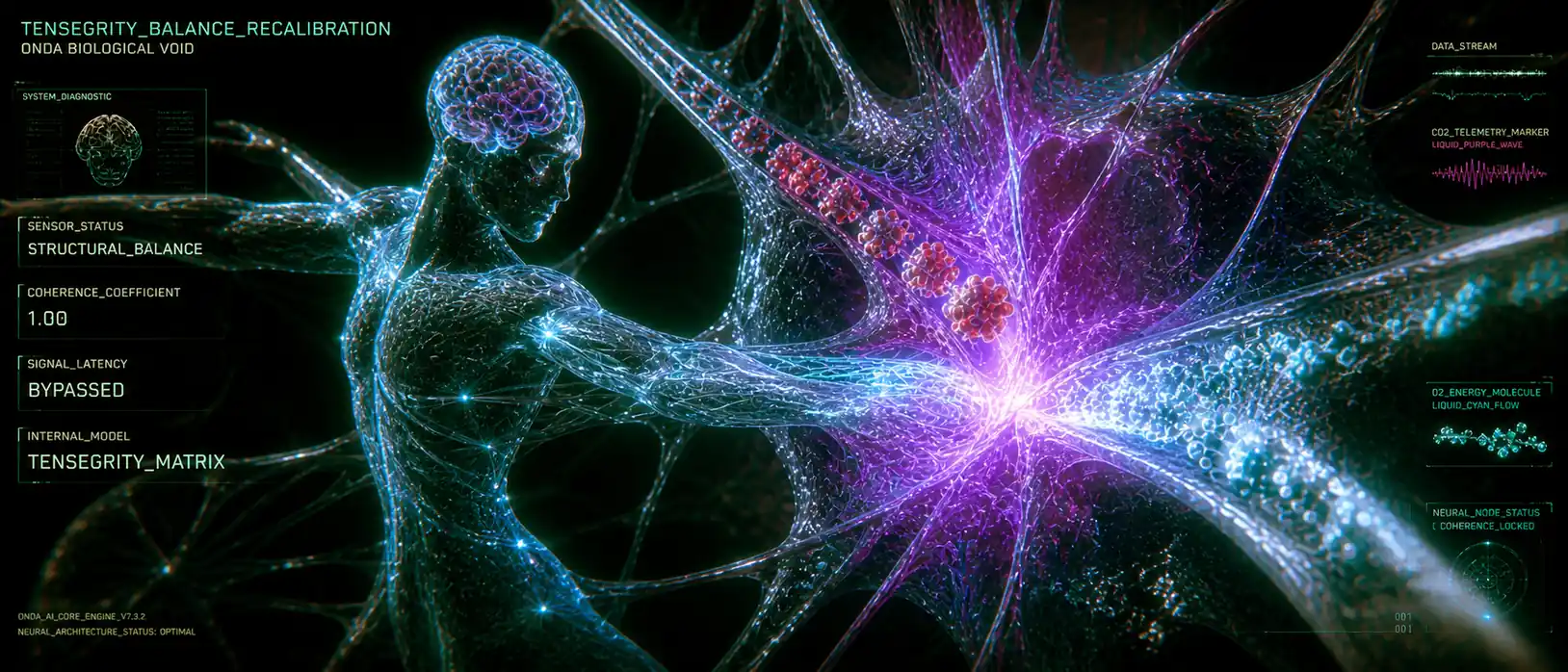
In the ONDA architecture, your physical body functions as a single, unified tensegrity matrix. When you are under stress or spend extended time in a sedentary posture, the trapezius muscles and the cervical (neck) area lock up, causing structural compression that impedes the vascular pathways.
Section 1: What goes wrong when your fascia locks up?
Three failure modes appear when the matrix locks up.
Impedance Spikes
The physical constriction limits microvascular blood flow, creating mechanical and metabolic resistance. The vascular tensegrity of the microvessels is what this constriction degrades.
Ventilation and Energy Blockade
Reduced oxygen delivery to the prefrontal cortex degrades the focal definition of the Acetylcholine Lens.
Objective
Remove the mechanical constriction, release the myofascial tension, and activate the parasympathetic nervous system to restore healthy systemic blood flow.
Section 2: The ONDA Protocol — Restoring Structural Balance
This protocol pairs localized myofascial release with vagal nerve activation to switch the system into a [ SYSTEM_COOLING: ACTIVE ] state.
[RELEASE] ---> Tissue Release (Clear Tension) ---> Slow Exhale (Calming Shift)
Step A: Tissue Release (Trapezius and Neck Decompression)
This step relieves structural compression around the major vascular pathways supplying the brain.
The Hack: Sit or stand in an upright, balanced posture. Depress the shoulders down and pull them slightly backward to lengthen the trapezius. Apply moderate, sustained pressure with your fingertips (or a massage ball/roller) on areas of high tension along the neck and upper shoulders. Hold each point for 30 to 45 seconds until the tissue tension subsides.
System Effect: Relaxes constricted muscle tissue, restoring a clear transport path for oxygen and nutrients.
Step B: Vagus Activation (Down-regulating System Noise)
This step uses a slow exhale to help lower the system Jitter. "Vagus activation" here is an image: neither tissue release nor humming has been shown to activate the vagus nerve directly. See slow breathing: the evidence.
The Hack: Inhale smoothly and deeply through the nose over 4 seconds. Exhale slowly over 8 to 10 seconds while making a low-frequency, resonant humming sound (or a long, controlled exhalation through pursed lips). Repeat for 5 full cycles.
System Effect: Slow breathing is associated with higher vagally mediated HRV; whether a longer exhale adds anything beyond slowing the breath is still debated. Slowing the breath also lowers your heart rate and releases remaining tension in the jaw and neck.
[ HARDWARE_VALIDATION ]EXAMPLE_DEVICE: HRV monitor / subjective tension scanMETRIC: rMSSD, neck/shoulder tension index, breath cadenceSTATUS: STRUCTURAL_BALANCEIllustration — not a measurement
Section 3: Impact Log — System Output
Regular execution of this protocol delivers the following results.
Impedance Reduction: Restores uninhibited blood and oxygen flow to the active neural networks.
Increased Coherence: Optimizes the performance of the Acetylcholine Lens.
Structural Cohesion: The physical body returns to functioning as a single, spring-like tensegrity network rather than a set of strained, isolated parts.
ONDA_STATEMENT: "Your body is a tensegrity matrix, not a set of strained levers. Release the physical noise, restore structural balance, and the processing signal will travel without resistance."