PEMF Therapy (Pulsed Electromagnetic Fields): What the Evidence Shows
Yakiv Bilenko — editor · Updated October 7, 2026
PEMF therapy applies weak, pulsed magnetic fields to the body through coils in a mat, pad or applicator. Medical versions are used for fractures that fail to heal and for pain and swelling after surgery, and trials suggest short-term pain relief in osteoarthritis. Settings vary widely between devices. It does not by itself establish benefits for sleep, energy or circulation from home mats, and people with implanted electronic devices should not use it without medical advice.
Key points
- Pulsed electromagnetic field therapy uses weak, time-varying magnetic fields from coils; it is far weaker than transcranial magnetic stimulation, and the two should not be confused.
- Proposed mechanisms such as adenosine receptors, calcium signalling and nitric oxide come mainly from cell and animal research, not from measurements in people using home mats.
- For fractures that fail to heal, a Cochrane review found the evidence inconclusive, while a broader meta-analysis of electrical and magnetic bone stimulators found fewer non-unions.
- Placebo-controlled trials suggest short-term pain relief in osteoarthritis and chronic low back pain, without a clear advantage over physiotherapy.
- Claims that home mats improve microcirculation, sleep or cell energy rest largely on manufacturer-linked studies; independent controlled trials are few or negative.
- In the United States, an FDA clearance covers one device and one stated use, and being registered with the FDA is not a clearance or an approval.
- People with a pacemaker, defibrillator or other implanted electronic device should not use PEMF without advice from their doctor.
What is PEMF therapy?
Pulsed electromagnetic field (PEMF) therapy applies weak magnetic fields that switch on and off, or change shape, many times a second. A current runs through coils in a mat, pad, ring or hand-held applicator, and the changing magnetic field passes through skin and clothing. At the intensities used, it does not noticeably heat tissue.
Three things share the name and should be kept apart:
- Medical PEMF and related stimulators. Prescription devices used for specific problems: bone growth stimulators for fractures that fail to heal or for spinal fusion [S15], and pulsed radiofrequency devices for pain and swelling after surgery [S16]. They have defined settings, clinical trials and regulatory paperwork for a named use.
- Consumer wellness mats and wearables. Products sold for home use, such as full-body mats (for example Bemer, Healthy Wave or OMI), small wearables and pads. Their settings differ from medical devices and from each other, and most have no trials of their own. ONDA reviews them separately in the PEMF device reviews.
- Transcranial magnetic stimulation (TMS). A clinical treatment for depression that uses much stronger, focused magnetic pulses to make nerve cells fire. It is a different technology with its own evidence. Even a transcranial PEMF helmet tested for depression produced fields orders of magnitude weaker than TMS equipment [S8]. Evidence for TMS does not transfer to PEMF, and the reverse.
How is it thought to work?
The starting point is laboratory work showing that electromagnetic fields can stimulate the formation of new bone [S1]. From there, researchers have proposed several mechanisms:
- Calcium and nitric oxide signalling. One model holds that weak nonthermal fields speed up calcium binding to a signalling protein (calmodulin), which then drives nitric oxide signalling involved in tissue repair [S12].
- Adenosine receptors. In bone cells, PEMF has been shown to activate adenosine receptors on the cell membrane, which feed into pathways that control bone formation [S13]. The same review states plainly that the mechanism of action is not completely understood [S13].
- Ion channels and microcirculation. Effects on ion movement across cell membranes and on small blood vessels are often cited in marketing. In people, the controlled data are thin (see the evidence below).
These are models, built mostly from cell, tissue and animal experiments. They explain why some biological effect is plausible. They do not show that a particular device, setting or home routine produces a benefit in people. "Cellular energy" is not a measured outcome in the human PEMF trials described here.
How is the dose described?
A PEMF "dose" has several parts, and devices report them in different ways:
- Frequency — how many pulses or pulse bursts per second. Devices range from a few pulses a second to radiofrequency carriers in the megahertz range [S16].
- Intensity — the strength of the magnetic field, usually in microtesla or gauss. It falls quickly with distance from the coil, so the value at the coil surface says little about what reaches a joint or bone.
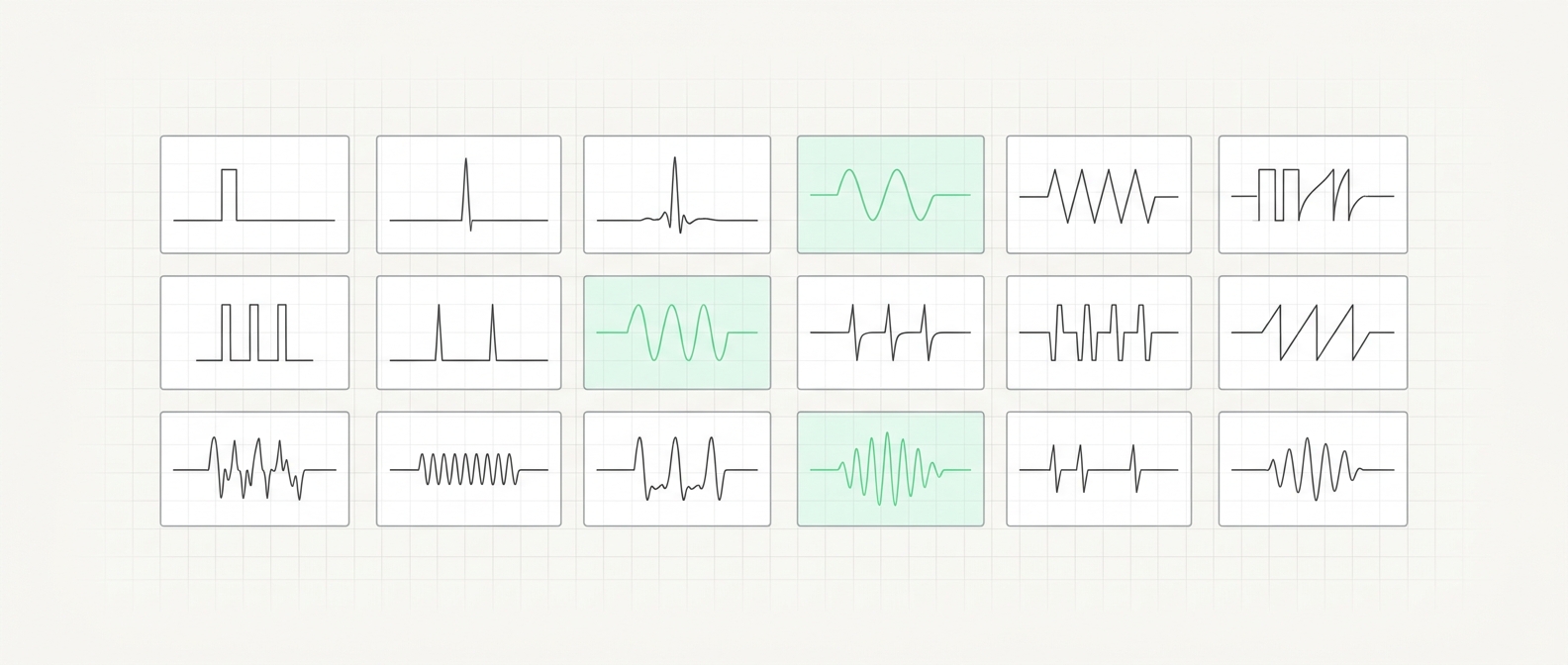
- Waveform — the shape of each pulse (square, sawtooth, sine and others) and how pulses are grouped.
- Session length and schedule — minutes per session, sessions per day, and weeks of use.
- Applicator and placement — a whole-body mat, a local pad, or a coil held over one spot.
Why trials are hard to compare. Studies of the same condition use different frequencies, intensities, waveforms and schedules. In a meta-analysis of osteoarthritis trials, device parameters did not explain the effect [S3]. That is a sign of how scattered the settings are, not proof that settings do not matter.
Why home devices rarely match trials. Medical devices are built and tested for one use, with set outputs [S15] [S16]. Consumer mats are described by the maker's own figures, often a peak value at the coil, and rarely state the field at the depth of a tissue. A home user usually cannot know whether their device resembles any device used in a trial.
What does the evidence show?
Fractures that fail to heal. Debated. A Cochrane review of four randomised placebo-controlled trials with 125 participants [S1] in delayed union and non-union of long bones found a small pooled effect that was not statistically significant. The authors called the evidence inconclusive and insufficient to inform practice [S1]. A later meta-analysis of 15 sham-controlled trials [S2] of electrical and magnetic bone stimulators found fewer radiographic non-unions and slightly less pain with stimulation, but it pooled several kinds of stimulators, not PEMF alone, and functional outcomes were rarely reported [S2]. This is hospital care with prescription devices.
Osteoarthritis and joint pain. Context-dependent. A meta-analysis of 16 randomised placebo-controlled trials [S3] in osteoarthritis found that PEMF reduced pain and stiffness and improved function compared with placebo, in the short term [S3]. A meta-analysis of knee osteoarthritis, 13 trials with 914 patients [S4], also found short-term pain relief compared with placebo, but PEMF was not superior to other conservative treatments such as physiotherapy, and the difference shrank with longer follow-up [S4]. These are clinical devices and protocols, not tests of consumer mats.
Low back pain. Context-dependent. A meta-analysis of 14 trials with 618 participants [S5] found pain relief in chronic low back pain, but no significant effect in acute low back pain and no improvement in physical function [S5].
Pain and swelling after surgery. Emerging. In the United States, pulsed radiofrequency devices for postoperative pain and edema form their own prescription device category [S16]. After breast reduction surgery, a small meta-analysis of four randomised trials [S6] associated PEMF with lower pain scores and less use of pain medicine. The evidence covers specific surgical settings and clinical devices.
Fibromyalgia. Emerging, and negative in the best trial we found. In a crossover trial in 108 women [S7] with fibromyalgia, a low-energy whole-body mat (a BEMER device) was compared with an inactive device. Pain fell in both periods, and there was no difference between active and sham treatment [S7]. This is a single study.
Depression. Emerging, small studies. Transcranial PEMF is a low-intensity helmet, distinct from TMS. In one double-blind trial in treatment-resistant depression, adding it to antidepressants gave better results than sham [S8]. A later single-arm study of 58 participants [S9] reported improvement, but it had no control group [S9]. Two small studies from one research network are not enough to recommend it, and they say nothing about consumer mats or wearables.
Microcirculation. Not shown consistently. Better small-vessel blood flow is the central marketing claim for some mats. In a controlled study of 15 healthy volunteers [S10] using a BEMER device under one leg, skin blood flow rose during sessions in both the treated and the untreated leg, with no difference between them [S10]. This is a single small study in healthy people.
Sleep, energy and general wellbeing. Unknown. The best-known data come from a manufacturer's post-market survey of 658 questionnaires [S11], which reported better sleep, pain and quality-of-life scores after device use. It had no control group, so it cannot separate any device effect from expectation or natural change [S11]. We found no consistent body of independent, sham-controlled trials of consumer PEMF devices for sleep, energy or recovery.
What remains uncertain: which settings matter, whether home devices deliver a meaningful field to deep tissue, whether short-term pain relief lasts, and whether any benefit seen with clinical devices applies to consumer mats.
Common claims, checked
"PEMF charges your cells with energy"
This phrase borrows from the mechanism models above. Cell studies show signalling changes in specific cell types [S12] [S13]. They do not show that a mat "recharges" cells or raises energy levels in people, and the human trials we found did not measure such an outcome. It is not shown.
"PEMF is a therapy for insomnia and depression"
For depression, the evidence is two small studies of a purpose-built transcranial helmet used alongside medication [S8] [S9]. That is early research, not an established therapy, and it does not apply to consumer mats. For insomnia, the main data are an uncontrolled manufacturer survey [S11]. Anyone with depression or persistent sleep problems should see a doctor; established treatments exist.
"The Earth's frequency (Schumann resonance) is missing from modern life, and PEMF restores it"
Schumann resonances are real, very weak natural electromagnetic oscillations between the Earth's surface and the ionosphere. Some consumer devices include a "Schumann" setting. We found no controlled human evidence that people lack this frequency or that adding it with a device improves sleep or health. It is not shown.
Are home devices medical devices?
Regulators judge devices by their intended use, so the same technology can sit in very different categories.
- Bone growth stimulators. In the United States, non-invasive bone growth stimulators are prescription devices that use electrical, magnetic or ultrasonic fields as an adjunct for fracture fixation and spinal fusion, or for established non-unions [S15]. They were class III devices approved via premarket approval (PMA) until May 2026; since 18 May 2026 they are class II devices with special controls, cleared through 510(k) premarket notification [S14].
- Postoperative pain and swelling. Nonthermal pulsed radiofrequency devices are prescription class II devices for adjunctive palliative use after surgery [S16].
- Consumer mats. At least one widely sold mat, the Bemer Therapy System Evo, was cleared through 510(k) K231368 [S19] under a product code for muscle-conditioning devices that are used for other than medical purposes and are not intended for people with medical conditions [S18]. A clearance like this says a device is substantially equivalent to one already legally on the market for a named use [S17]; it is not evidence that the device improves health.
Three words are often blurred in marketing: registered (the company and product are listed with the FDA; this is not a review of the device), cleared (found substantially equivalent through 510(k) premarket notification for a stated use [S17]) and approved (premarket approval after a review of safety and effectiveness, used for the highest-risk devices). "FDA registered" is not "FDA cleared", and neither is "FDA approved". Always check which use a clearance actually names before reading it as evidence for anything else.
Safety
Low-intensity PEMF devices are generally reported as low-risk when used as directed, and side effects in clinical trials were few and mild [S1] [S8]. Some cautions apply in general:
- Implanted electronic devices. People with a pacemaker, defibrillator, cochlear implant, insulin pump, nerve stimulator or other active implant should not use PEMF without advice from their doctor. US rules for medical bone stimulators require labelling with appropriate warnings for patients with implanted medical devices [S15]; follow the warnings of any device you use.
- Pregnancy. Safety in pregnancy has not been studied well enough to say. Talk to your doctor first.
- Epilepsy. Devices placed on the head have not been studied well in people with seizures. Ask a neurologist first.
- Metal implants. Ask the surgeon who placed a plate, screw or joint replacement before using a strong coil over it; consumer mats are weaker, but the manufacturer's warnings still apply.
- Skin. Do not use on broken or sensitive skin; medical stimulator labelling must warn against use on compromised skin [S15]. Heated mats add a burn risk if skin sensation is reduced.
- Do not replace care. A fracture that fails to heal, ongoing joint or back pain, depression or persistent insomnia needs a medical assessment. Do not use a home device instead of it.
What it does not tell you
- Different settings. Frequency, intensity, waveform and schedule vary widely between studies, so a result from one protocol does not transfer to another, or to a home device [S3] [S4].
- Clinical devices versus consumer mats. The positive pain results come from clinical devices and set protocols [S3] [S4] [S5] [S6]; most consumer products have no trials of their own.
- Small samples. Many trials are small, and the Cochrane review on non-union rested on four randomised placebo-controlled trials with 125 participants [S1].
- Hard to blind. Some devices produce heat, sound or a tingle, and people may guess whether a device is active. In the fibromyalgia trial, pain fell during sham treatment as well [S7], which shows how strong expectation and time effects are.
- Short follow-up. Most pain trials measured short-term effects only [S3] [S4].
- Mechanism is not outcome. Cell findings on adenosine receptors or nitric oxide [S12] [S13] do not show a benefit in people.
Conflicts of interest
- The most cited microcirculation and wellbeing data for one consumer mat come from the manufacturer's own post-market monitoring [S11]. Independent controlled studies of the same device in fibromyalgia and in healthy volunteers found no difference from sham or control [S7] [S10].
- A mechanism review of PEMF in bone healing was co-written by employees of a PEMF bone-stimulator maker [S13].
- The senior author of the bone-stimulator meta-analysis reports honoraria and research grants from orthopaedic companies, including a bone-stimulator maker [S2].
- Many consumer PEMF claims ("published studies", "FDA class II") come from manufacturers' marketing. A count of studies says nothing about whether they were controlled, independent or positive.
In ONDA
ONDA does not include a PEMF feature and does not measure magnetic fields, blood flow, bone healing or pain. ONDA reads heart data such as pulse and, with an Apple Watch or a device that syncs to Apple Health, heart rate variability; it does not assess the effect of a PEMF device and does not diagnose. ONDA reviews of PEMF mats and wearables are listed in the PEMF device reviews; they score devices on specifications and evidence, which is not clinical proof for any use.
Educational information, not a diagnosis or medical treatment.
Evidence at a glance
| Claim | Evidence | Limitation |
|---|---|---|
| Laboratory studies show that electromagnetic fields can stimulate new bone formation, which is the rationale for using them on fractures that fail to heal. [S1] | Emerging | Laboratory evidence cited as background in the review; not a clinical outcome. |
| Calmodulin-dependent nitric oxide signalling is proposed as the way cells respond to weak nonthermal electromagnetic signals. [S12] | Emerging | Narrative review drawing on cell, animal and pilot clinical work. |
| PEMF has been shown to activate membrane adenosine receptors in bone cells, but the mechanism of action is not completely understood. [S13] | Emerging | Mainly cell studies of osteoblasts; review co-written by employees of a PEMF device maker. |
| In a Cochrane review of randomised placebo-controlled trials in delayed union and non-union, the pooled effect on union was not statistically significant and the evidence was inconclusive. [S1] | Debated | Few small trials, mostly tibial non-union; review searches ended in 2010. |
| A meta-analysis of sham-controlled trials of electrical and magnetic bone stimulators found fewer radiographic non-unions with stimulation. [S2] | Context-dependent | Pools several stimulation types, not only PEMF; functional outcome data limited; senior author has industry ties. |
| In osteoarthritis, placebo-controlled trials showed a benefit of PEMF on pain, stiffness and physical function, limited to the short term, and device parameters did not explain the effect. [S3] | Context-dependent | Short-term effects only; clinical devices and protocols vary widely. |
| Device parameters did not influence symptoms in the osteoarthritis meta-analysis. [S3] | Emerging | A pooled comparison across heterogeneous trials; does not show that any setting is irrelevant. |
| In knee osteoarthritis, PEMF relieved symptoms at short term compared with placebo but was not superior to other conservative therapies such as physiotherapy, and differences shrank with longer follow-up. [S4] | Context-dependent | Mixed control groups; heterogeneous devices; self-reported pain. |
| In low back pain, PEMF reduced pain in chronic low back pain but did not improve physical function. [S5] | Context-dependent | No significant effect in acute low back pain; small trials. |
| After breast reduction surgery, a small meta-analysis associated PEMF with lower pain scores and less analgesic use. [S6] | Emerging | Four trials after one type of surgery, with clinical devices. |
| In women with fibromyalgia, a BEMER device was no better than an inactive device; pain fell similarly in both periods. [S7] | Emerging | Single trial, one device, women only. |
| In treatment-resistant depression, transcranial low-intensity PEMF added to antidepressants was superior to sham in one double-blind trial. [S8] | Emerging | Single small trial with a purpose-built helmet, as an add-on to medication. |
| The transcranial PEMF helmet generated an electrical field in tissue orders of magnitude weaker than rTMS equipment. [S8] | Established | Describes the device in one trial; field strengths of other devices differ. |
| A single-arm multicentre study of transcranial PEMF as an add-on in treatment-resistant depression reported symptom improvement, without a control group. [S9] | Emerging | No control group; improvement may reflect time, expectation or regression to the mean. |
| In healthy volunteers, skin blood flow rose during sessions on both the BEMER-treated leg and the control leg, with no difference between them. [S10] | Emerging | Small study, healthy people, skin microcirculation on the thigh only. |
| A manufacturer post-market questionnaire survey reported better sleep, pain and quality-of-life scores after device use, without any control group. [S11] | Unknown | Uncontrolled self-report from users of one device; cannot separate device effects from expectation or natural change. |
| Non-invasive bone growth stimulators were approved via premarket approval (PMA) as class III devices until May 2026; since 18 May 2026 they are class II devices cleared via 510(k) premarket notification. [S14] | Established | United States only; the final order took effect on 18 May 2026, and other countries differ. |
| A non-invasive bone growth stimulator is a prescription device that uses electrical, magnetic or ultrasonic fields as an adjunct for fracture fixation and spinal fusion or for established non-unions. [S15] | Established | Regulatory definition; says nothing about how well any device performs. |
| The labelling of non-invasive bone growth stimulators must include appropriate warnings for patients with implanted medical devices. [S15] | Established | Applies to this medical device class; consumer wellness mats are not covered by this rule. |
| Nonthermal shortwave therapy is a prescription class II device that applies pulsed radiofrequency electromagnetic energy for adjunctive palliative use in postoperative pain and edema of soft tissue. [S16] | Established | Regulatory category; describes intended use, not proof of effect. |
| A 510(k) clearance is an FDA order finding a device substantially equivalent to one already legally on the market. [S17] | Established | Describes the regulatory route only. |
| The FDA product code NGX covers powered muscle stimulators for muscle conditioning used for other than medical purposes, not intended for patients with medical conditions. [S18] | Established | Product-code definition; the specific cleared indication of each device is in its own 510(k) summary. |
| The Bemer Therapy System Evo was found substantially equivalent through a 510(k) under product code NGX. [S19] | Established | Database entry; the exact indications for use are in the 510(k) summary, which we did not quote here. |
Sources
- [S1] Griffin et al. (2011), Cochrane. Electromagnetic field stimulation for treating delayed union or non-union of long bone fractures in adults. Cochrane Database of Systematic Reviews. DOI 10.1002/14651858.CD008471.pub2 · PMID 21491410 · Cochrane review; conflicts of interest: none known
- [S2] Aleem et al. (2016). Efficacy of Electrical Stimulators for Bone Healing: A Meta-Analysis of Randomized Sham-Controlled Trials. Scientific Reports. DOI 10.1038/srep31724 · PMID 27539550 · Pools electrical and magnetic stimulators, not PEMF alone; the senior author reports honoraria and research grants from orthopaedic companies including a bone-stimulator maker (Bioventus)
- [S3] Yang et al. (2020). Effects of Pulsed Electromagnetic Field Therapy on Pain, Stiffness, Physical Function, and Quality of Life in Patients With Osteoarthritis: A Systematic Review and Meta-Analysis of Randomized Placebo-Controlled Trials. Physical Therapy. DOI 10.1093/ptj/pzaa054 · PMID 32251502 · Short-term outcomes only, as the authors state
- [S4] Viganò et al. (2021). Pain and Functional Scores in Patients Affected by Knee OA after Treatment with Pulsed Electromagnetic and Magnetic Fields: A Meta-Analysis. Cartilage. DOI 10.1177/1947603520931168 · PMID 32508140 · Online 2020, journal volume 2021; authors declare no conflicts
- [S5] Sun et al. (2022). Efficacy of pulsed electromagnetic field on pain and physical function in patients with low back pain: A systematic review and meta-analysis. Clinical Rehabilitation. DOI 10.1177/02692155221074052 · PMID 35077249
- [S6] Zhang et al. (2020). Analgesic effect of pulsed electromagnetic fields for mammaplasty: A meta-analysis of randomized controlled studies. Medicine (Baltimore). DOI 10.1097/MD.0000000000021449 · PMID 32871867 · Small meta-analysis of four trials after one type of surgery; authors declare no conflicts
- [S7] Multanen et al. (2018). Pulsed electromagnetic field therapy in the treatment of pain and other symptoms in fibromyalgia: A randomized controlled study. Bioelectromagnetics. DOI 10.1002/bem.22127 · PMID 29709070 · Independent hospital trial of a BEMER device against an inactive device (crossover)
- [S8] Martiny et al. (2010). Transcranial low voltage pulsed electromagnetic fields in patients with treatment-resistant depression. Biological Psychiatry. DOI 10.1016/j.biopsych.2010.02.017 · PMID 20385376 · Single sham-controlled trial with a purpose-built helmet; funding and device ties not stated in the abstract
- [S9] Larsen et al. (2020). Transcranial pulsed electromagnetic fields for treatment-resistant depression: A multicenter 8-week single-arm cohort study. European Psychiatry. DOI 10.1192/j.eurpsy.2020.3 · PMID 32093804 · Single-arm study with no control group
- [S10] Biermann et al. (2020). The influence of pulsed electromagnetic field therapy (PEMFT) on cutaneous blood flow in healthy volunteers. Clinical Hemorheology and Microcirculation. DOI 10.3233/CH-209224 · PMID 33216020 · Small controlled study in healthy volunteers using a BEMER device, with the other leg as control
- [S11] Bohn et al. (2013). The effects of the physical BEMER vascular therapy … on sleep, pain and quality of life of patients with different clinical pictures on the basis of three scientifically validated scales. Journal of Complementary and Integrative Medicine. DOI 10.1515/jcim-2013-0037 · PMID 23940071 · Uncontrolled questionnaire survey from the post-market monitoring of the device; no control group
- [S12] Pilla (2013). Nonthermal electromagnetic fields: from first messenger to therapeutic applications. Electromagnetic Biology and Medicine. DOI 10.3109/15368378.2013.776335 · PMID 23675615 · Narrative review; no conflict-of-interest statement in the PubMed record
- [S13] Kaadan et al. (2024). Augmentation of Deficient Bone Healing by Pulsed Electromagnetic Fields — From Mechanisms to Clinical Outcomes. Bioengineering (Basel). DOI 10.3390/bioengineering11121223 · PMID 39768041 · Two of four authors are employed by Igea, a maker of PEMF bone-stimulation devices
- [S14] US Food and Drug Administration, Federal Register 91 FR 20352 (2026). Physical Medicine Devices; Reclassification of Non-Invasive Bone Growth Stimulators. · official documentation · Final order, document 2026-07366, docket FDA-2020-N-1053; published 16 April 2026, effective 18 May 2026
- [S15] Code of Federal Regulations, 21 CFR 890.5870. Non-invasive bone growth stimulator. · official documentation
- [S16] Code of Federal Regulations, 21 CFR 890.5290. Shortwave diathermy (including nonthermal shortwave therapy). · official documentation
- [S17] US Food and Drug Administration. Premarket Notification 510(k). · official documentation
- [S18] US Food and Drug Administration, product classification NGX. Stimulator, muscle, powered, for muscle conditioning. · official documentation
- [S19] US Food and Drug Administration, 510(k) K231368. Bemer Therapy System Evo. · official documentation
Related
How ONDA Science pages are made: every number comes from one checked list of facts, every claim is mapped to its sources and graded by strength of evidence, and sources need a DOI or PMID (manufacturer documentation is used only for device facts).