I Maneuver
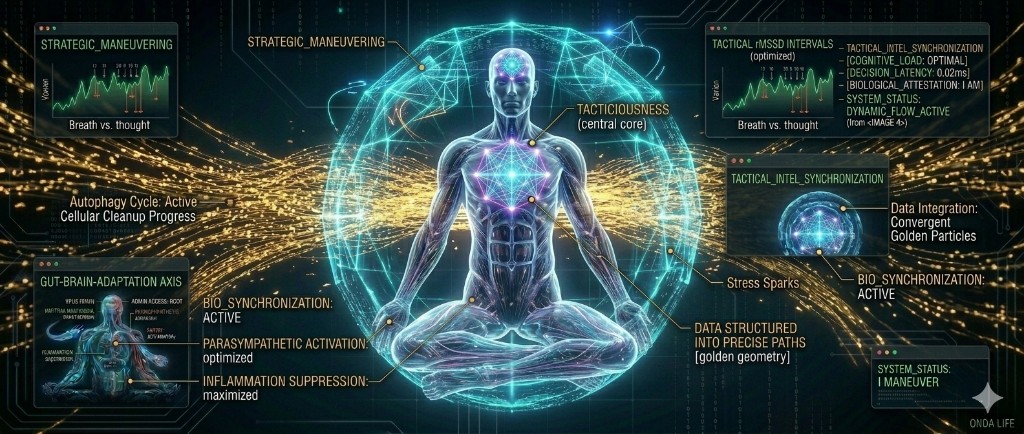
Protocol: The Maneuverability of the “Small Mammal”
Welcome to the stage where biological flexibility transforms into applied mastery. If the previous stages were about learning to simply “be,” here we learn to be in motion.
At the core of Part 4 lies the evolutionary gift of small mammals: the ability for instantaneous evasion, subtle navigation, and micro-avoidance of threats without falling into paralyzing stress. We translate maneuverability from a matter of “luck” into a measurable biological skill.
Biological Protocol
Our practices are based on the four pillars of modern science:
Polyvagal Theory
In the terms of Polyvagal Theory (a debated model): training the nervous system to “drift” smoothly between the Ventral Vagus (the state of social engagement and safety) and the Sympathetic system (energy for action). Utilizing sympathetic tone for a maneuver without collapsing into panic or rage.
Neurobiology and Neuroception
Inspired by polyvagal ideas (a debated model): we practise attention to the felt sense of safety and to changes around us, which the model calls neuroception. It is a practice image, not a claim that a specific brain circuit is being trained.
Neuroendocrinology
Working with the felt experience of stress. We practise meeting pressure with steady, precise focus instead of being carried away by it.
Lymphology
Using muscle tone as a natural pump to clear the body of stress metabolic byproducts, ensuring physical freshness even under high-load conditions.
Target Systems
Instead of rigid reflexes, we develop sensorimotor emotional reactivity.
- •Vestibular Apparatus: Precise orientation within chaos.
- •Proprioception: A sense of trajectory and the boundaries of one’s “safety bubble.”
- •Diffuse Perception: 360° “pole attention,” allowing one to see the world as a flow of opportunities rather than obstacles.
Results & Benefits
The outcome of completing Part 4 is high cognitive selectivity. You gain the ability to:
- •Reduce impulsivity, replacing it with conscious speed.
- •Execute smooth and rapid transitions in both life and work.
- •Utilize micro-movements and breathing for real-time self-soothing.
Emotional navigation at this stage is not a cognitive calculation but a sensory process. You don’t think about how to evade—you feel the trajectory and flow through it.