Cortisol and the Stress Response: What It Does and What Is Myth
Yakiv Bilenko — editor · Updated October 7, 2026
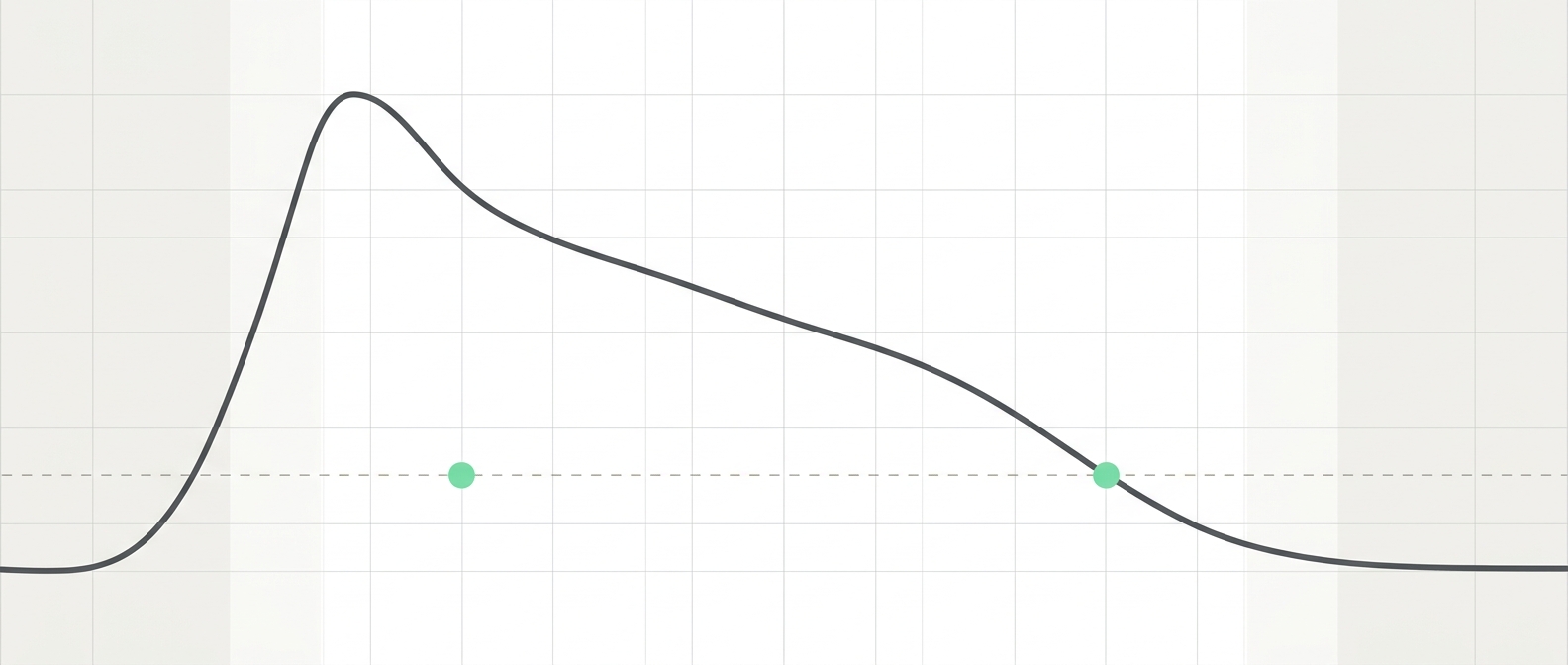
The body answers stress with two systems: a fast nervous response that releases adrenaline and noradrenaline within seconds, and a slower hormonal one, the HPA axis, that releases cortisol. Cortisol is an essential hormone, not just a stress hormone: it mobilises energy, shapes immunity and follows a daily rhythm, rising after waking and falling by evening. A single reading means little without the time of day. Watches and rings do not measure it.
Key points
- Stress is handled by a fast system (sympathetic nerves, adrenaline and noradrenaline) and a slower one (the HPA axis, cortisol).
- Cortisol is essential for life; both too much and too little cause disease.
- Cortisol rises sharply after waking and falls towards evening, so a single value means little without the time of day.
- Blood, saliva, urine and hair each capture a different time window; none of them is measured by a watch or ring.
- Sleep loss and hard exercise raise cortisol; evidence that meditation or breathing lowers it is mixed and context-dependent.
- Cushing's syndrome and adrenal insufficiency are real diseases diagnosed with specific tests; adrenal fatigue is not a recognised condition.
- Claims that an exercise lowers cortisol by a set percentage usually lack a study behind them.
What is the stress response?
When the body faces a threat or challenge, two systems answer.
- The fast system. The sympathetic branch of the autonomic nervous system releases noradrenaline and, from the adrenal glands, adrenaline. Heart rate, breathing and blood pressure change within seconds.
- The slow system. The brain's stress centres release corticotropin-releasing hormone, which leads the pituitary and then the adrenal glands to release cortisol. This chain is called the HPA axis (hypothalamus, pituitary, adrenal). Its effects build over minutes to hours.
Together they form a stress system that reaches metabolism, immunity, sleep, mood and reproduction [S1].
What does cortisol do?
Cortisol is often called "the stress hormone", but it is an essential hormone that the body needs every day. It helps release energy from stores, shapes the immune response and helps set daily rhythms. Both too much and too little activity of the stress system lead to disease [S1]: without cortisol, the body cannot cope with illness or injury.
Its daily rhythm
Cortisol follows a strong daily rhythm. It rises sharply in the half hour or so after waking, a pattern called the cortisol awakening response, and measuring it reliably depends on taking samples at exact times after waking [S2]. Levels fall through the day and reach a quiet period in the evening and early night [S3].
This is why a single cortisol value means little on its own. A high morning reading can be normal, and the same reading in the late evening could be a sign worth checking. Sleep matters too: in a laboratory study, losing sleep raised cortisol the following evening and delayed its evening drop [S3].
How is cortisol measured?
- Blood: a snapshot at one moment; used in clinical testing.
- Saliva: reflects free cortisol and can be collected at home at set times, for example to study the awakening response or in late-night testing [S2] [S5].
- Urine: collected over a full day, it gives a daily total; used in clinical testing [S5].
- Hair: reflects cortisol over months and is mostly a research method [S4].
Each method answers a different question, and none of them is done by a watch, ring or phone. Wearables measure heart signals such as heart rate variability, not hormones.
What changes cortisol?
- Sleep loss raises evening cortisol [S3].
- Exercise raises cortisol at moderate to high intensity, but not at low intensity, in a small study [S8].
- Acute stress activates the HPA axis as part of the normal response [S1].
- Time of day matters more than most single influences [S2].
Practices. Context-dependent and mixed. Meta-analyses of meditation report lower cortisol in some analyses [S10], but one found the effect only in people with an illness, and a small, non-significant effect in saliva samples [S9]; see meditation and the nervous system. In a small randomised trial, weeks of diaphragmatic breathing training lowered salivary cortisol [S11]; see slow breathing. Cold water immersion did not raise cortisol in a small laboratory study [S12]; see cold exposure.
Cortisol in medicine
Real cortisol disorders exist and are diagnosed with specific tests:
- Cushing's syndrome (too much cortisol) is tested with urine cortisol, late-night saliva cortisol or a dexamethasone suppression test, confirmed with a second test and an endocrinologist [S5].
- Adrenal insufficiency (too little cortisol) is tested in people with suggestive symptoms, using a corticotropin stimulation test [S6]. It can be life-threatening.
See a doctor if you have unexplained weight gain with easy bruising or new high blood pressure, or persistent exhaustion with weight loss, dizziness on standing, nausea or salt craving. For questions to bring, see an ONDA report for your endocrinologist.
Is "adrenal fatigue" real?
"Adrenal fatigue" is often described as adrenals worn out by chronic stress. A systematic review found no substantiation that it is an actual medical condition [S7], and endocrinology societies do not recognise it. Exhaustion is real and worth investigating, but tests and supplements sold for "adrenal fatigue" can delay finding the actual cause, including true adrenal insufficiency [S6].
Can a practice or supplement "lower cortisol by X%" or "detox" it?
Claims that a breathing exercise, food or supplement lowers cortisol by a specific percentage rarely come with a study, and the research on practices shows mixed, context-dependent effects [S9] [S10]. Cortisol is not a toxin to be removed: it is a hormone the body needs every day [S1]. A real excess of cortisol is a medical condition diagnosed with specific tests, not something a "cortisol detox" fixes [S5].
Can your watch or HRV show your cortisol?
No wearable measures cortisol. Watches and rings estimate heart signals such as heart rate and HRV, which can shift with stress and sleep, but they are not a cortisol reading. A single low HRV reading does not by itself mean you are stressed or unwell. Cortisol is measured in blood, saliva, urine or hair [S4] [S5].
What it does not tell you
- A single cortisol number says little without the time it was taken [S2].
- A practice that lowers cortisol in one study may not do so for you, or in saliva rather than blood [S9].
- Feeling stressed is not the same as an abnormal cortisol level.
In ONDA
ONDA does not measure cortisol. ONDA shows your pulse live during a practice, from the iPhone camera or an Apple Watch. Changes in your HRV or resting heart rate can reflect sleep, stress, illness or training, but they are not a cortisol reading; see why HRV changes day to day.
Educational information, not a diagnosis or medical treatment.
Evidence at a glance
| Claim | Evidence | Limitation |
|---|---|---|
| The stress response is carried by a stress system with central hormones such as corticotropin-releasing hormone and brainstem noradrenaline centres, acting on metabolism, immunity, sleep and other systems. [S1] | Established | Review; describes the system in general terms. |
| Both too much and too little stress-system activity can lead to disease. [S1] | Established | Review. |
| Cortisol rises markedly in the first 30 to 45 minutes after waking (the cortisol awakening response), and measuring it depends on exact timing. [S2] | Guideline / expert consensus | Methods consensus for research. |
| Sleep loss raised evening cortisol and delayed its evening quiet period in a laboratory study. [S3] | Emerging | Small study in young men; acute sleep loss. |
| Blood, saliva and urine reflect shorter periods; hair cortisol is thought to reflect cortisol secretion over months. [S4] | Context-dependent | Mostly a research method; not a routine clinical test. |
| Cushing's syndrome is diagnosed with specific tests such as urine cortisol, late-night salivary cortisol or dexamethasone suppression, confirmed by a second test and an endocrinologist. [S5] | Guideline / expert consensus | Clinical guideline; testing is for people with suggestive features. |
| Primary adrenal insufficiency should be tested for in patients with suggestive symptoms, using a corticotropin test as the reference. [S6] | Guideline / expert consensus | Clinical guideline. |
| A systematic review found no substantiation that adrenal fatigue is an actual medical condition. [S7] | Established | Systematic review of heterogeneous studies. |
| Moderate- to high-intensity exercise raised circulating cortisol, while low-intensity exercise did not. [S8] | Emerging | Twelve trained men; a single 30-minute session. |
| Meditation interventions had a medium effect on blood cortisol only in at-risk (ill) samples, and a small, non-significant effect on saliva cortisol. [S9] | Context-dependent | Mixed controls; sampling methods vary. |
| Pooled across forms, meditation reduced cortisol and other stress markers compared with active controls. [S10] | Context-dependent | Heterogeneous trials; effect sizes vary by form and control. |
| In a small randomised trial, a course of diaphragmatic breathing training lowered salivary cortisol compared with a control group. [S11] | Emerging | Forty participants; intensive multi-week training. |
| In one laboratory study, water immersion at several temperatures, including cold water, did not raise cortisol. [S12] | Emerging | Small group of young men; one-hour immersions. |
Sources
- [S1] Chrousos (2009). Stress and disorders of the stress system. Nature Reviews Endocrinology. DOI 10.1038/nrendo.2009.106 · PMID 19488073
- [S2] Stalder et al. (2016). Assessment of the cortisol awakening response: expert consensus guidelines. Psychoneuroendocrinology. DOI 10.1016/j.psyneuen.2015.10.010 · PMID 26563991
- [S3] Leproult et al. (1997). Sleep loss results in an elevation of cortisol levels the next evening. Sleep. · PMID 9415946 · Laboratory study in young men
- [S4] Stalder & Kirschbaum (2012). Analysis of cortisol in hair — state of the art and future directions. Brain, Behavior, and Immunity. DOI 10.1016/j.bbi.2012.02.002 · PMID 22366690
- [S5] Nieman et al. (2008). The diagnosis of Cushing's syndrome: an Endocrine Society clinical practice guideline. The Journal of Clinical Endocrinology & Metabolism. DOI 10.1210/jc.2008-0125 · PMID 18334580 · Task force received no corporate funding
- [S6] Bornstein et al. (2016). Diagnosis and treatment of primary adrenal insufficiency: an Endocrine Society clinical practice guideline. The Journal of Clinical Endocrinology & Metabolism. DOI 10.1210/jc.2015-1710 · PMID 26760044 · Task force received no corporate funding
- [S7] Cadegiani & Kater (2016). Adrenal fatigue does not exist: a systematic review. BMC Endocrine Disorders. DOI 10.1186/s12902-016-0128-4 · PMID 27557747 · An erratum was published (2016)
- [S8] Hill et al. (2008). Exercise and circulating cortisol levels: the intensity threshold effect. Journal of Endocrinological Investigation. DOI 10.1007/BF03345606 · PMID 18787373 · Small laboratory study in trained men
- [S9] Koncz, Demetrovics & Takacs (2021). Meditation interventions efficiently reduce cortisol levels of at-risk samples: a meta-analysis. Health Psychology Review. DOI 10.1080/17437199.2020.1760727 · PMID 32635830
- [S10] Pascoe et al. (2017). Mindfulness mediates the physiological markers of stress: systematic review and meta-analysis. Journal of Psychiatric Research. DOI 10.1016/j.jpsychires.2017.08.004 · PMID 28863392
- [S11] Ma et al. (2017). The effect of diaphragmatic breathing on attention, negative affect and stress in healthy adults. Frontiers in Psychology. DOI 10.3389/fpsyg.2017.00874 · PMID 28626434 · Small trial with biofeedback-assisted training
- [S12] Šrámek et al. (2000). Human physiological responses to immersion into water of different temperatures. European Journal of Applied Physiology. DOI 10.1007/s004210050065 · PMID 10751106 · Small laboratory study in young men
Related
- ScienceThe Autonomic Nervous System: Sympathetic and Parasympathetic
- ScienceWhy HRV Changes From Day to Day
- ScienceWhat a Single HRV Value Can and Can't Tell You
- ScienceMeditation and the Autonomic Nervous System: What the Evidence Shows
- ScienceSlow Breathing: What the Evidence Shows
- ScienceCold Exposure: What the Evidence Shows and Where It Gets Risky
- ArticleYour Heart Rate and Your Hormones: What an Endocrinologist Can Do With Your Data (Thyroid, Diabetes)
How ONDA Science pages are made: every number comes from one checked list of facts, every claim is mapped to its sources and graded by strength of evidence, and sources need a DOI or PMID (manufacturer documentation is used only for device facts).