Doctors and Your Data
Your watch records weeks of resting heart rate, HRV, breathing and sleep that no doctor normally sees. These guides show who can use that history for what — your GP, a cardiologist, a sleep specialist, a therapist or psychiatrist, a sports doctor — how to put it on one page, and where watch data stops: it points to a question, it is never a diagnosis.
Start here

Doctors and Your Data: Which Specialist Can Use Your Heart, HRV and Sleep Trends
Your watch records months of heart rate, HRV, breathing and sleep. This guide shows which of 11 doctors can use that data for which problem — from GP and cardiologist to sleep, hormone and lung specialists — and how to bring it.
Read the guide →All Doctors and Your Data guides (13)

Your Breathing in Numbers: What a Lung Specialist Can Do With Your Data (Asthma, Breathlessness, Breathing Patterns)
Your watch tracks how fast you breathe at night — a quiet signal that often changes before you feel ill. Here's how a pulmonologist can use your breathing and heart-rate history, and why breathing retraining is one of the few breathing practices in official guidelines.

Showing Your Night Data to a Sleep Specialist: What It Can and Can't Tell Them
Your watch records every night — heart rate, HRV, breathing and sleep timing. Here's what a sleep specialist can take from that history, which tests they may use next, and why obsessing over sleep scores can backfire.

Showing Your Heart Data to a Cardiologist: What They Can (and Can't) Do With It
A cardiologist reads your heart-rate trends differently from a GP. Here's what a heart specialist can take from a resting heart rate, HRV and breathing report, what tests they may use next, and where watch data stops.
Your Heart Rate and Your Hormones: What an Endocrinologist Can Do With Your Data (Thyroid, Diabetes)
Hormones set the pace of your heart. A thyroid problem can push resting heart rate up or down, and diabetes can quietly lower HRV. Here's how an endocrinologist can use your heart-rate history — and where blood tests take over.

Showing Your Heart Data to Your GP: What a Family Doctor Can Do With It
Your family doctor is usually the first person to see your watch data. Here's how a GP can read a heart-rate and HRV report, what help they can offer, and how to make the appointment count.
Your Cycle in Your Heart Rate: What a Gynecologist Can Do With Your Data (Cycle, Pregnancy, Menopause)
Resting heart rate and HRV shift across the menstrual cycle, through pregnancy and in the years around menopause. Here's how a gynecologist can use that history, what it can't tell them, and how to share it on your terms.

Heart Rate Data and the Nervous System: What a Neurologist Can Do With It (POTS, Dysautonomia, Long COVID)
When your heart races on standing, you tire after small efforts, or recovery never comes after an illness, the autonomic nervous system may be involved. Here's how a neurologist can use your heart-rate and HRV history — and why the clinic's own test breathes at 6 breaths a minute.

Your Work Week in Your Heart Rate: What an Occupational Health Doctor Can Do With Your Data (Shift Work, Burnout)
Your body keeps a record of your job. Night shifts, long hours and chronic work stress leave a signature in resting heart rate, HRV and sleep. Here's how an occupational health doctor can use it — and what to know about confidentiality.

Recovery Isn't a Straight Line: What a Rehabilitation Doctor or Physiotherapist Can Do With Your Data
After illness, surgery or a heart event, recovery comes in steps, setbacks and plateaus. Here's how a rehabilitation team can use your resting heart rate, HRV and breathing history to pace your comeback — and why the day after an effort tells more than the day of.

Showing Your Recovery Data to a Sports Doctor: Training, Overtraining and Coming Back Safely
Resting heart rate and HRV trends show how your body handles training. Here's how a sports medicine doctor can use them — to spot overreaching, find hidden causes of poor recovery, and guide a safe return after illness.

Bringing Your Body Data to Therapy: How a Therapist or Psychiatrist Can Use It
Stress and emotion leave traces in your heart rate, HRV, breathing and sleep. Here's how a psychotherapist or psychiatrist can use that history — to spot triggers, build body awareness, track progress and watch medication effects.
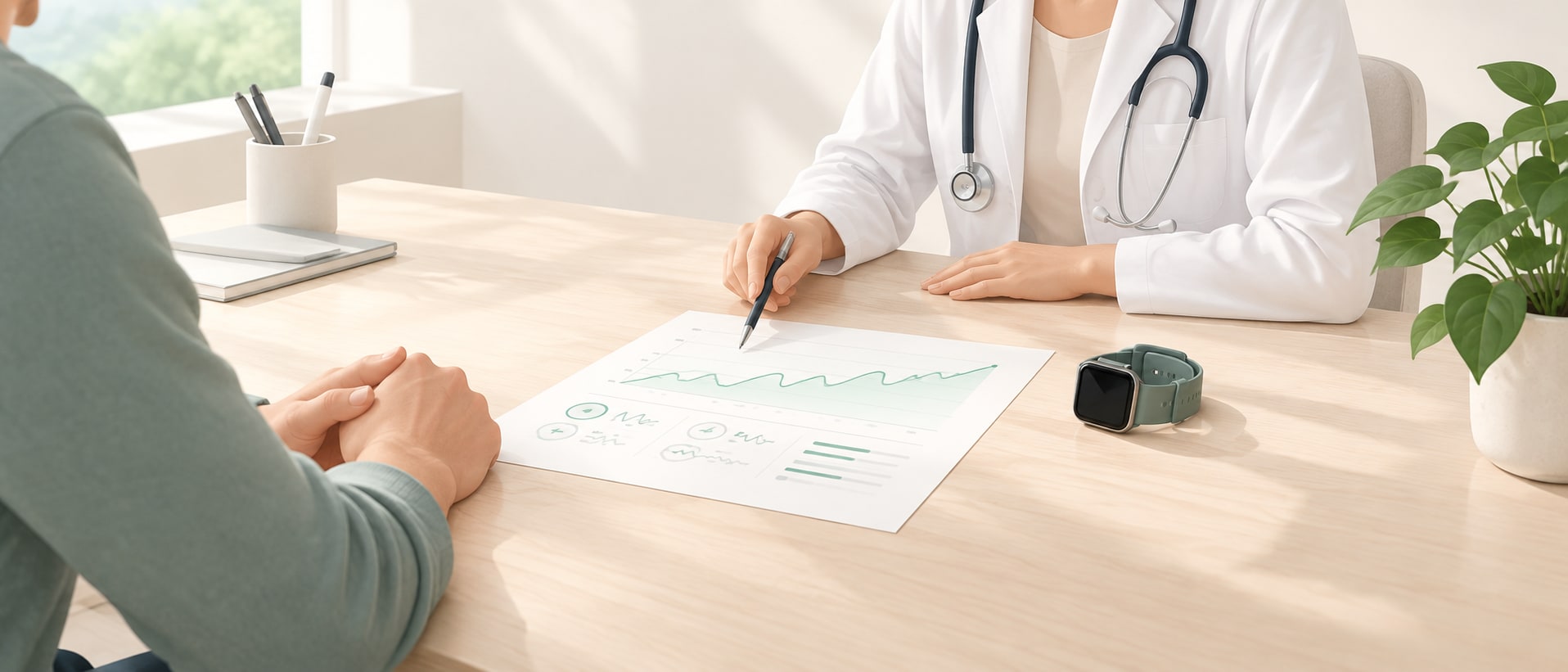
How to Talk to Your Doctor About Your Watch Data (Without Being Dismissed)
Your watch collects months of heart rate, HRV and sleep data your doctor never sees. Here's what clinicians actually find useful, how to prepare a one-page summary, and the questions worth asking.
The science behind this topic
Common questions about Doctors and Your Data
Should I show my doctor my smartwatch data?
Yes, if something has changed or you have symptoms — but bring a summary, not your phone. Doctors find trends, context and dates useful: a resting heart rate that rose for weeks, shorter sleep, a dated alert. A single HRV reading or a brand's readiness score means little to them. Watch data is context, never a diagnosis.
How do I prepare wearable data for a doctor's appointment?
Spend about twenty minutes turning it into one page: your baseline over a calm period, what changed and when, two or three dated trend charts covering four to eight weeks, context such as illness, medication or alcohol, your symptoms, and your written questions. One page gets read; forty screenshots don't.
Which doctor should I see about my heart rate or HRV data?
In most healthcare systems, start with your GP: they see your whole history, rule out everyday causes like infection, medication, sleep or alcohol, and refer you on only if needed. A cardiologist comes next for palpitations or a pulse raised for weeks; a sleep specialist for unrefreshing sleep or snoring; a sports doctor for stalled recovery.
Can a smartwatch detect heart rhythm problems?
A heart-rate trend cannot: pulse is not rhythm, and only an ECG-type recording shows the rhythm itself. Some watches have a separately cleared ECG app or irregular rhythm notification — if one fired, bring the date and time. A cardiologist may then use an ECG, a Holter monitor or an event monitor to capture an episode.
Can my watch tell if I have sleep apnea?
No. Nightly breathing rate and heart rate can add weight to the question, especially if you snore or wake unrefreshed, but they don't detect sleep apnea. That takes a home sleep apnea test or an overnight sleep study, which measure breathing, oxygen and sleep stages directly. Some watches have a separately cleared apnea notification — bring any alert with its date.
When should I stop checking my watch and see a doctor?
Immediately, without checking any app, if you have chest pain, fainting or severe breathlessness. Book a normal appointment if a change lasts for weeks rather than days — for example a resting pulse up by about 10 beats — or comes with symptoms like unusual tiredness or palpitations. Never change or stop medication based on watch data.
How to Talk to Your Doctor About Your Watch Data →Doctors and Your Data →