HRV & Heart Rate
Heart rate variability and resting heart rate are two of the most useful signals your body gives you — if you read them correctly. These guides explain what's normal for your age, why your personal baseline matters more than any average, how to measure consistently across devices, what a low reading really means, and which habits raise HRV over time.
Start here
Normal HRV by Age: What’s a Good Heart Rate Variability?
There’s no single good HRV number — it depends on age and your own baseline. Typical HRV ranges by age, why HRV drops as you get older, and why your trend matters more than any average.
Read the guide →All HRV & Heart Rate guides (20)
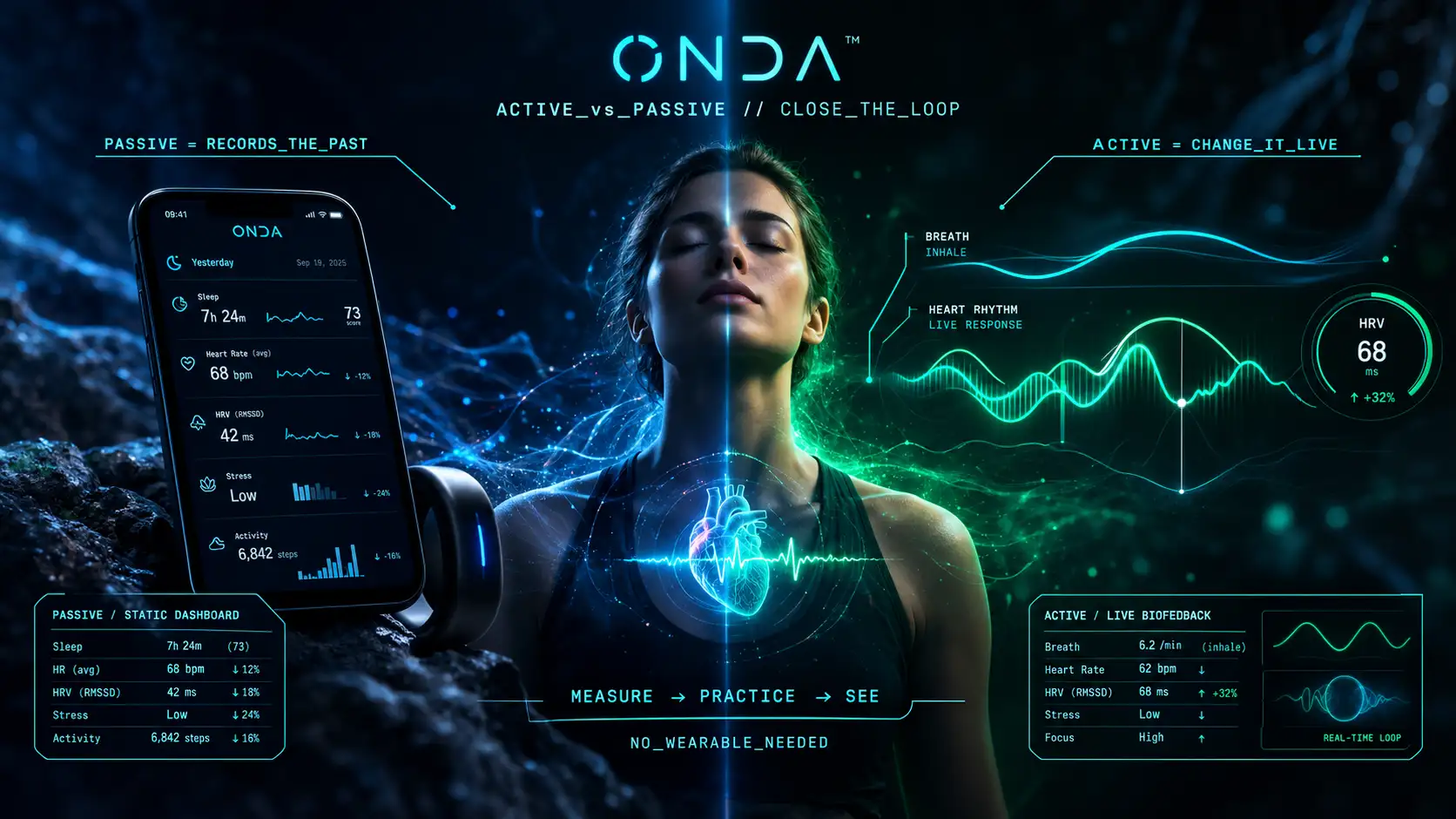
Active Intervention vs Passive Tracking: The 2026 Wearable Shift
Wearables are splitting into two jobs: passive trackers that measure your nervous system, and active-intervention tools that change it. What the 2026 shift means, and how to use each.

AI-Integrated Biomarker Tracking | Predictive Health
Move beyond static tracking. Learn how AI-driven predictive analytics can forecast illness and burnout before symptoms appear.
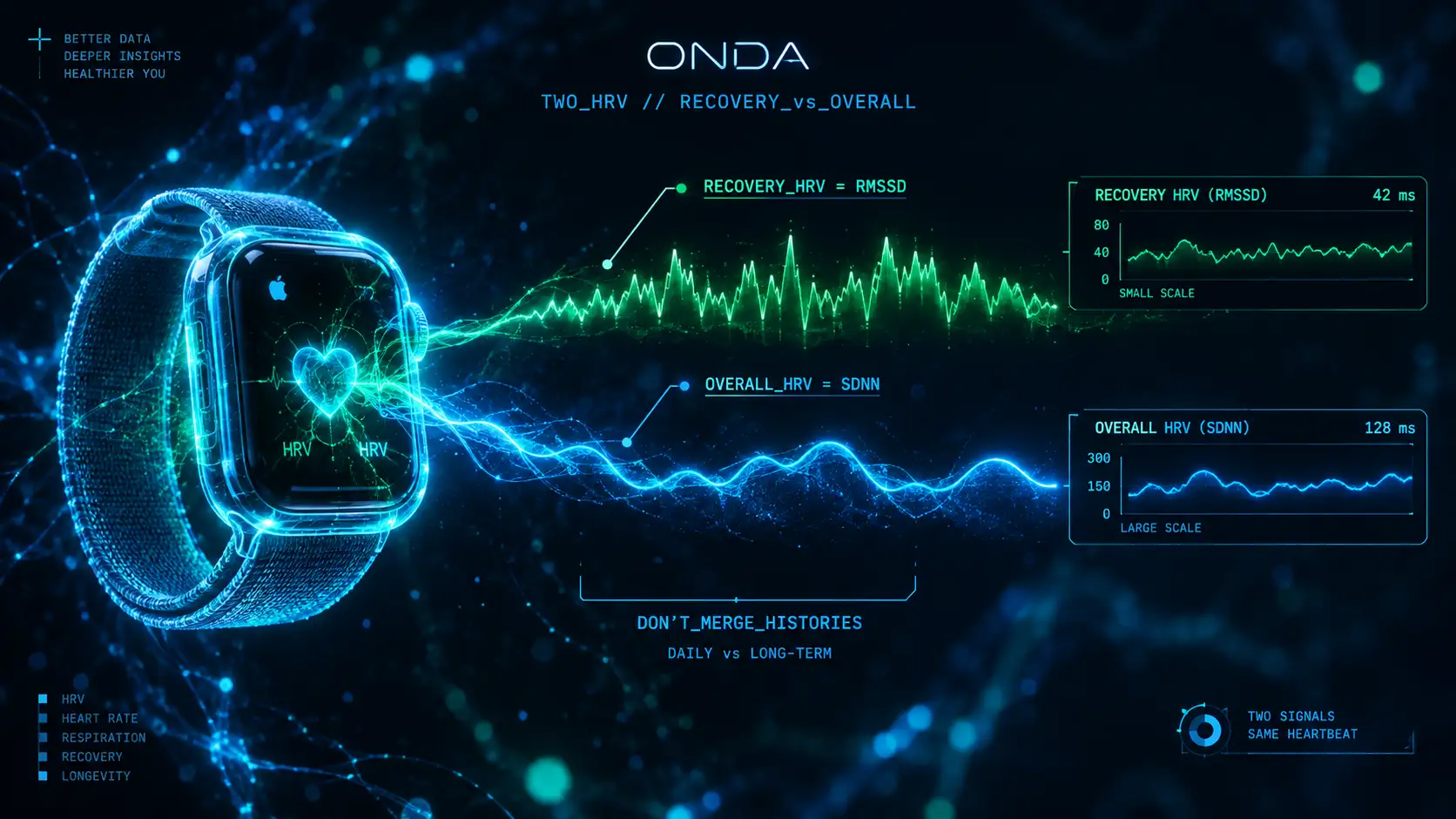
Apple Watch Now Shows Two HRV Numbers: Recovery HRV vs Overall HRV
In September 2026 Apple split Apple Watch HRV into Recovery HRV and Overall HRV, added RMSSD to HealthKit, and started measuring HRV every ~5 minutes. What changed, why there are two numbers, and why you can’t merge the old and new history.
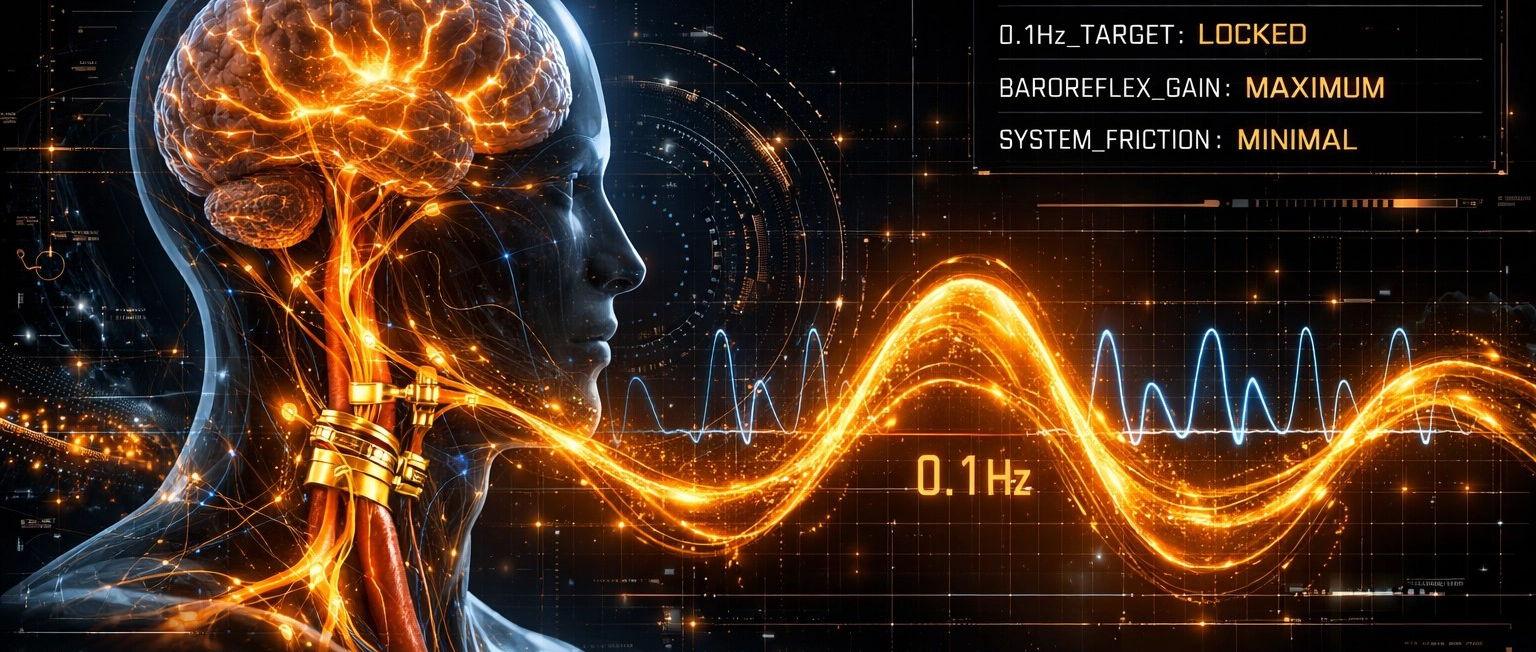
The 0.1 Hz Shift: Engineering the Baroreflex Hook
At exactly 0.1 Hz (6 breaths/min) your breathing syncs with Mayer Waves, hijacking the baroreflex loop to maximize HRV amplitude, lower blood pressure, and phase-lock the heart-brain coherence signal.

CHM: Continuous Hormone Monitoring
Live stream of your internal chemistry: from static bloodwork snapshots to a dynamic endocrine dashboard with real-time cortisol and hormone tracking.

Building a Fault-Tolerant Human: The HRV Buffer
Low HRV = no headroom — any stress triggers cascade failure. High HRV = operational buffer. The ONDA hardening protocol uses hormetic loading, VNS calibration, and predictive HRV monitoring to build a fault-tolerant biological system.
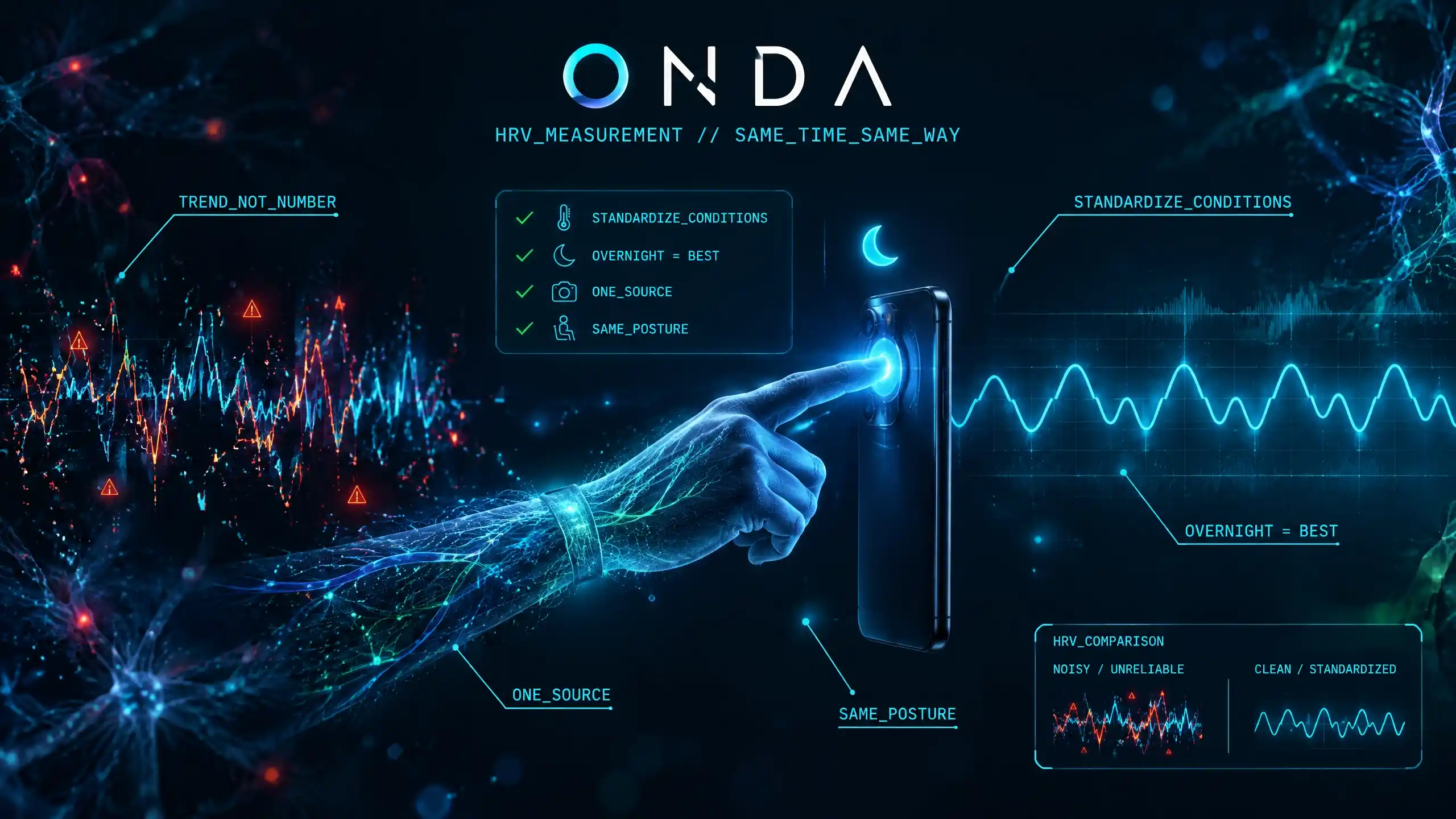
How to Measure HRV So the Number Actually Means Something
HRV swings with time of day, posture, breathing, caffeine and your last meal — so a reading taken at random is noise. The simple rules that make your HRV comparable night to night, and why the trend beats any single number.
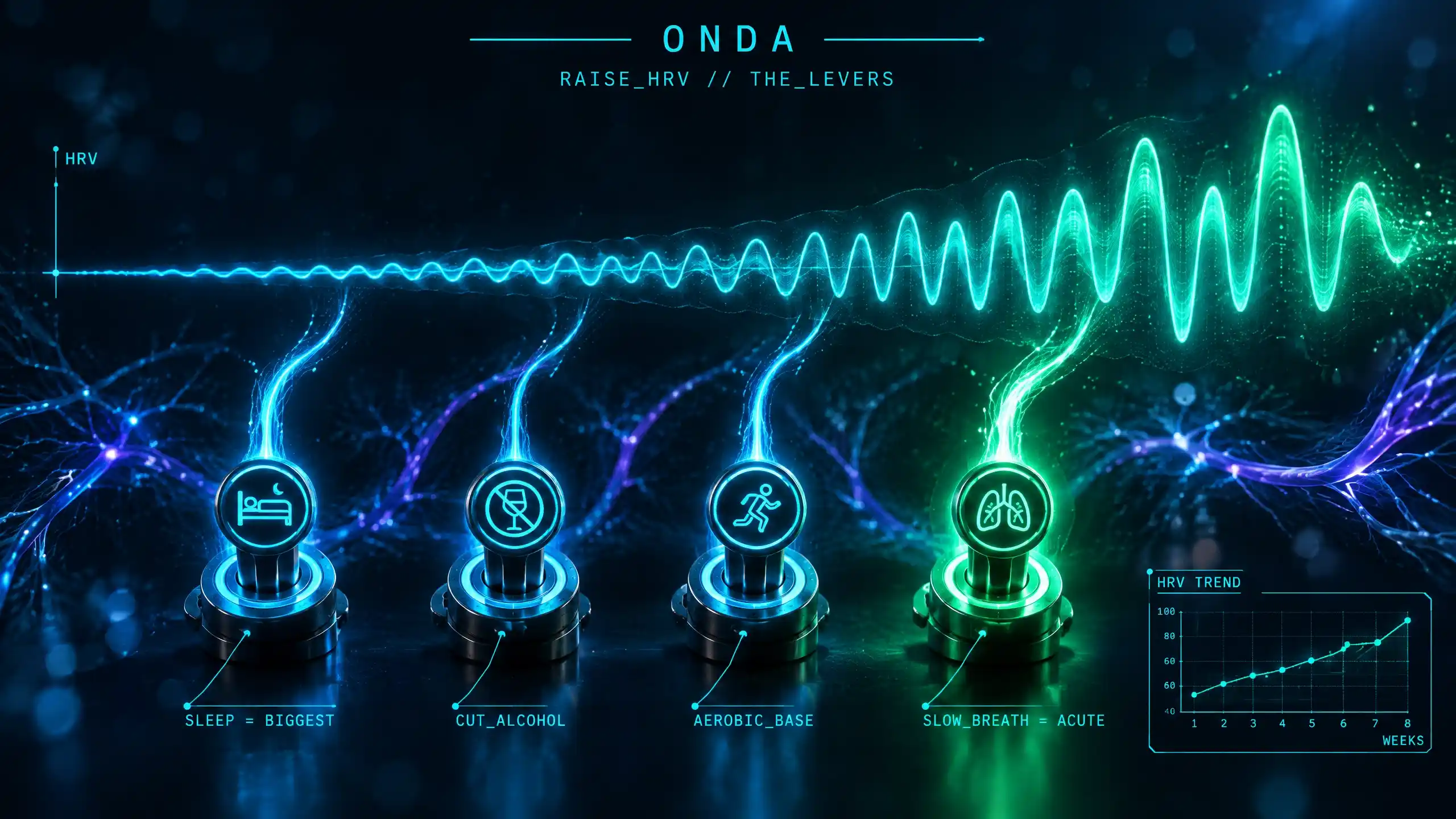
How to Raise Your HRV Naturally
Higher HRV means a more adaptable nervous system. The levers that actually raise it — sleep, training, alcohol, stress — plus the one you can train directly: slow breathing with live biofeedback.
What Breathing and Cold Really Do to Your HRV — The Honest Version
Breathing and cold exposure do raise HRV — but temporarily, not permanently. The honest, evidence-based picture, minus the vagus-hack hype.

Why Your HRV Is Different on Every Device (and Which to Trust)
Your Oura, Apple Watch and Whoop all report different HRV numbers. Here is why — RMSSD vs SDNN, overnight vs spot, PPG vs ECG — and which reading to actually trust.
HRV as the Harmony of Your Body’s Rhythms: A Chronobiology View
Beyond a recovery score, HRV reflects how well your body’s many rhythms — heartbeat, breath, metabolism — work together. The chronobiology view, and why coherence matters.

HRV Training: Measuring the Latency of Your Nervous System
Heart Rate Variability is the real-time diagnostic of your Autonomic Nervous System. Learn to read the pulse of your code and optimize recovery.
Resting Heart Rate by Age: What’s Normal?
A normal resting heart rate is 60–100 bpm for adults, but the healthy range shifts with age and fitness. Typical resting heart rate ranges by age, what raises or lowers yours, and when it matters.

System Feedback: The Biometric Loop
Stop tracking and start optimizing. Learn how ONDA turns your biometric data into immediate corrective protocols for peak performance.
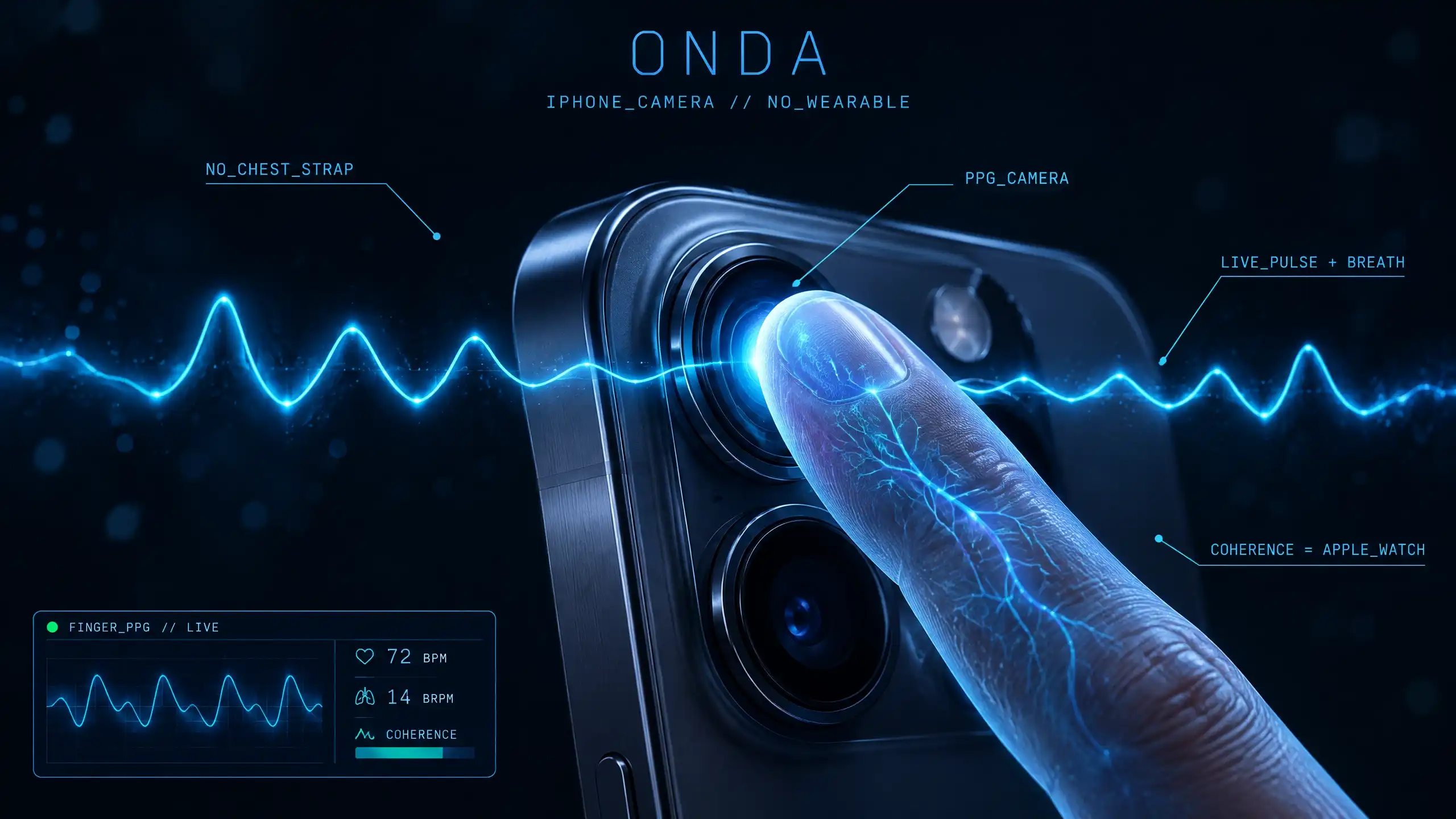
Train Your Breathing With Just an iPhone — No Wearable Needed
You don’t need a ring, strap or watch to start breathing biofeedback. How the iPhone camera reads your pulse — what it can and honestly can’t do — and where a wearable still adds.
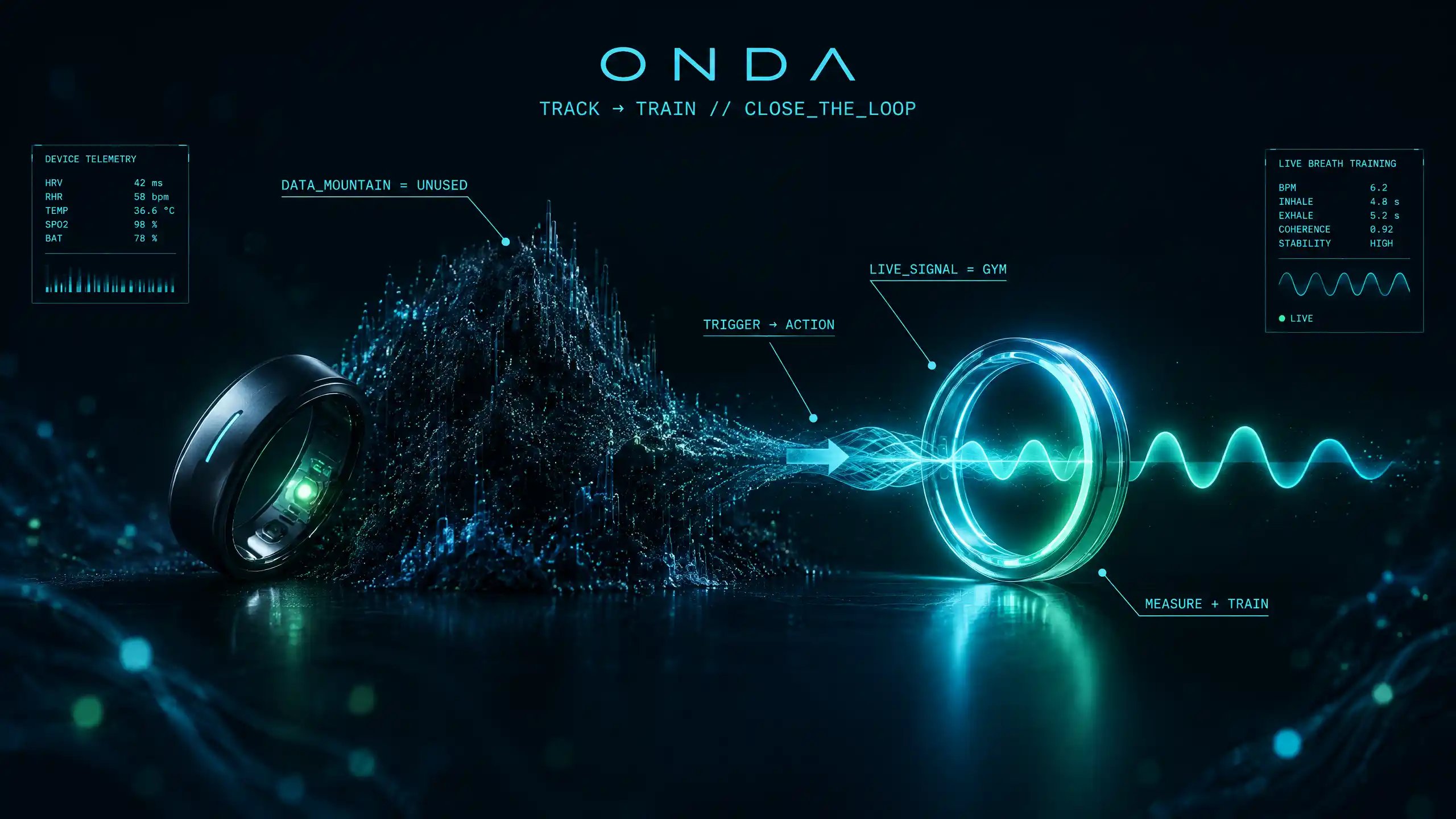
Use Your Wearable to Train, Not Just Track
Your ring or watch collects a mountain of HRV data you never act on. The shift that makes wearables actually useful: turning the numbers into training — a self-tracking plus self-training loop.

Your HRV Reading Is Low. Now What?
Your Apple Watch or app flagged a low HRV. Before you worry: one reading is mostly noise. What a low HRV actually means, when to ignore it, and the practice that does something about it.
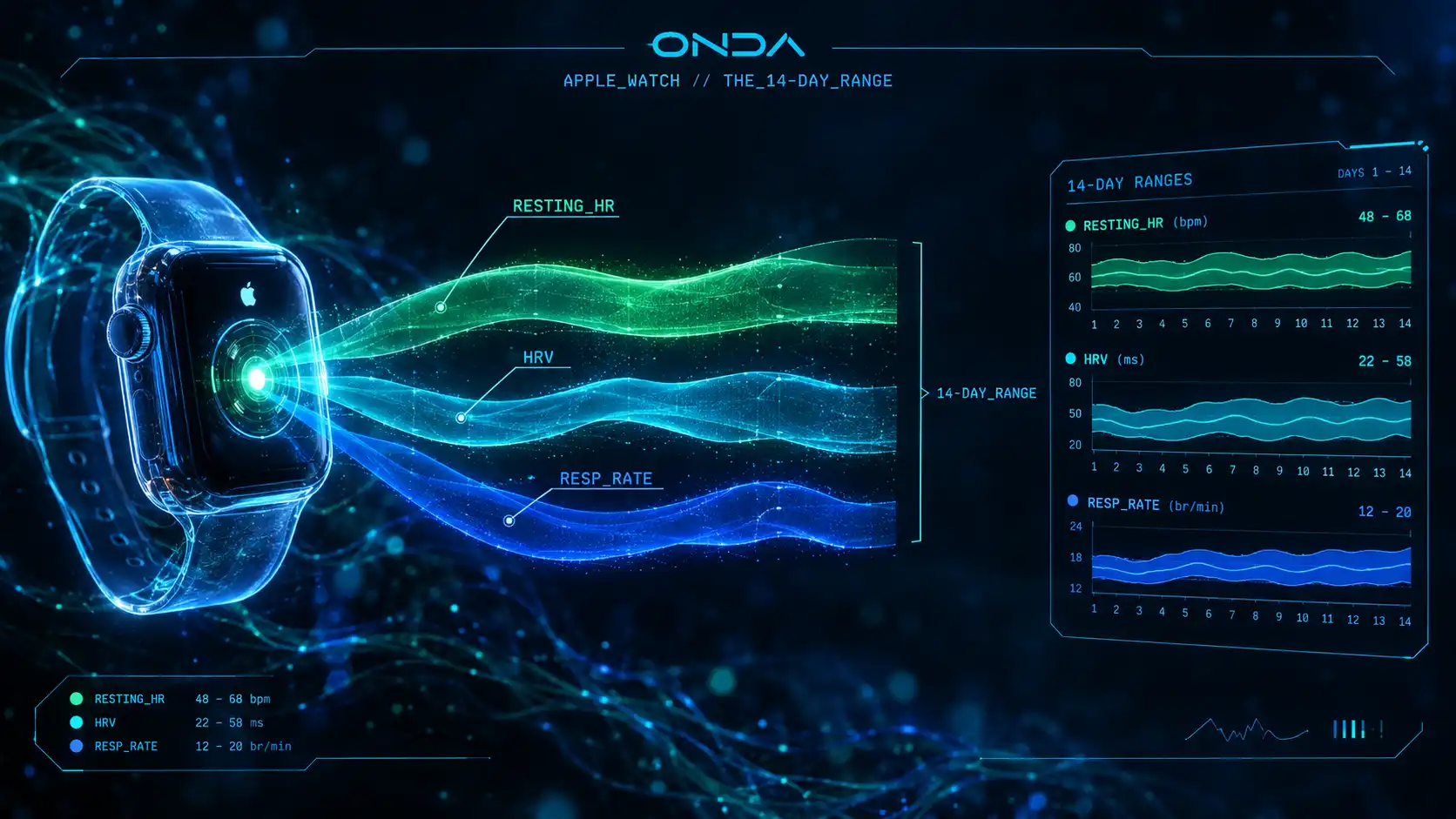
What Your Apple Watch Records Over Two Weeks
Your Apple Watch quietly logs your resting pulse, heart-rate variability and breathing every night. Here is what those numbers are — and why two weeks of range tells you more than any single reading.

Your Baseline Knows First: The Signal Your Body Sends Before You Notice
Your resting heart rate, HRV and breathing drift from your personal normal before you consciously feel “off.” Why the deviation — not the number — is the signal, and how a personal baseline makes it visible without any medical claim.