Lifestyle Effects
Everyday habits leave a clear trace in your heart rate and HRV. These guides show — with data — what alcohol, caffeine, nicotine, late meals and screen time do to your body overnight, how long the effects last, and what dopamine, brain fog and "digital overload" really are.
Start here
How Much Does Alcohol Lower Your HRV? The Data by Number of Drinks
Alcohol lowers heart rate variability and raises resting heart rate overnight, in a dose-dependent way. How much each drink costs your recovery, from wearable and peer-reviewed data.
Read the guide →All Lifestyle Effects guides (16)
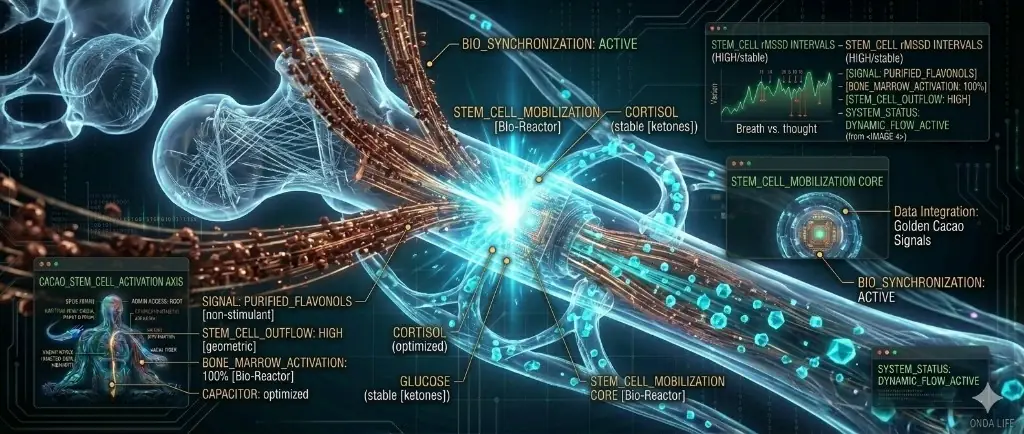
Cacao & Stem Cells
Filter the noise. Learn how purified cacao flavonols trigger stem cell production and optimize your regenerative matrix without stimulant overload.
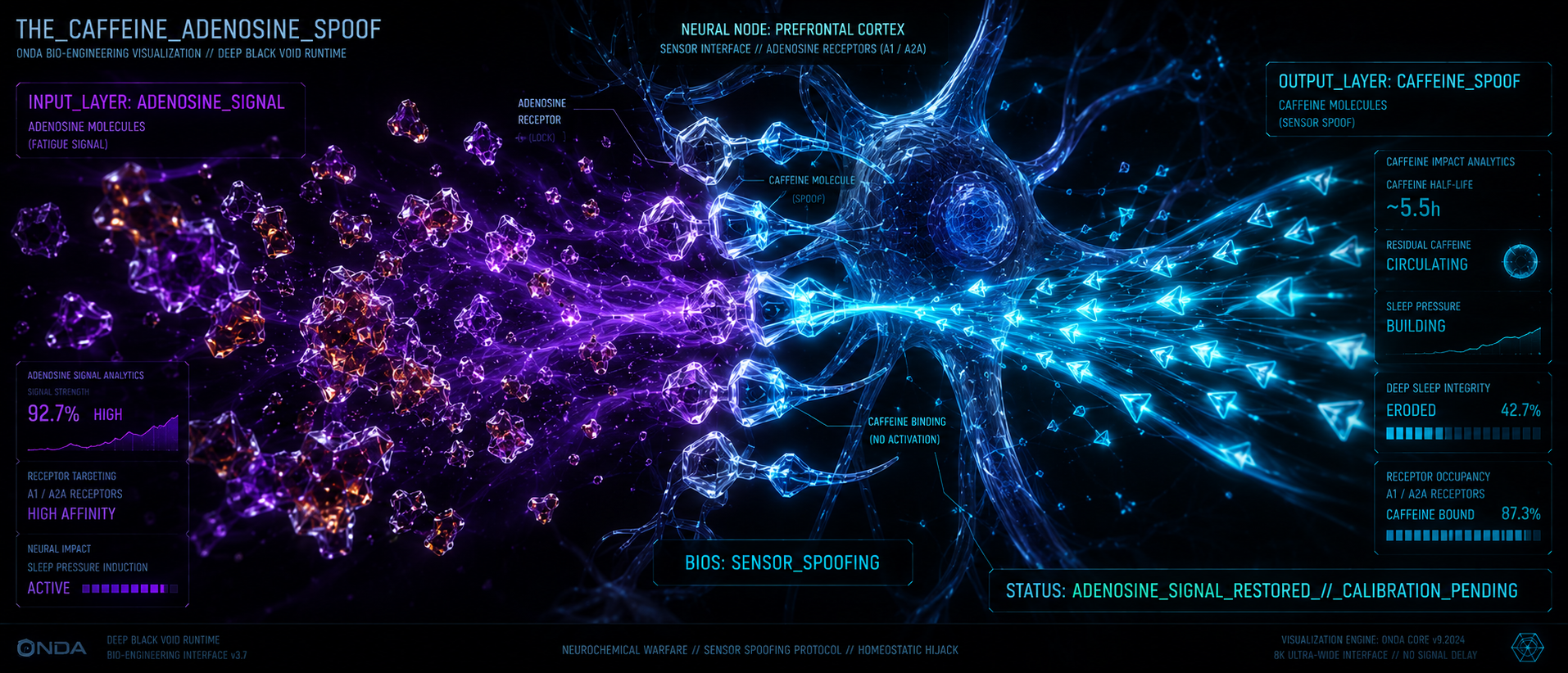
Caffeine: Hacking the Adenosine Block
Caffeine works by blocking adenosine, your sleep-pressure signal. Learn its half-life, why an afternoon coffee wrecks your sleep, and when to set your cut-off.
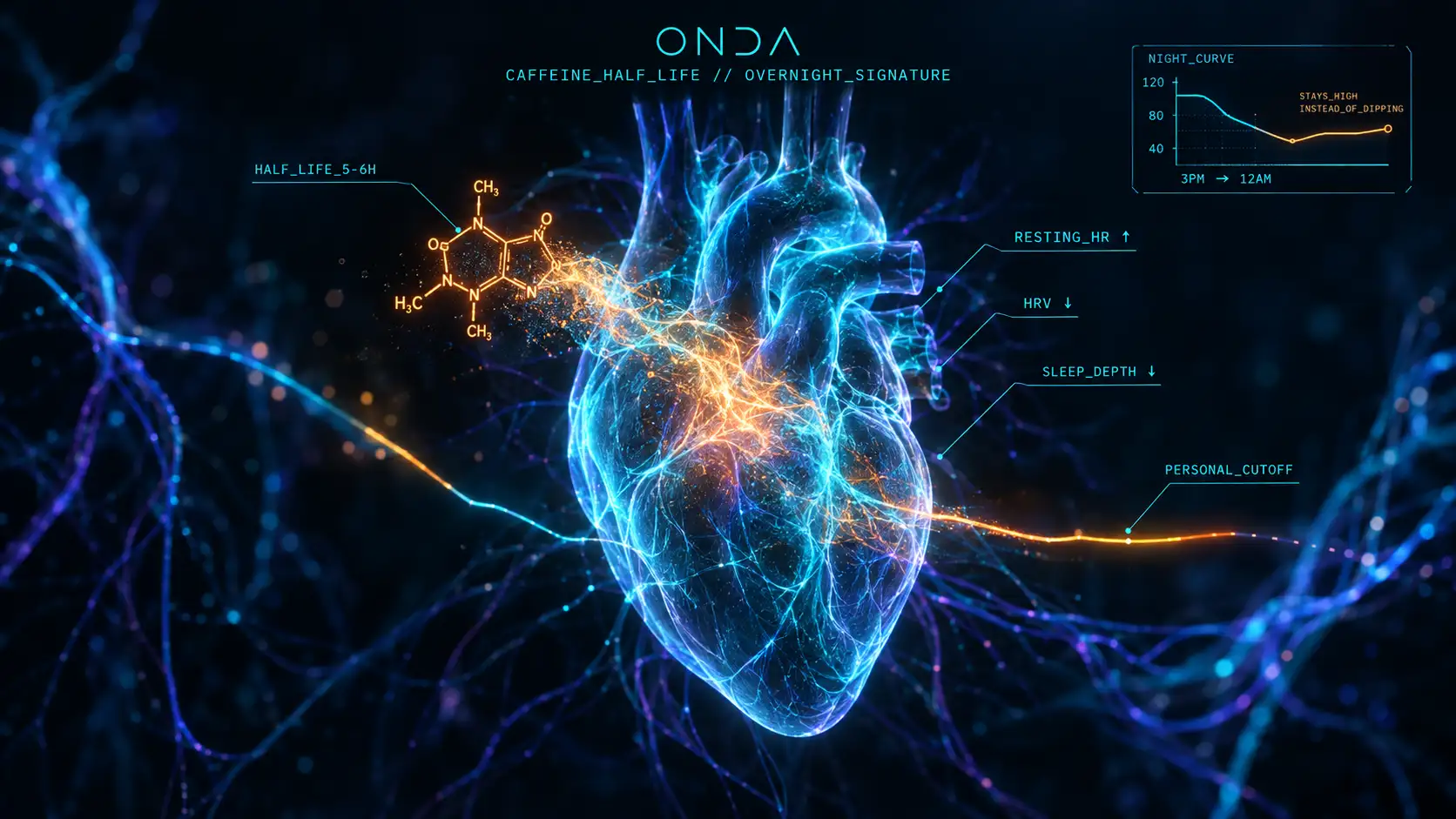
Caffeine's Overnight Signature: What the Afternoon Coffee Does to Your Heart
Caffeine has a 5–6 hour half-life, so the afternoon cup can still raise your resting heart rate and flatten your overnight HRV. Why the effect is deeply personal, and how to find your own caffeine cutoff from your own data.

Digital Dementia: Installing a Firewall for Your Attention
Your attention is a limited bandwidth resource. Learn to install a protective firewall against digital fragmentation and reclaim cognitive sovereignty.
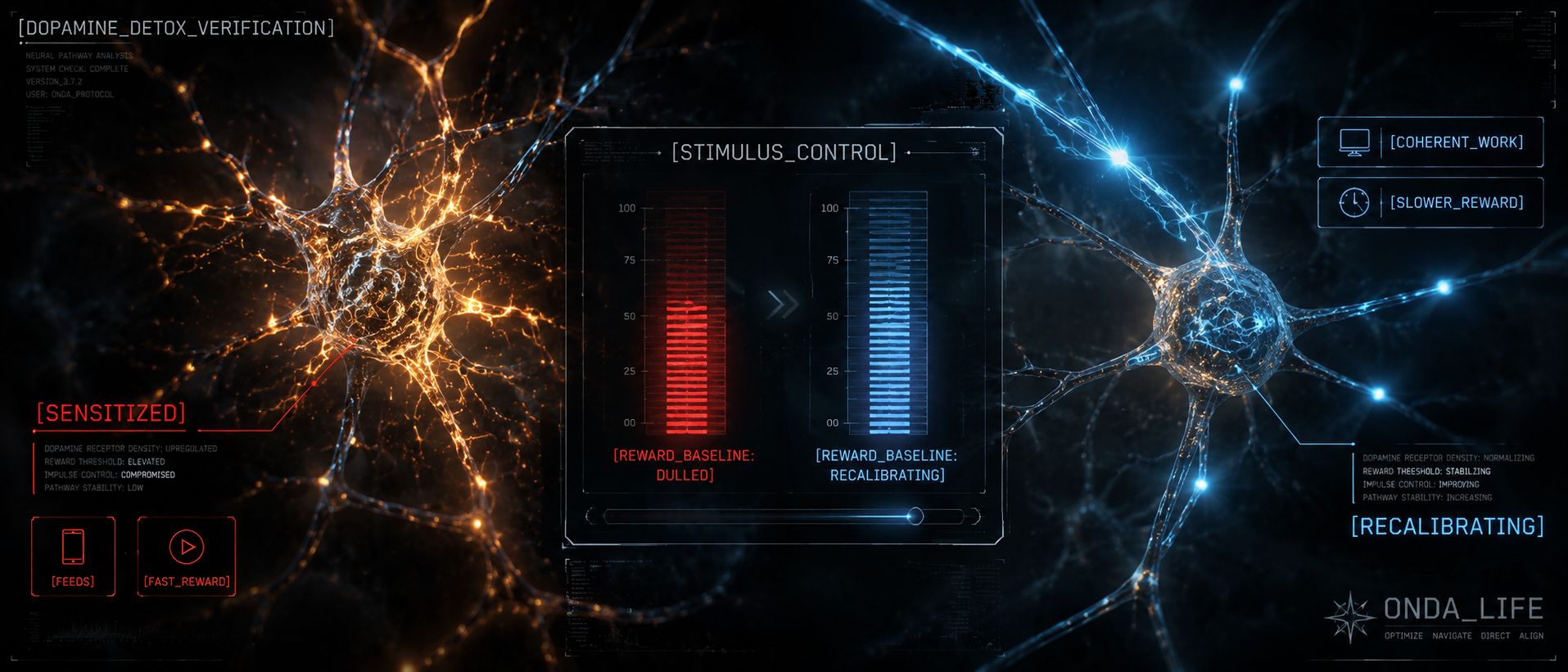
Does a Dopamine Detox Actually Work? The Honest Answer
You can’t detox dopamine — but the practice behind the buzzword works. Here’s what a dopamine detox really is (stimulus control), what the science says, and how to do it.
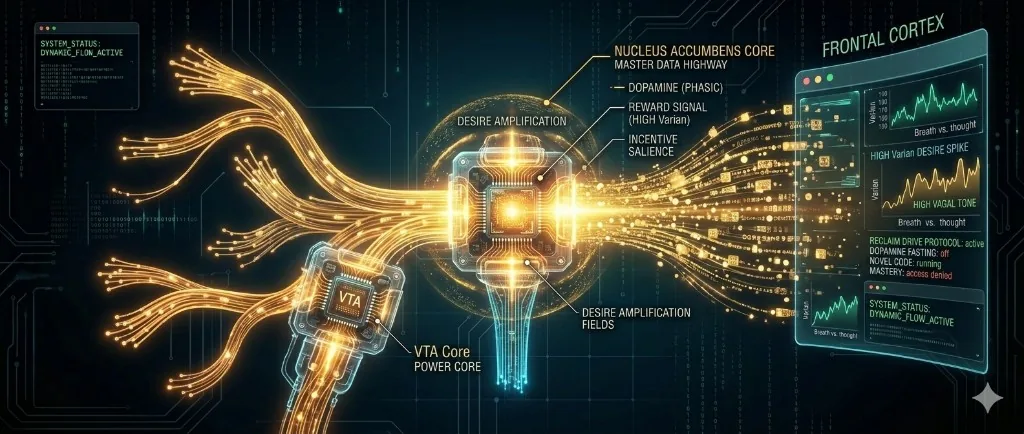
Dopamine Architecture: Drive, Prediction Error, and Reward Traps
Dopamine architecture: reclaim your drive by understanding the biological Prediction Error — and escape the Dopamine Traps that hijack your reward circuitry.
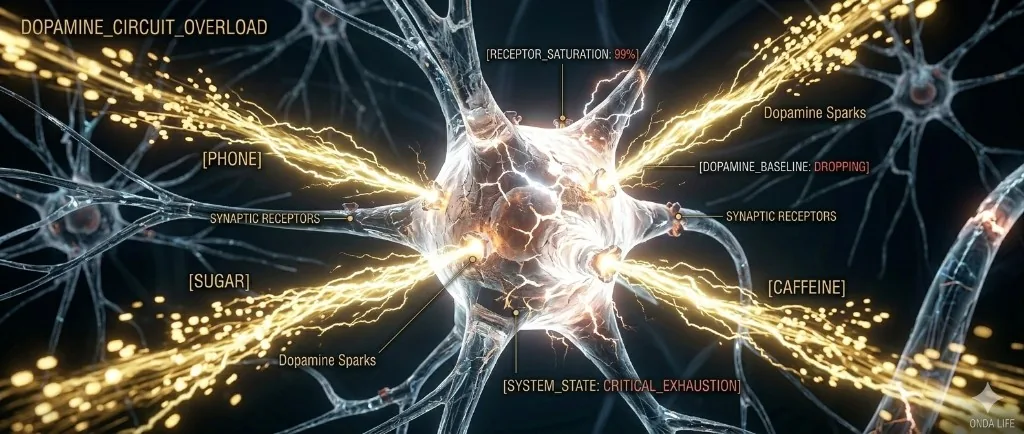
Dopamine Stacking & Circuit Overload
How chasing dopamine leads to burnout — and what actually helps the reward system settle and recover.
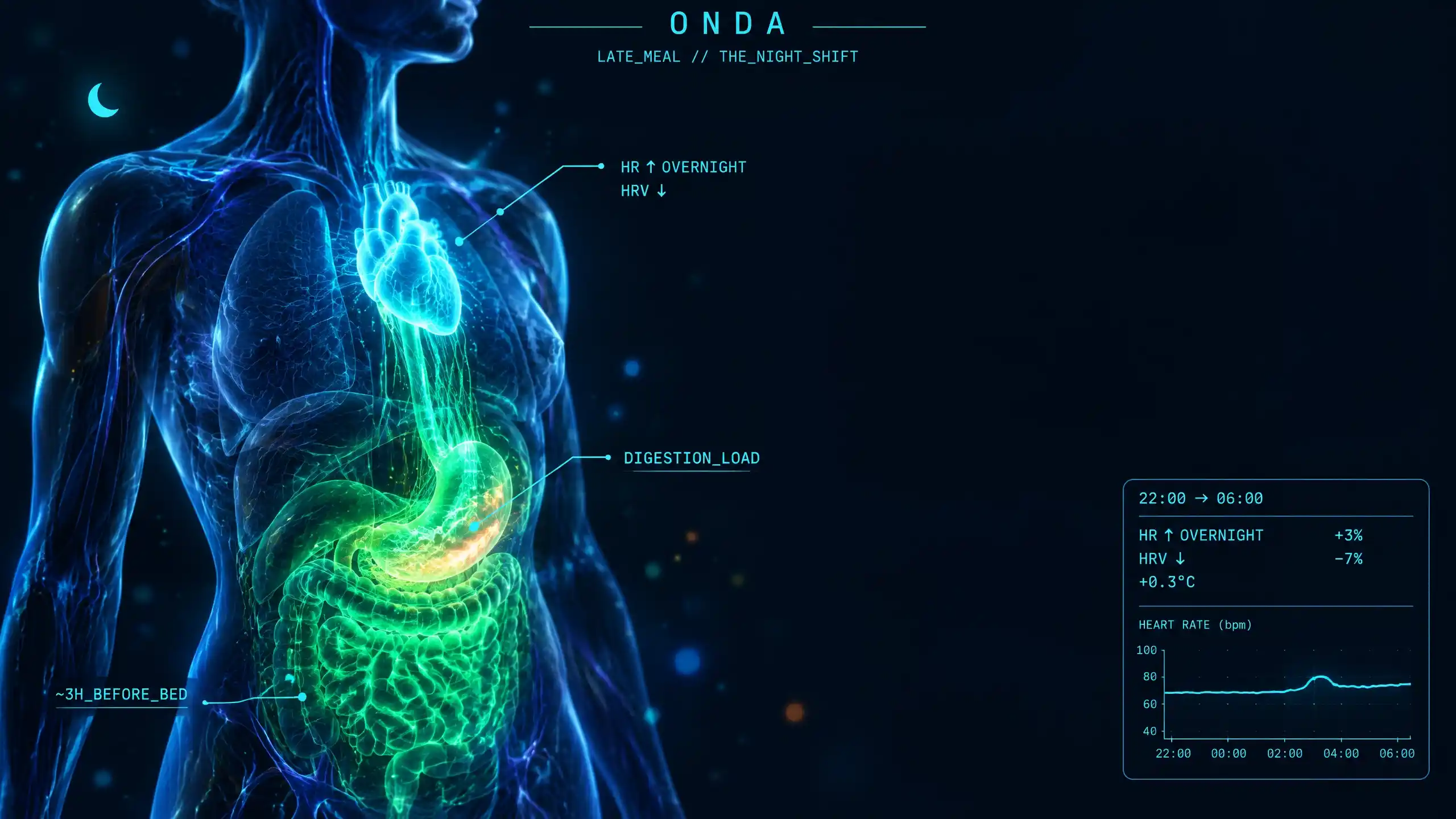
The Late Dinner Your Heart Works Through
A big meal close to bedtime can keep your heart rate up and your HRV down while both should be falling — digestion is sympathetic work at the wrong time. The effect is real but personal, which is exactly why it’s worth measuring.
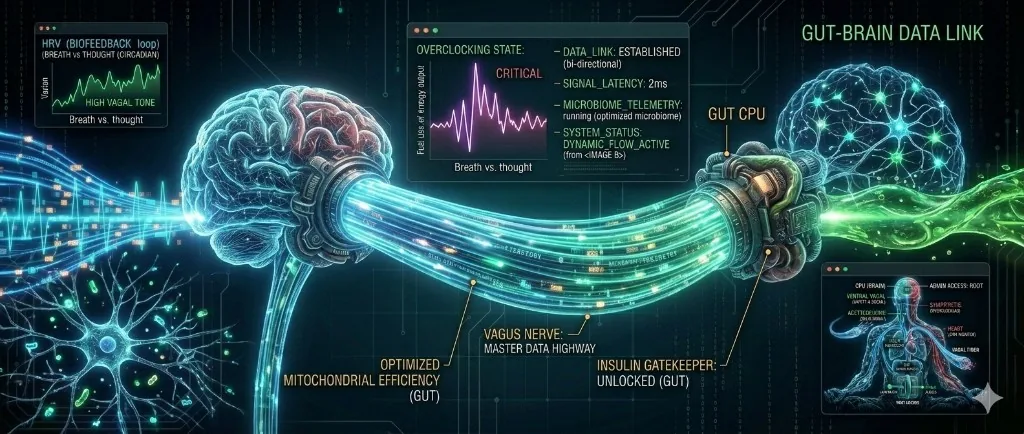
The Second Brain: Managing Your Gut-Brain Data Link
Your gut is your second brain. With 500M+ neurons and the Vagus Nerve as a biological modem, the microbiome modulates mood, immunity, and cognition. Optimize your Data Link.
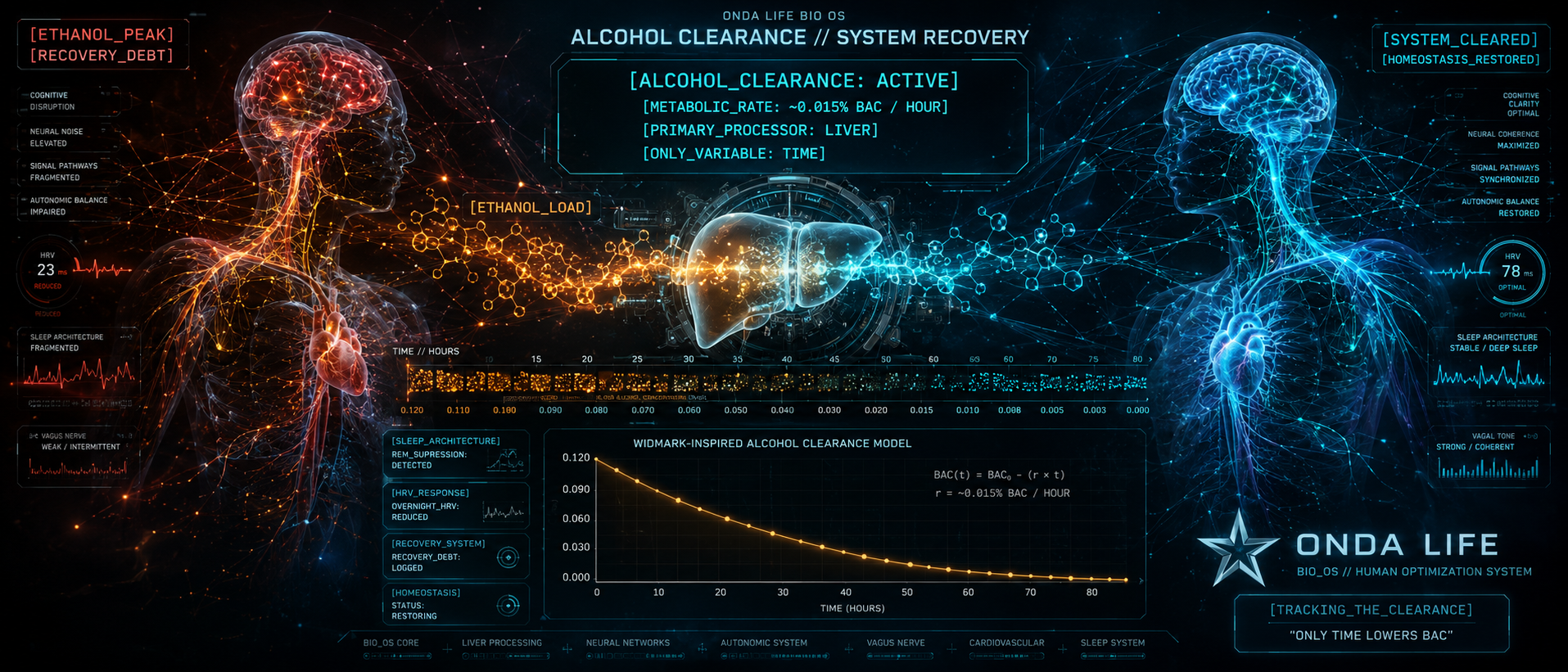
How Long Does Alcohol Stay in Your System?
How long alcohol stays in your body, how fast it clears (~one drink an hour), why nothing speeds it up, and what it does to your sleep and recovery.
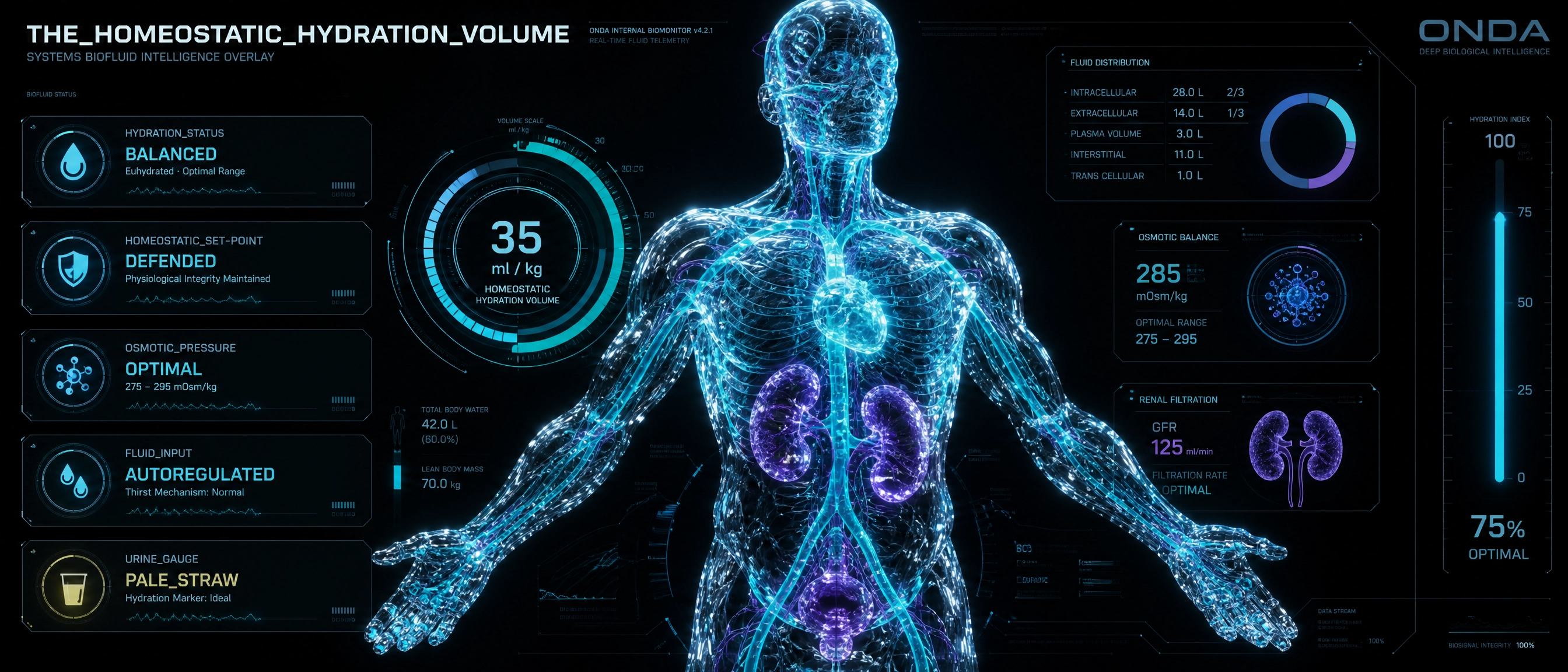
How Much Water Should You Drink a Day?
How much water you really need — by bodyweight, not a fixed "8 glasses" — plus how exercise, heat and caffeine change it, and why thirst and urine colour matter most.
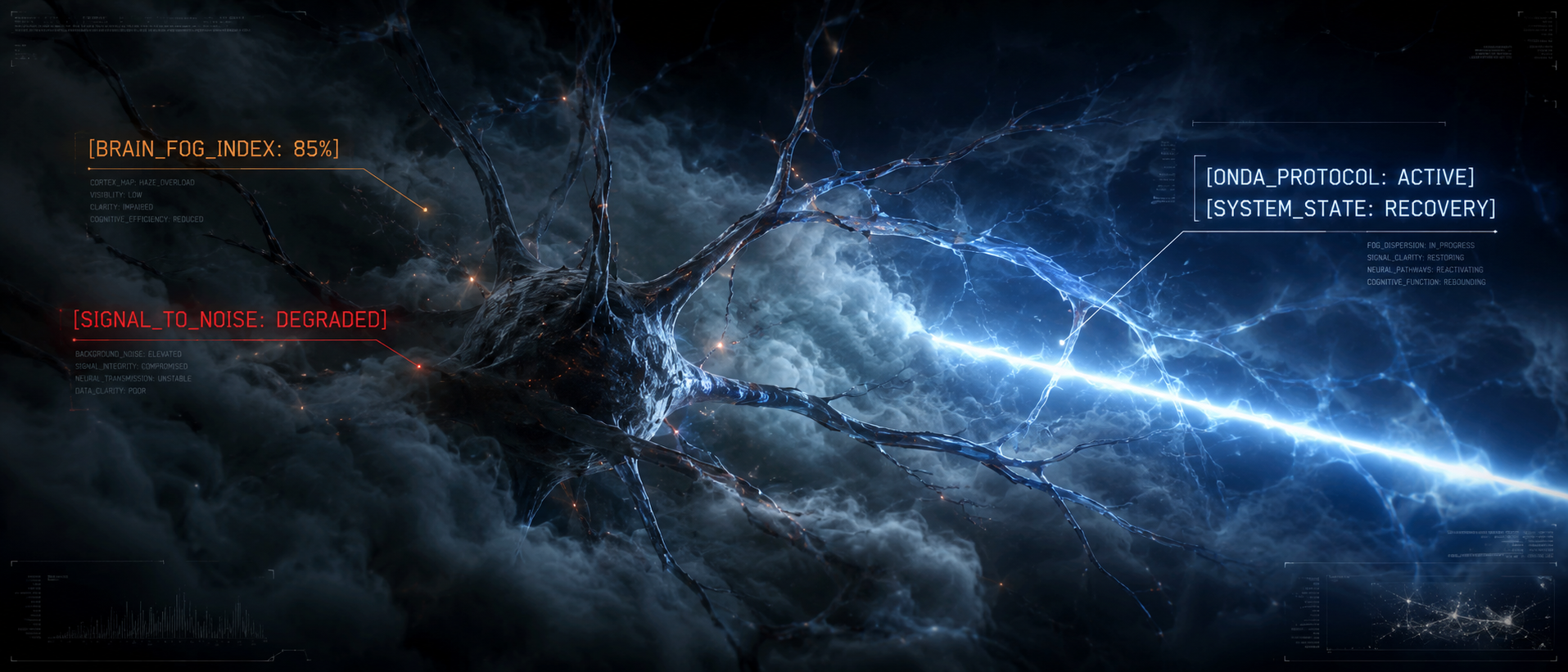
How to Get Rid of Brain Fog
Brain fog is a symptom, not a diagnosis. The common, fixable causes — sleep, stress, overstimulation, lifestyle — and the fastest way to clear each.
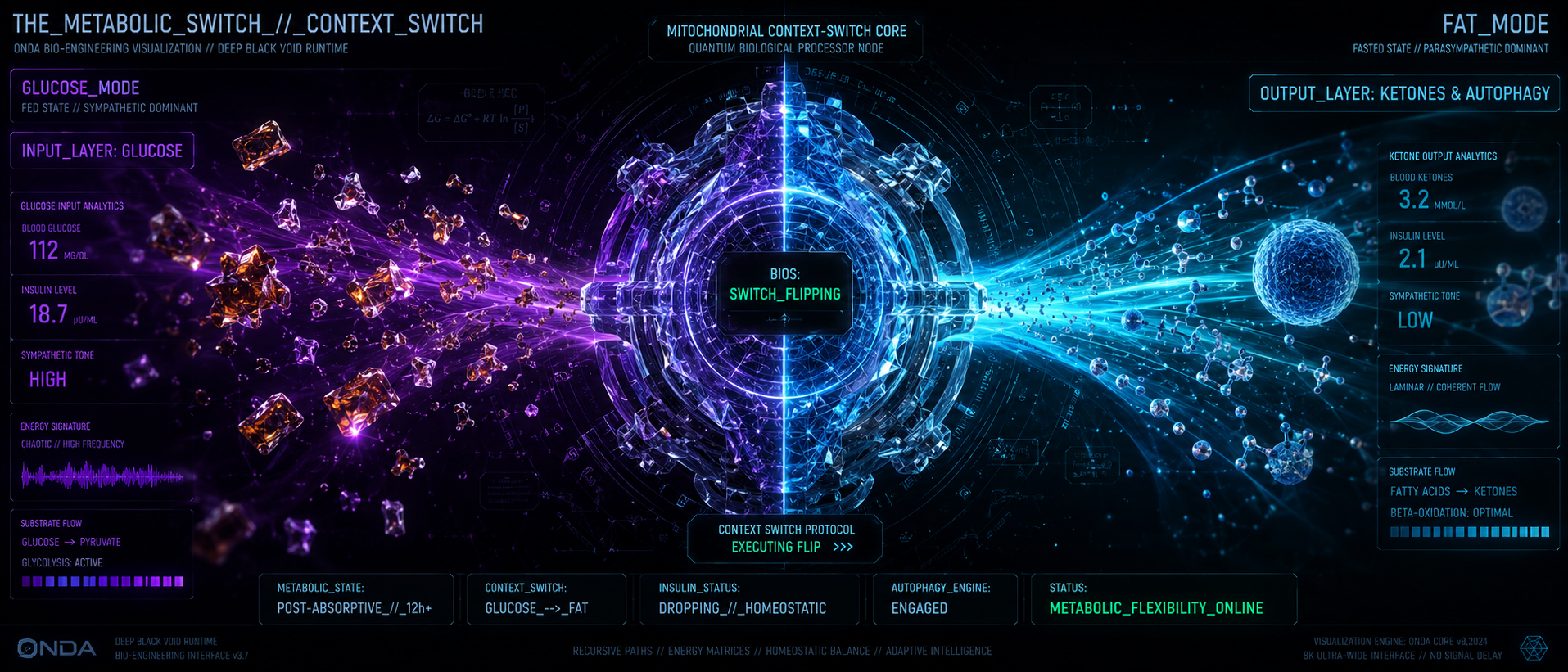
Intermittent Fasting: Flipping the Metabolic Switch
Intermittent fasting is less about eating less and more about flipping a metabolic switch. Learn the 16:8 protocol, what happens hour by hour, and who should skip it.
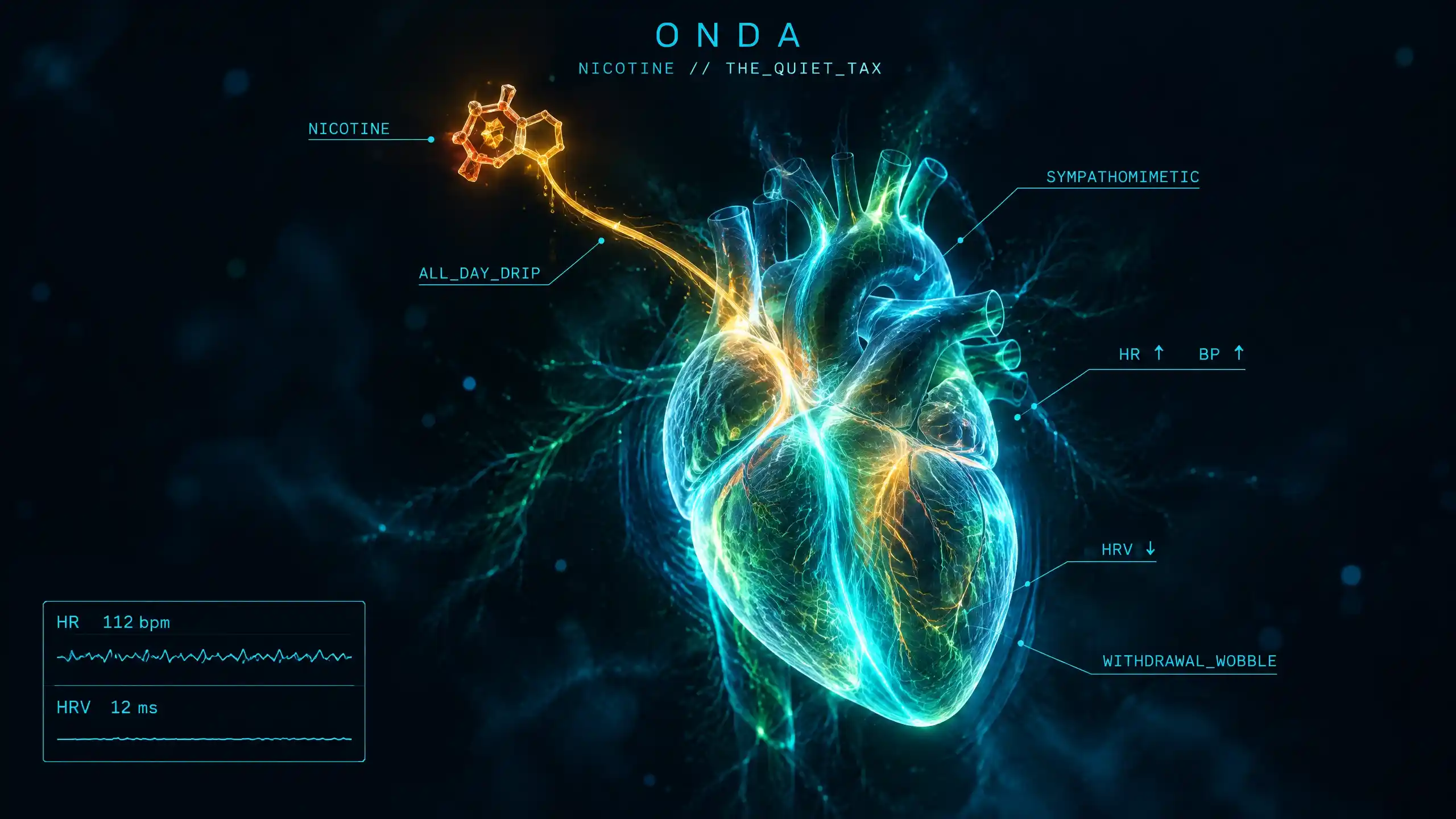
The Quiet Tax: What Nicotine and Vaping Do to Your Heart Rate and HRV
Nicotine is a stimulant, and vaping delivers it in a steady drip — raising heart rate and blood pressure while flattening HRV. Why the effect hides behind “it relaxes me,” and how it shows up in your own numbers.
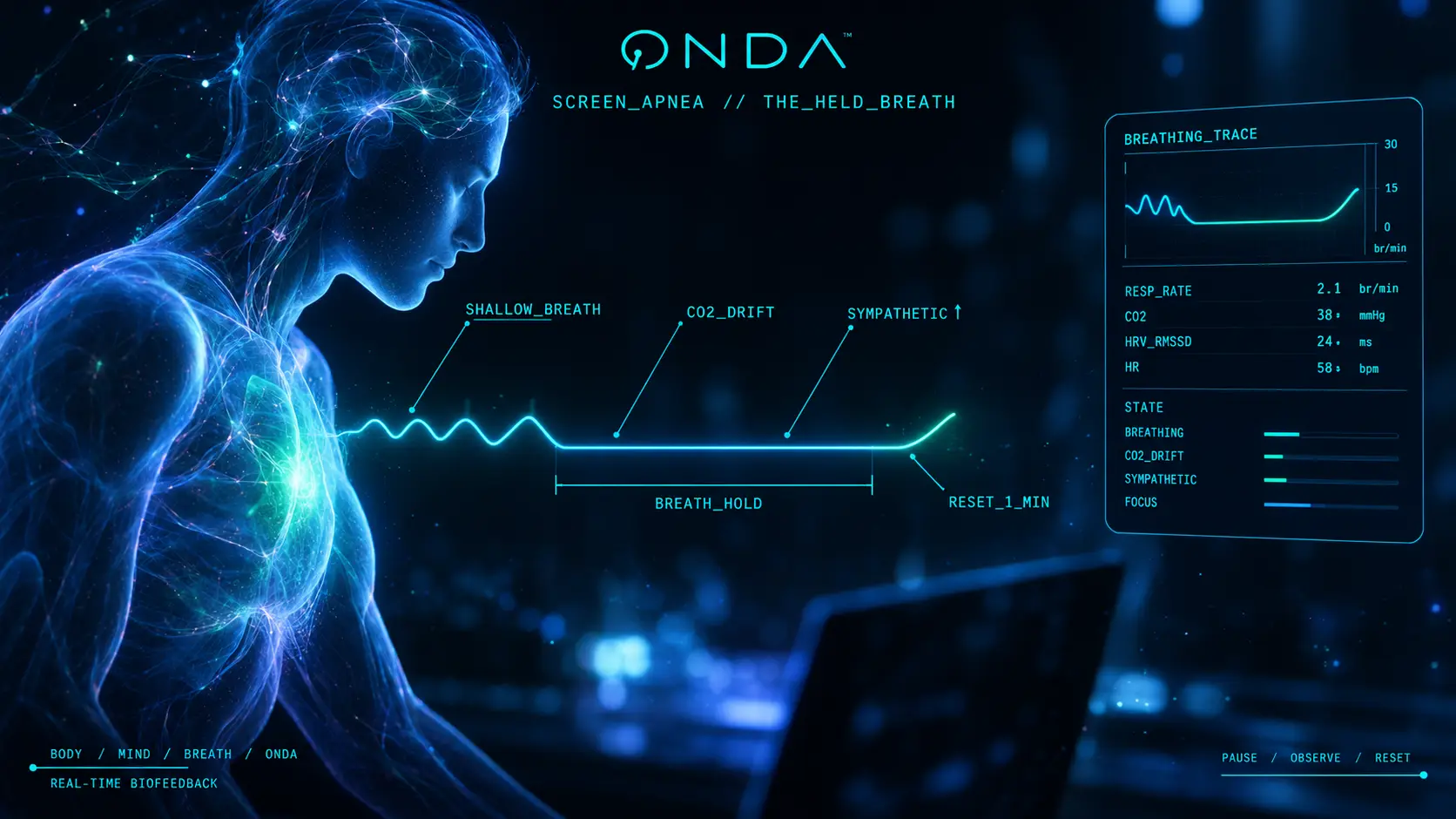
Screen Apnea: You Stop Breathing at Your Desk
Screen apnea — shallow or suspended breathing while locked into a screen — affects most people and they never notice. What it does to your stress and focus, and how a measured breath breaks the freeze in a minute.