Sleep & Body Clock
Good sleep depends as much on timing as on hours. These guides cover how much sleep you need, how light sets your body clock, why social jet lag harms more than being a night owl, and practical ways to wind down — from breathing before bed to Yoga Nidra and clinical approaches to insomnia.
Start here
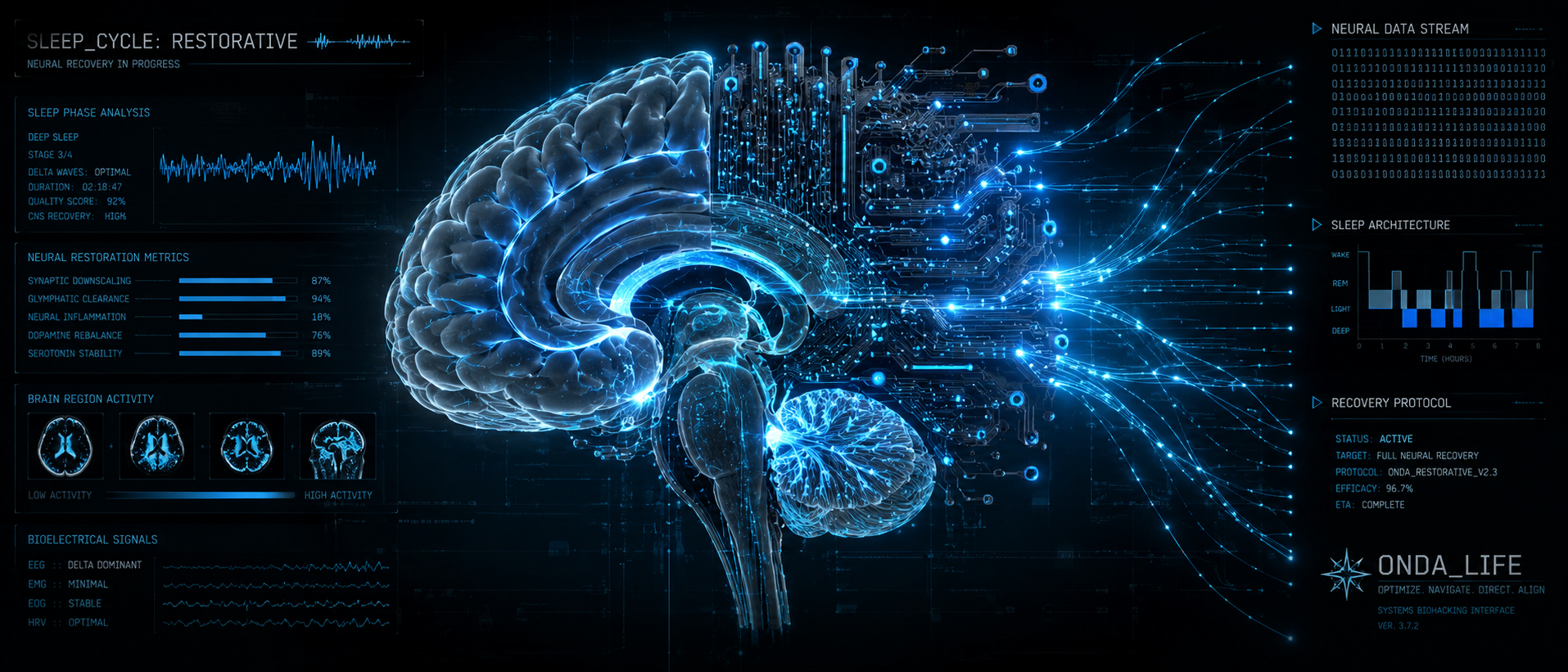
How Much Sleep Do You Need? (By Age)
How much sleep you really need by age, why "I only need 5 hours" is almost always wrong, and how sleep debt builds — with the evidence and the fixes.
Read the guide →All Sleep & Body Clock guides (15)
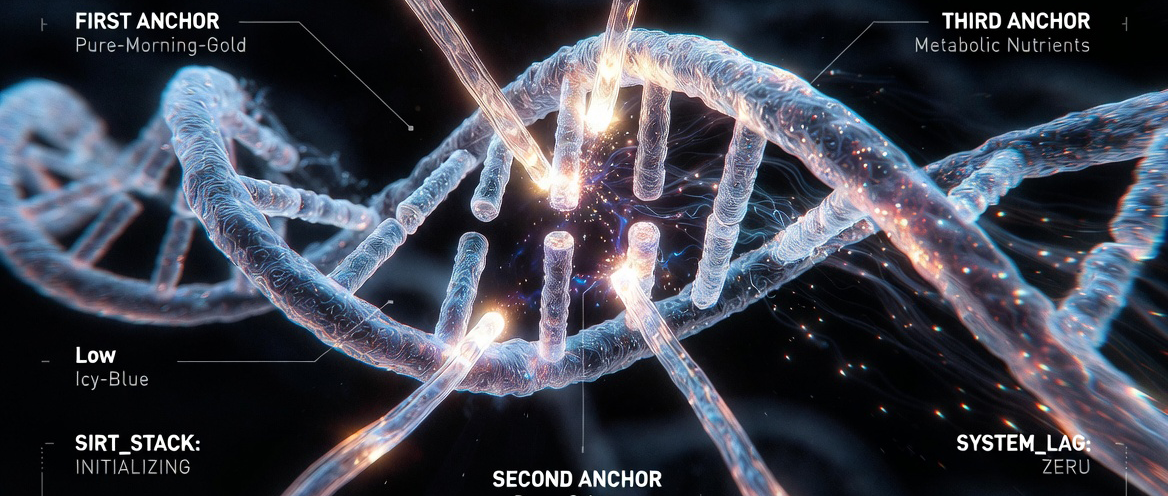
Circadian Anchors: 3 Signals That Tell Your DNA It's Time to Heal
Your DNA only understands Zeitgebers — external synchronization signals. When these conflict, the body stops repairing and starts resolving conflicts instead. Three anchors reset the system: photonic trigger, thermal reset, and metabolic gate.
Chronotherapy: Treating Mood and Sleep with Light, Dark, and Timing
Chronotherapy uses light, darkness, and the timing of sleep to reset the body clock and treat mood and sleep disorders. The German clinical tradition behind it — including wake therapy.
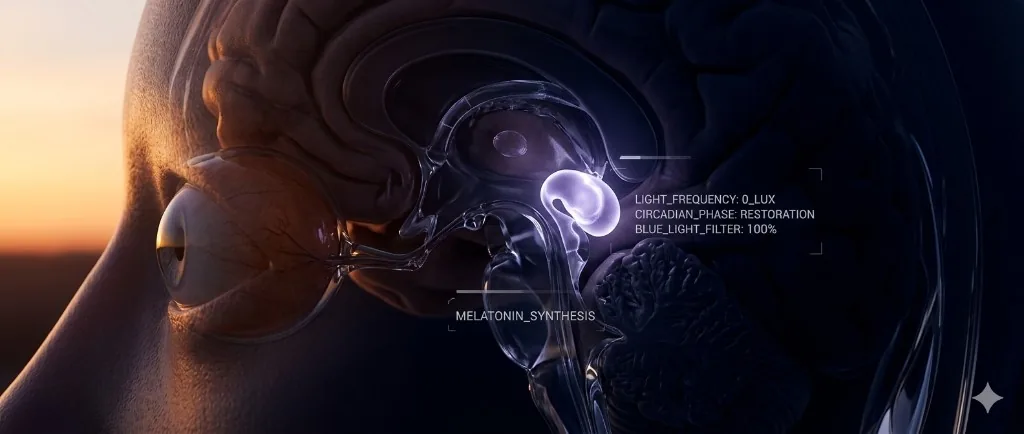
Signal Stability: Circadian Lighting and Dark Therapy
Light is the primary programming language for your biological clock. Master Circadian Lighting and Dark Therapy to restore hormonal integrity and eliminate photic noise.
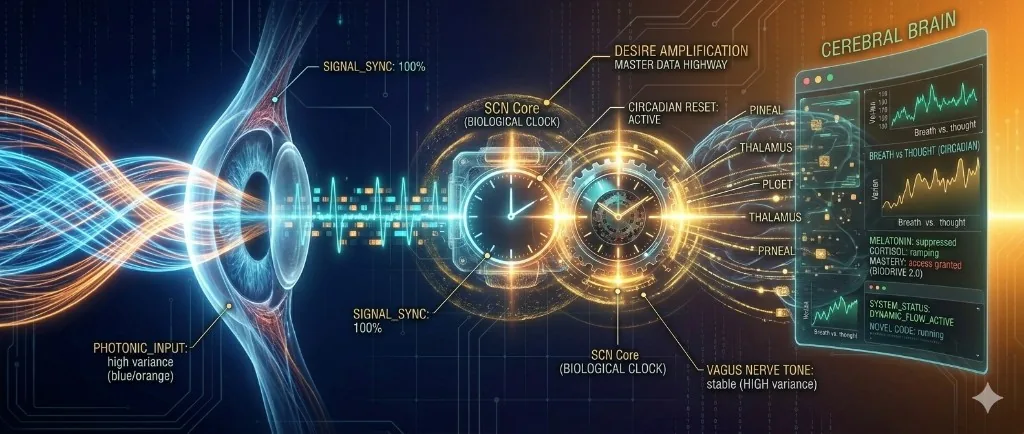
The Circadian Reset: Programming Your Biological System Clock
Circadian rhythm reset: master the photic signal and resync your hardware with the solar cycle. Fix Circadian Drift, insomnia, and chronic brain fog.
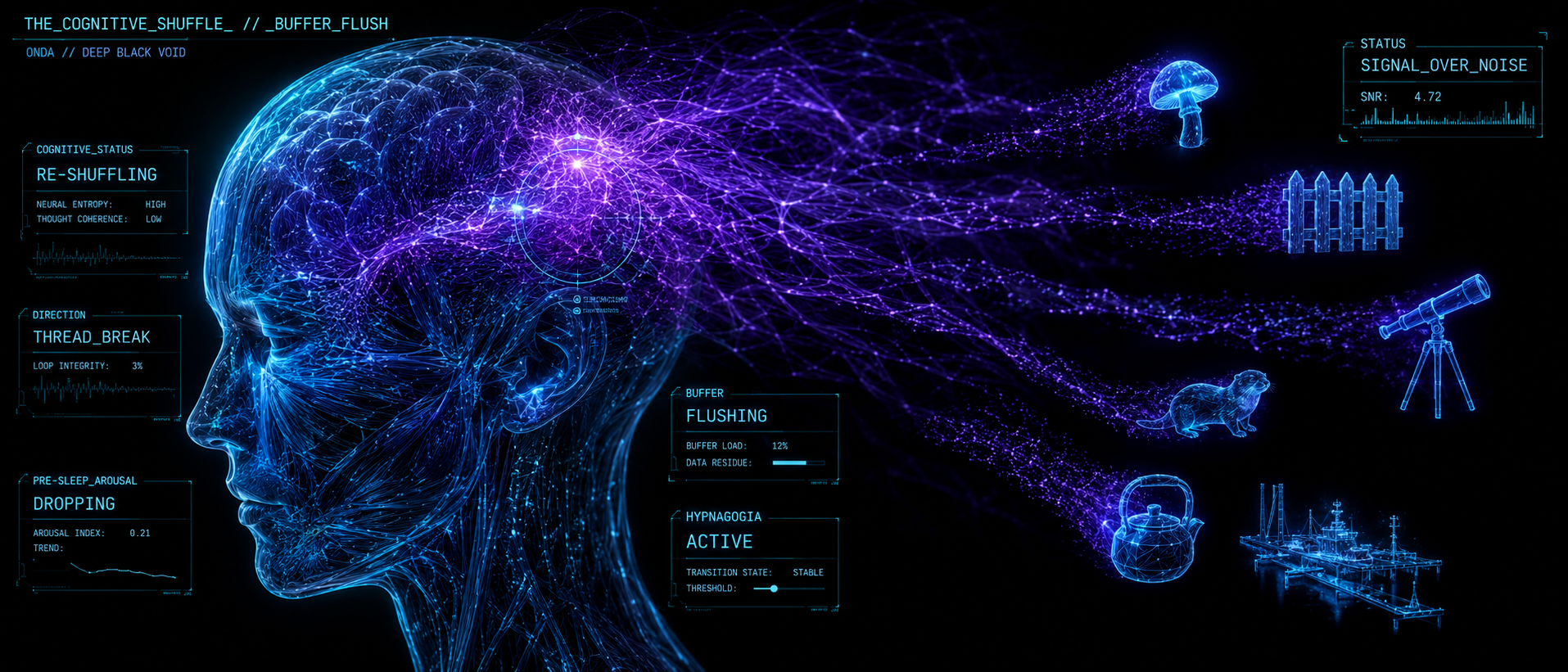
Cognitive Shuffling: The Mental Trick to Fall Asleep Fast
Cognitive shuffling is a science-backed bedtime technique: picture random, unrelated words to quiet a racing mind and fall asleep faster. Here is how it works and how to do it.
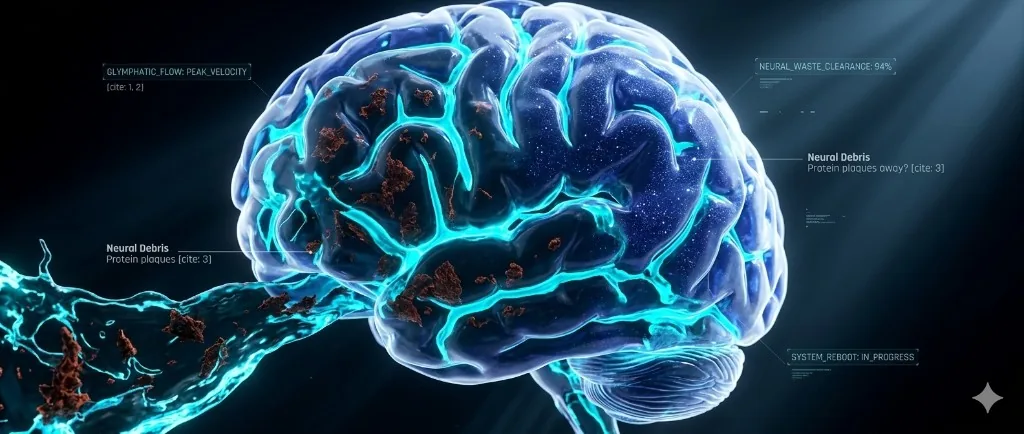
Glymphatic Flush: Clearing Neural Cache
Your brain's cache-clear during deep sleep: optimizing the glymphatic pathway for beta-amyloid removal and neural clarity.
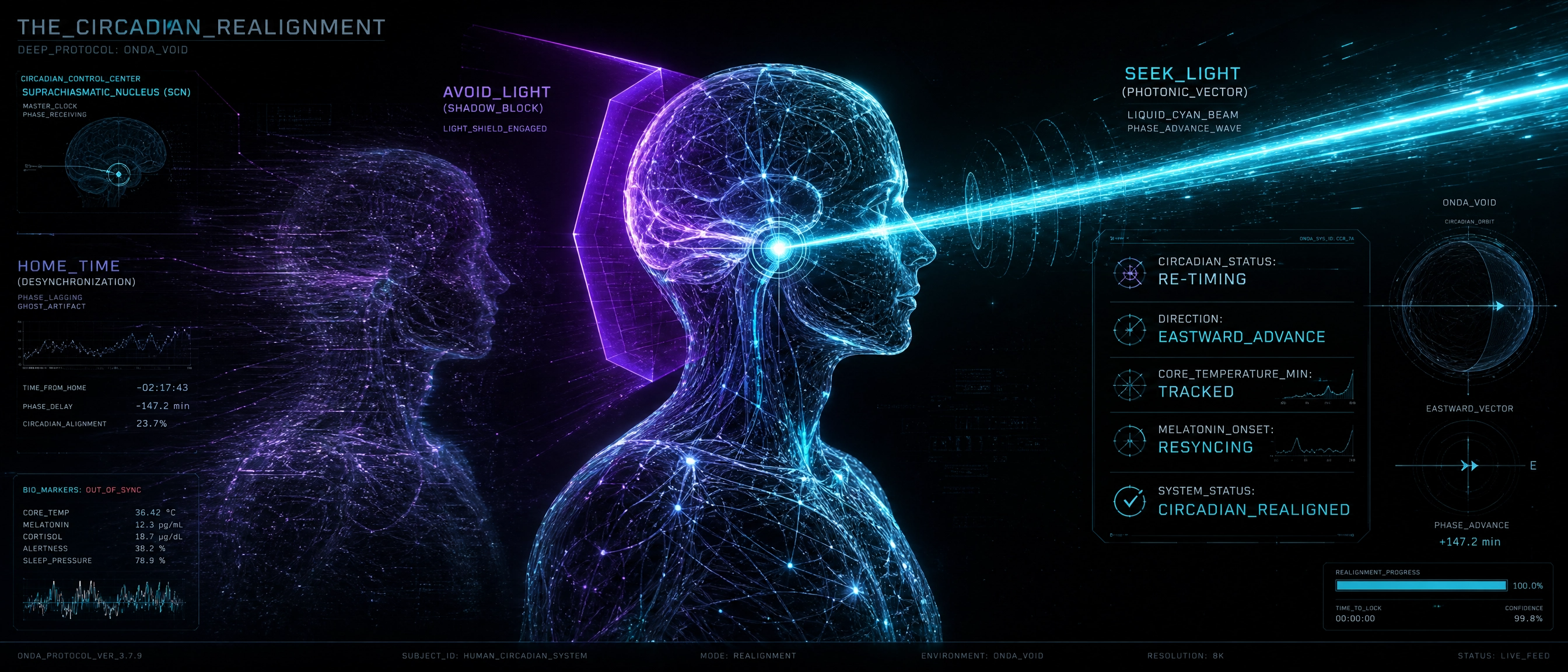
How to Beat Jet Lag: Light, Melatonin & Timing
Beat jet lag by shifting your body clock the right way: well-timed light is the strongest lever, melatonin helps eastward, and direction decides the strategy.
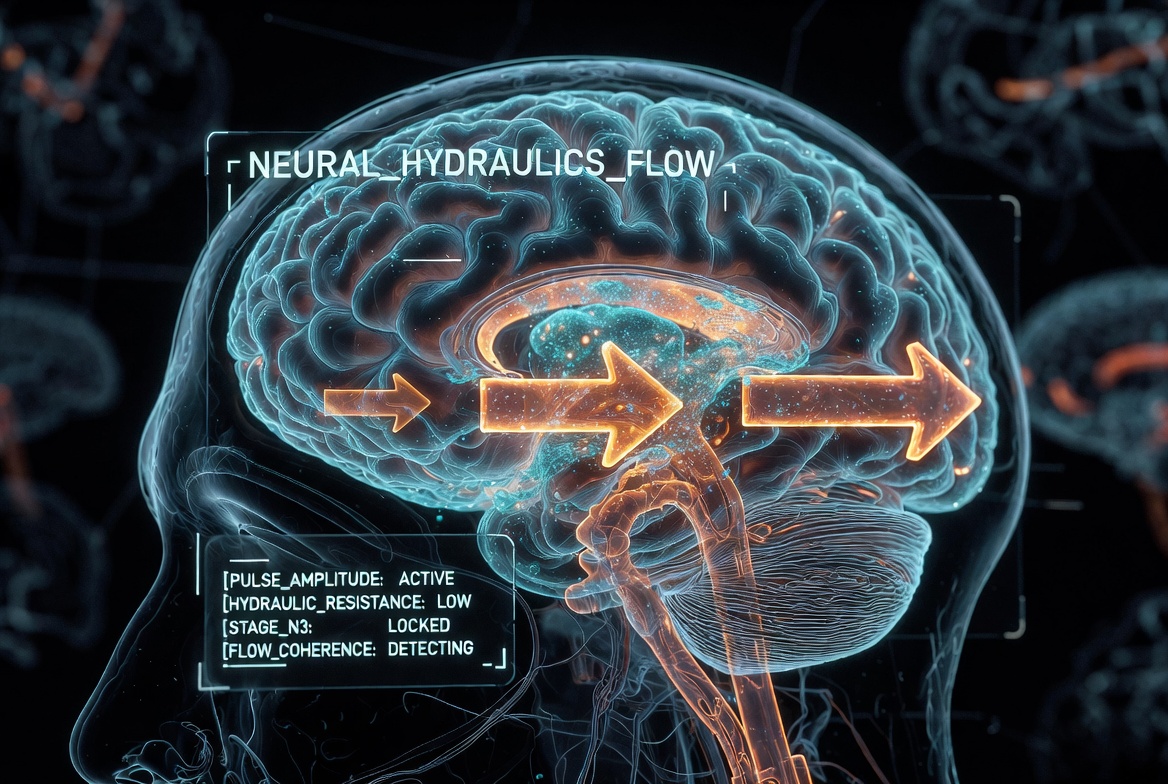
Neural Hydraulics: Engineering Flow and Mental Clarity
The brain is a hydraulic machine — arteries act as pistons, CSF flushes metabolic waste, and posture controls hydrostatic pressure. The ONDA hydraulic protocol primes vascular elasticity, optimizes gravity, and modulates breath for full nightly purge.
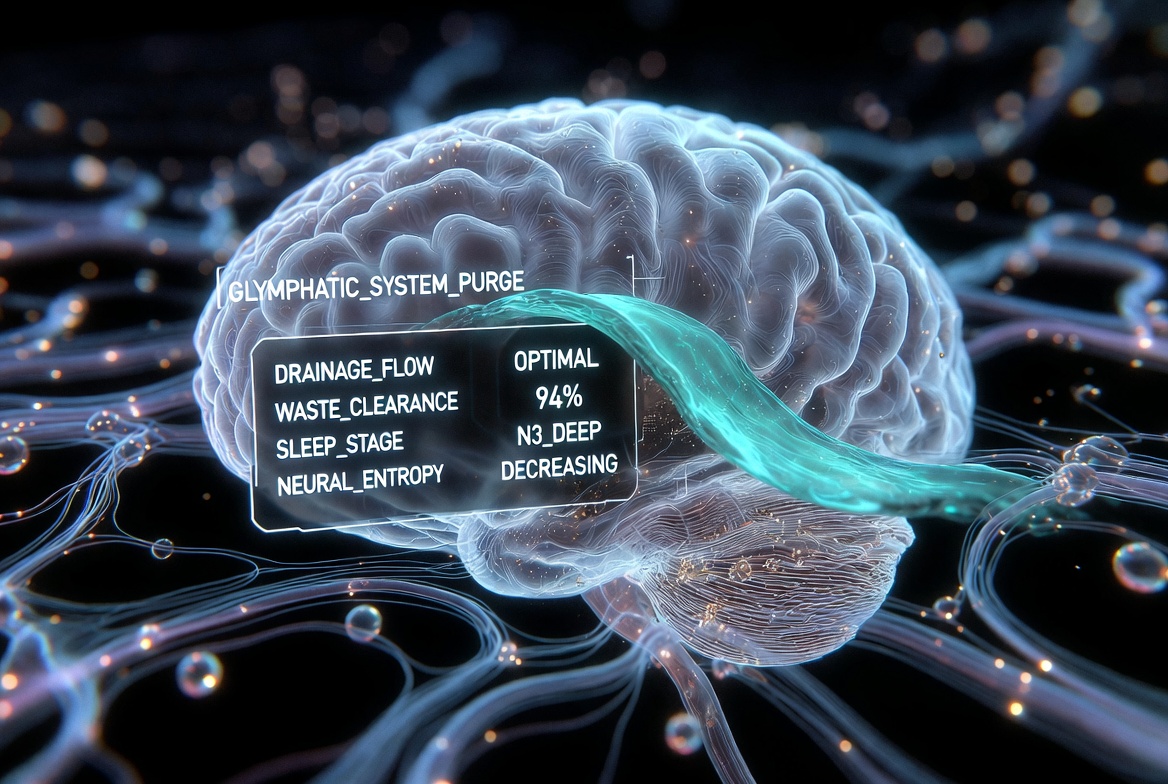
The Nightly Flush: Glymphatic System and Neural Cache Clearance
The glymphatic system runs only during Deep Sleep — flushing beta-amyloids and tau proteins via a 60% expanded intercellular space. The ONDA purge protocol maximizes N3 entry, arterial pulsatility, and lateral sleep positioning.
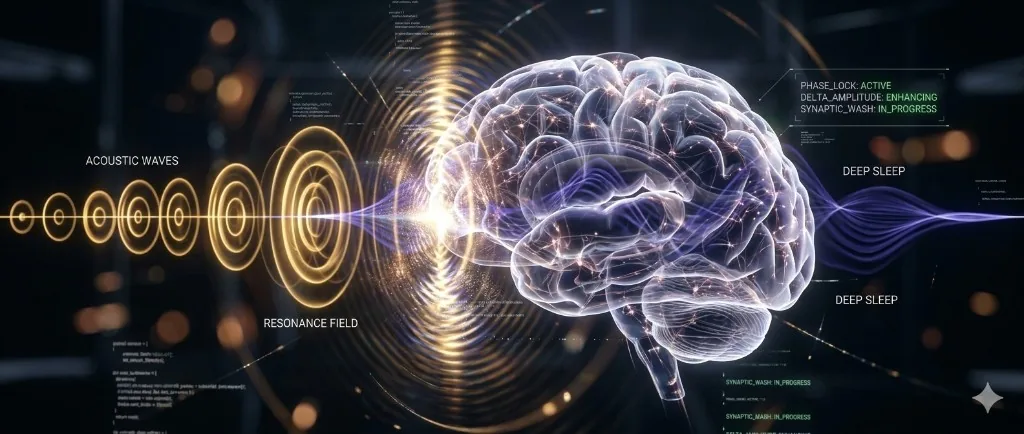
Phase-Locked Sleep: Acoustic Deep Sleep Stimulation
Learn how to use phase-locked acoustic stimulation and real-time EEG to amplify deep sleep waves and optimize cognitive recovery.
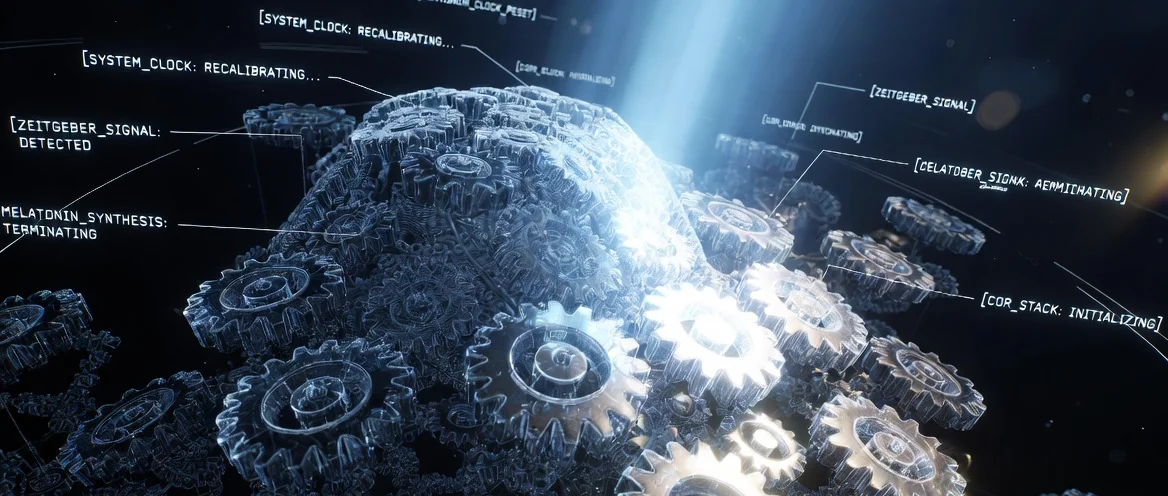
Hard Reset: How to Recalibrate Your Biological Clock
Circadian desynchronization is System Lag. Use the ONDA Hard Reset protocol — three Zeitgebers in 72 hours — to reflash your biological clock and restore deep sleep, HRV, and metabolic timing.
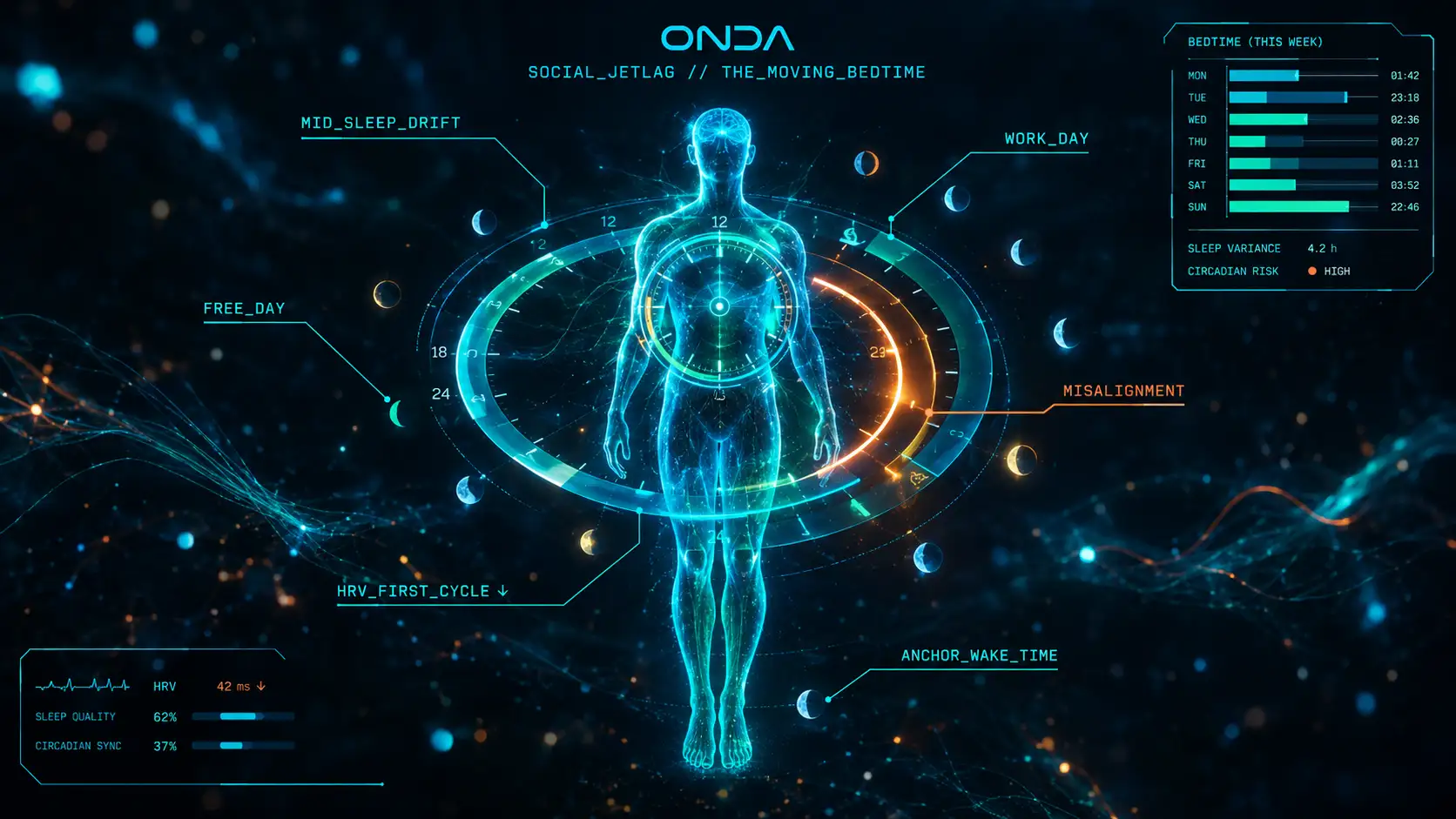
Social Jet Lag: Why a Moving Bedtime Reads as Chronic Stress
You didn’t fly anywhere, but shifting your bedtime an hour night to night gives your body a version of jet lag — and it flattens the HRV that recovers you. Why sleep regularity, not just duration, is a signal worth watching.
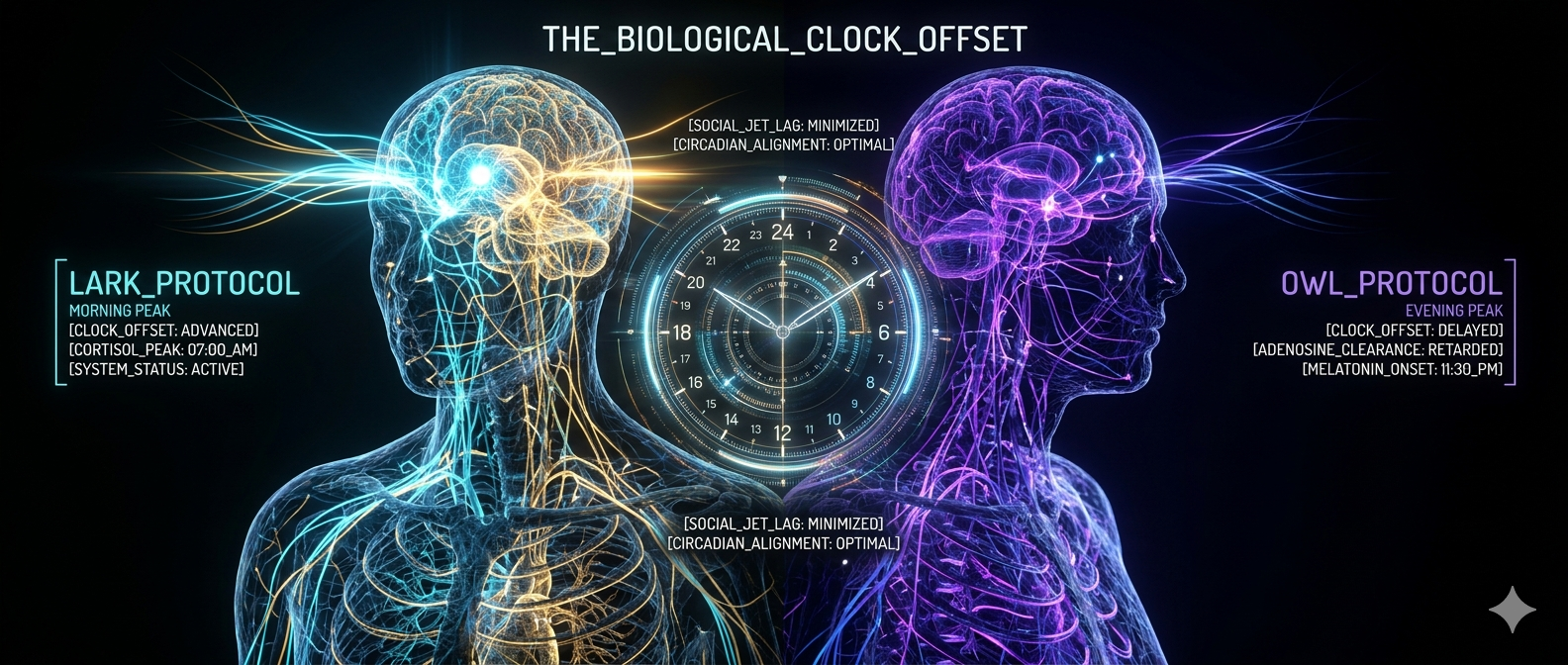
What’s Your Chronotype? Morning Lark or Night Owl
Your chronotype is your body clock’s natural timing — lark, owl or in between. What it is, why it’s largely genetic, social jet lag, and how to work with it.
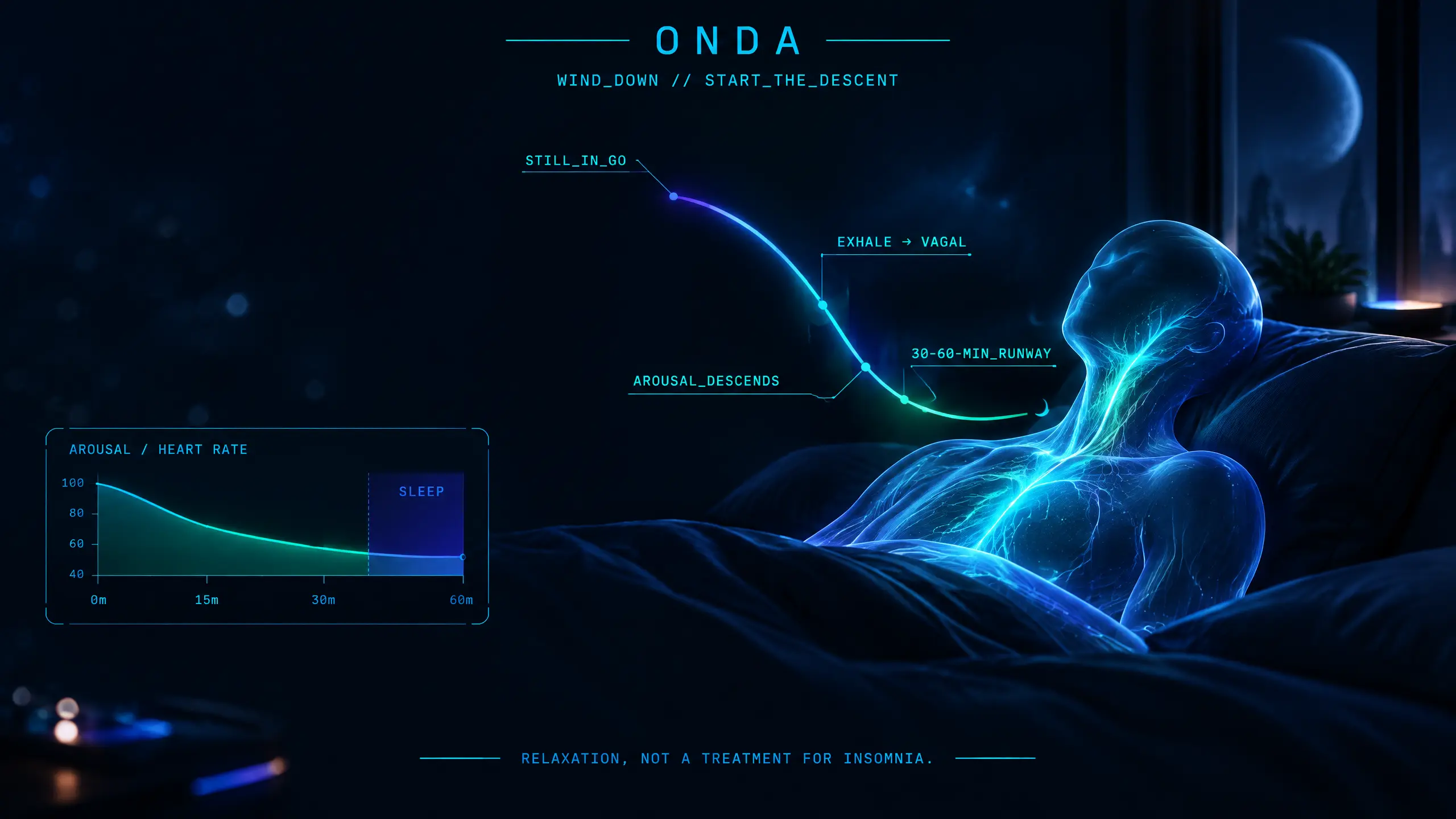
The Evening Wind-Down: Breathing Your Body Out of Work Mode
You’re in bed, but your body is still at work — heart up, mind looping. Why evening arousal wrecks sleep onset, and a simple breathing wind-down that signals your system it’s safe to power down.