
Stop tracking your stress.Start training it.
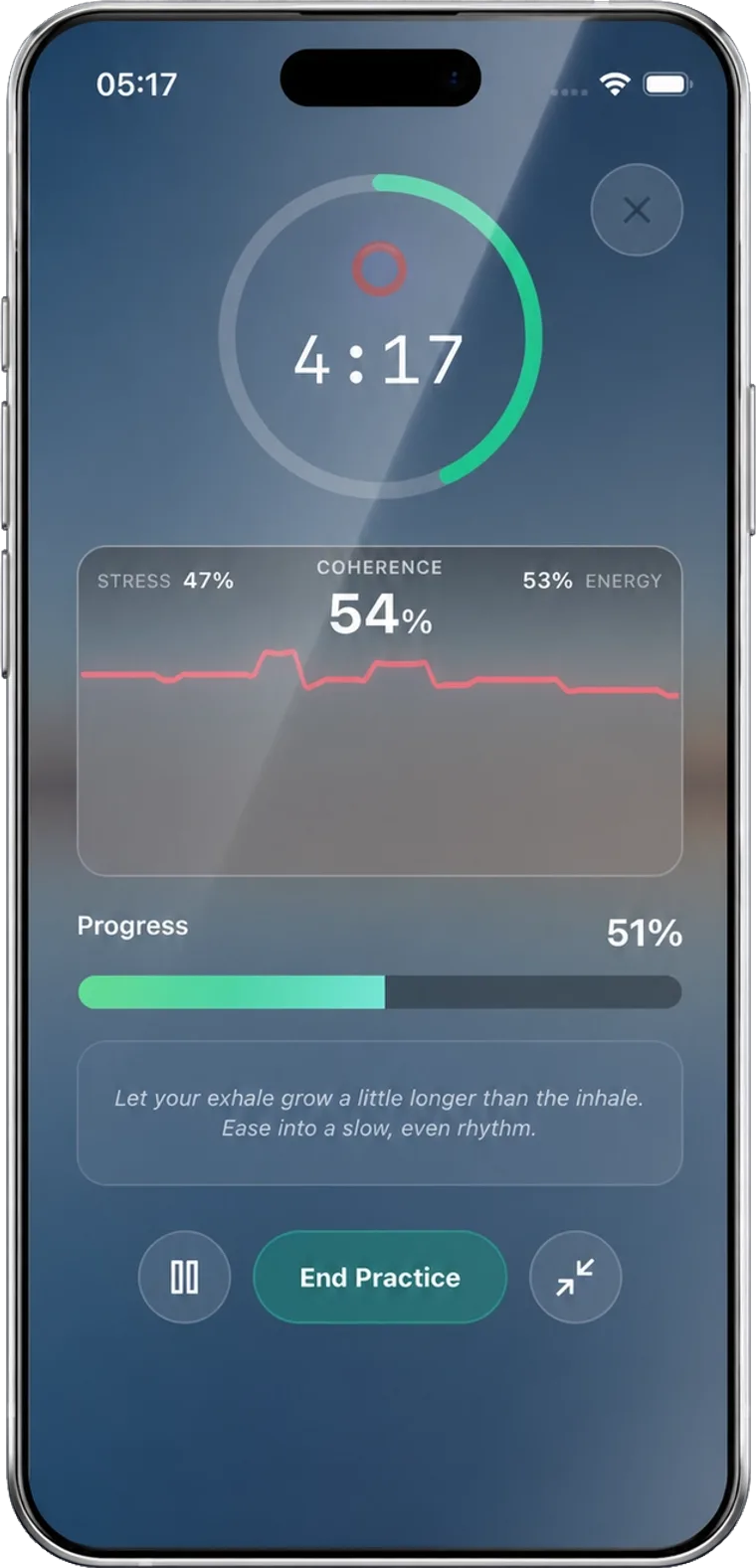
Your watch already tells you your HRV is low. ONDA guides your breathing and shows your heart rhythm respond in real time — so you can actually calm your nervous system, not just measure it. Works with your iPhone camera or an Apple Watch — no extra hardware needed.
No account. Free to start. Your first reading in 90 seconds.
[ THE PROBLEM ]
You've tried the apps. You have the watch. You still can't switch off.
Meditation apps feel nice but they're random — no feedback, no way to know if anything's working, so they don't stick. Trackers are the opposite problem: your ring tells you your HRV tanked and your stress is high, then leaves you to figure out what to do about it.
ONDA is the part in between. Guided breathing, with live feedback from your own heart — so you can see the number move while you practice, and watch your baseline trend up over weeks.
[ THE PRODUCT ]
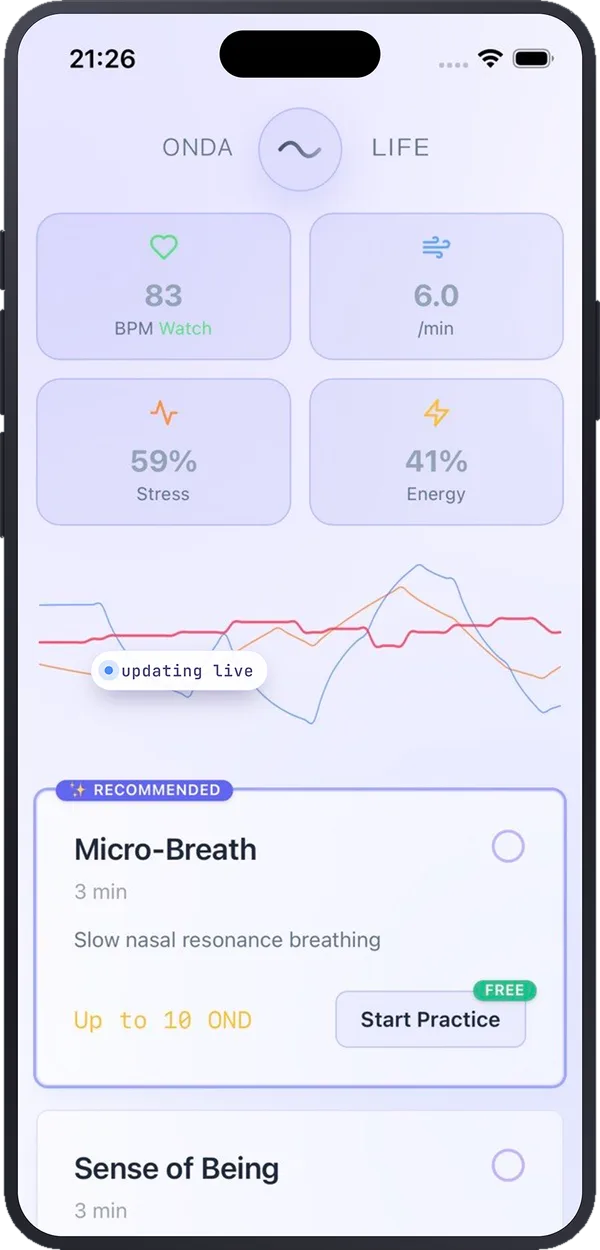
Most apps score you after. ONDA shows you during.
See your body respond, in real time. Breathe along with the guidance and watch your heart rhythm smooth out as you go — the live feedback loop meditation always lacked.
[ HOW IT WORKS ]
Three steps. Five minutes.
Connect
Use your iPhone camera, or pair the Apple Watch you already own. No special hardware required.
Breathe
Follow a guided session, 5 to 30 minutes. ONDA guides your breathing and reads your heart in real time.
Watch it move
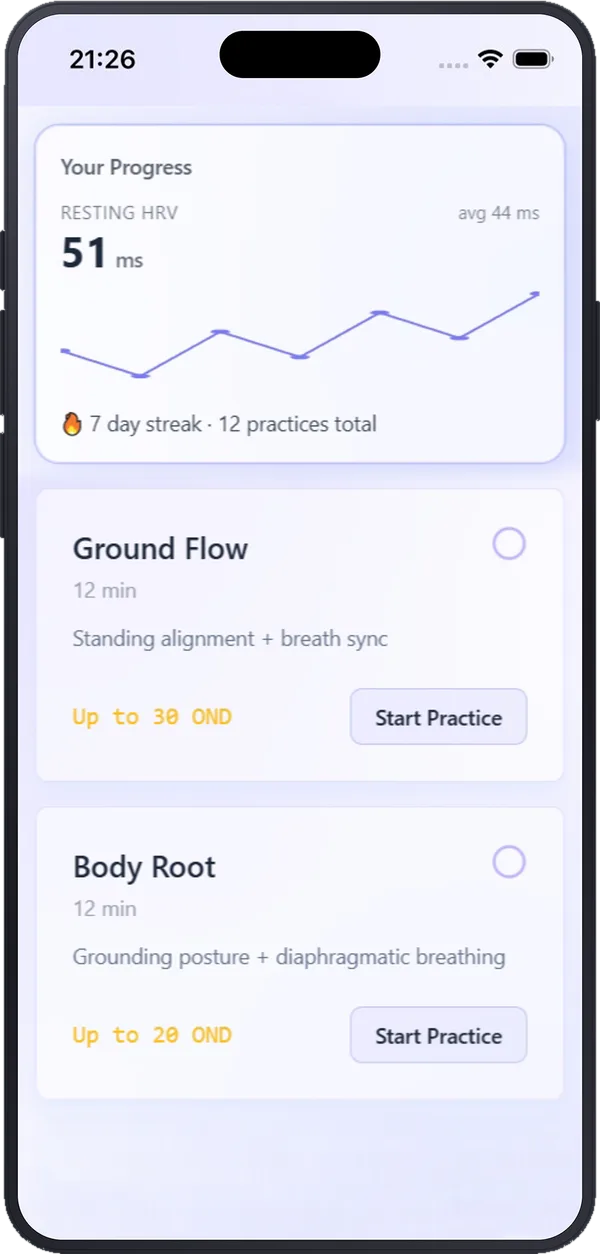
See your rhythm respond now, and your HRV baseline trend up over the weeks you keep practicing.
[ WHY ONDA ]
Not another meditation app. Not another tracker.
Structured, because it's sequential.
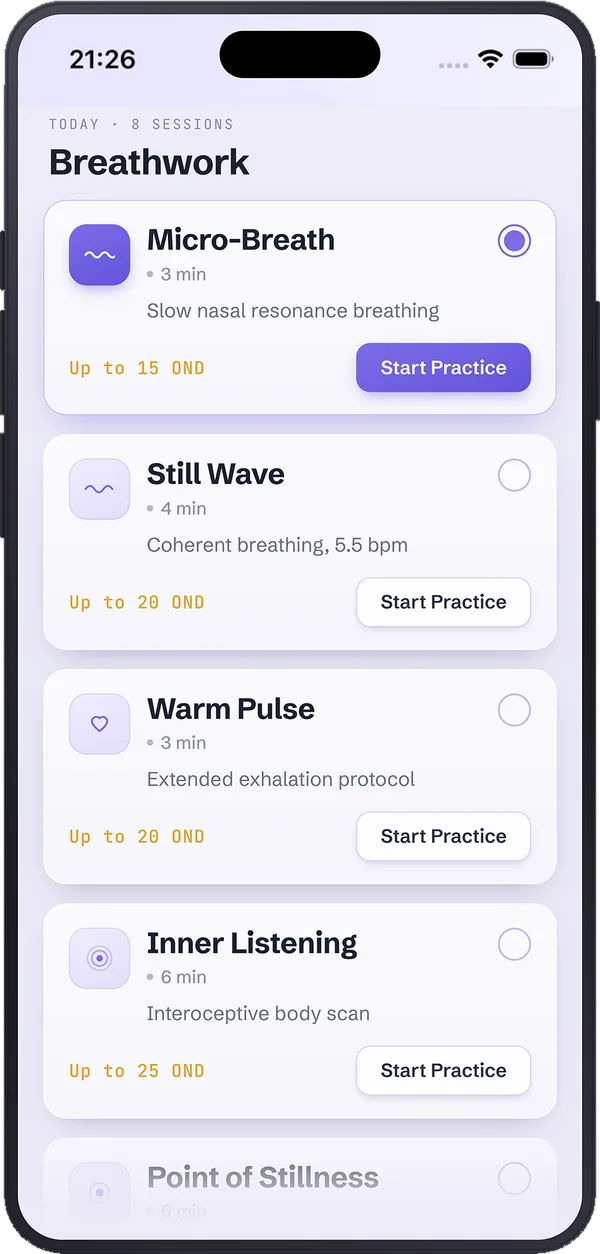
A real 8-level progression where each level builds on the last — not a shuffle of unrelated sessions. You always know the next step.
Training, not just tracking.
Whoop and Oura tell you you're stressed. ONDA helps you do something about it.
Honest, not anxiety-inducing.
Your trend matters more than one morning number. We won't gamify your panic.
Works on what you own.
Your iPhone camera or an Apple Watch — plus HRV from any tracker that syncs to Apple Health.
[ WHY TRUST IT ]
Trust, earned in under 90 seconds.
Built on resonance breathing and HRV biofeedback — with the research it rests on cited, in plain sight.
See the science →No account and no email before your first reading — free to start.
Co-developed with a neuroscience PhD advisor. · App Store reviews coming soon — we'd rather show real ones than fake them.
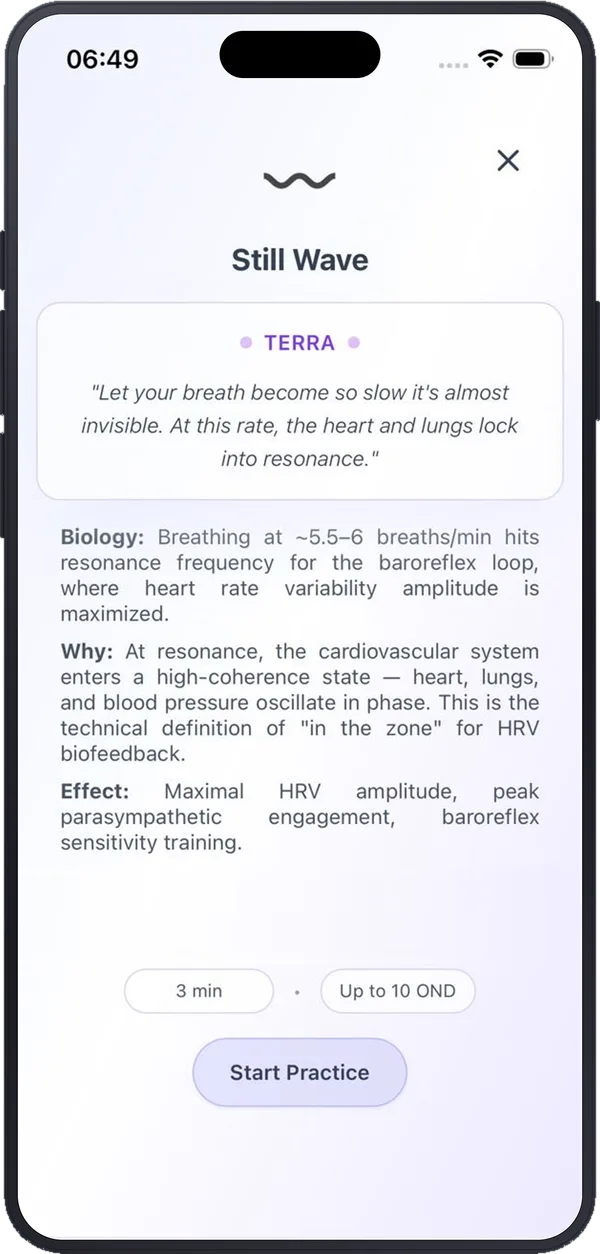
[ THE PATH ]
Where it goes: 8 levels.
ONDA isn't one exercise — it's a structured progression. You start by settling your nervous system, then build from there. Go as deep as you want, from steadying your baseline to the quietest states of long practice.
- BODY / TERRA
- EMOTIONS / AQUA
- MIND / AER
- SOCIETY / IGNIS
- BODY II / TERRA II
- BRAIN / AQUA II
- DNA / AER II
- ATOMIC / IGNIS II
BODY / TERRA
Breathing, diaphragm, and HRV — the foundation of parasympathetic activation.
EMOTIONS / AQUA
Working with stress and emotional reactivity — steadier responses when things get heavy.
MIND / AER
Attention and focus — training a calmer, clearer mind.
SOCIETY / IGNIS
Connection and social calm — showing up steadier around other people.
BODY II / TERRA II
Deeper embodiment — moving from thinking about the body to feeling it. Flow and ease in motion.
BRAIN / AQUA II
Self-awareness and metacognition — watching your own mind with more clarity.
DNA / AER II
Where the practice stops being something you do and becomes part of who you are. Months of consistency settling into a steadier baseline.
ATOMIC / IGNIS II
The deep, quiet states long-term practitioners describe — total presence, the self going still. Experiential, not measured. The edge of the map.
[ RECENT_LOG ]
latest →Wim Hof Breathing and Inflammation: It’s the Breath, Not the Cold
Radboud University research showed people can voluntarily calm their immune response through breathing — and that the breathing, not the cold, is the active ingredient. What the science found.
Can Breathing Help with Altitude Sickness? What the Research Suggests
Controlled hyperventilation breathing (from the Wim Hof Method) was used on a Kilimanjaro expedition to reduce altitude sickness. What the research suggests about breath and acclimatization.
Alternate Nostril Breathing (Nadi Shodhana): Benefits and How to Do It
Alternate nostril breathing (Nadi Shodhana) calms the nervous system and can lower blood pressure and raise HRV. How to do it, why the slow pace is what works, and when to use it.
Humming Breath (Bhramari): The Simplest Way to Stimulate Your Vagus Nerve
Humming breath, or Bhramari, stimulates the vagus nerve through vibration in the larynx. How to do bee breath, why humming raises vagal tone, and when to use it for calm.
Fast vs Slow Pranayama: Why Some Breathing Energizes and Some Calms
Not all breathwork calms you. Fast techniques like Kapalabhati energize and activate the sympathetic system, while slow ones like Nadi Shodhana calm. How to choose the right one.
[ DEEP DIVES ]
Flagship Articles
Science-backed guides for nervous system optimization. From vagal tone to longevity hardware.

Vagus Nerve: The Body's Master Switch for Calm
How the vagus nerve regulates your stress response and recovery — and what slow, paced breathing can actually influence.
→
Dopamine Architecture: Drive, Prediction Error, and Reward Traps
Dopamine architecture: reclaim your drive by understanding the biological Prediction Error — and escape the Dopamine Traps that hijack your reward circuitry.
→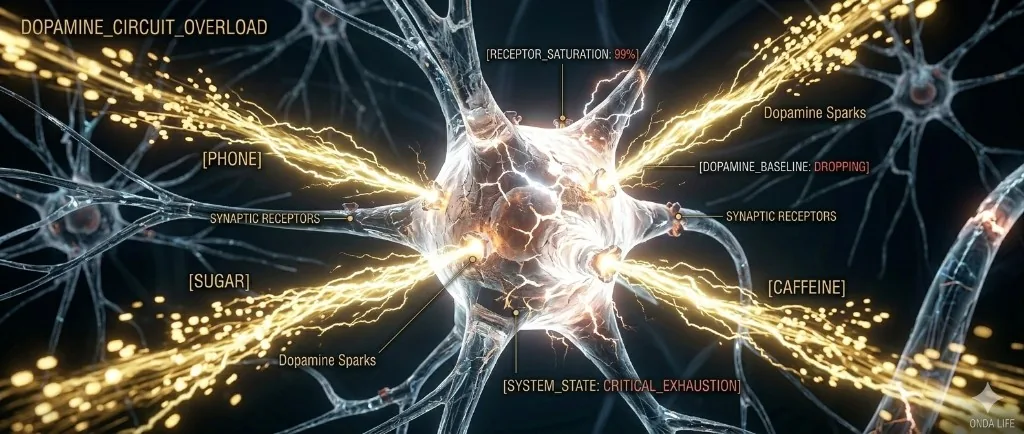
Dopamine Stacking & Circuit Overload
How chasing dopamine leads to burnout — and what actually helps the reward system settle and recover.
→Start with one breath.
Free to start. No account. Your first reading in 90 seconds.
The world around you becomes how you see it inside yourself.